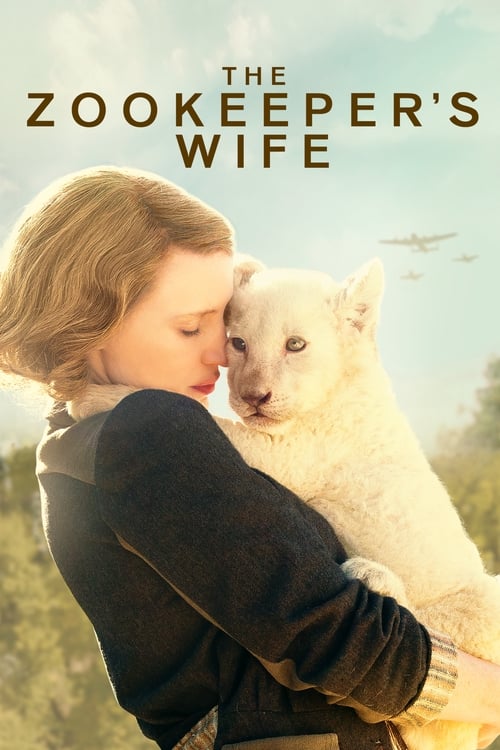
The Zookeeper's Wife (2017)
Directed by Niki Caro
No — The Zookeeper's Wife is not especially woke, scoring 24 out of 100 on our wokeness meter.
Antonina Żabińska kept a zoo in Warsaw, and when the Germans arrived she kept people in it.
Consciousness Markers
The film centers Antonina Żabińska and was directed, written, and sourced by women, with critics calling it a feminist Holocaust film. Its feminist perspective is embedded rather than explicitly doctrinal.
The Holocaust drama carries moral weight and a postscript, but it avoids overt contemporary sermonizing.
The cast is largely white European, though several Jewish roles are filled by Israeli actors. There is no notable modern diversity-casting agenda.
It dramatizes Nazi antisemitic persecution and Jewish rescue, but frames this as historical atrocity rather than modern racial-justice commentary.
No LGBTQ+ themes or characters are present.
The zoo setting and animal welfare elements do not amount to a climate crusade.
No critique of capitalism or wealth is present.
No body-positivity themes are present.
No neurodivergence themes are present.
The film is based on a true story and follows the historical record without revisionist framing.
Why it received this score
Antonina Żabińska kept a zoo in Warsaw, and when the Germans arrived she kept people in it. Niki Caro directs this adaptation of Diane Ackerman's book, with Angela Workman handling the screenplay, and Jessica Chastain occupying the center of nearly every frame. The behind-the-camera roster is notably female, and critics at the time reached for the phrase feminist Holocaust film. That label sits comfortably enough. The story belongs to a woman who moves through occupation by tending frightened creatures, human and otherwise, and the film observes her without ever stopping to announce its own virtue.
The historical record is treated with respect. There is no mischievous reordering of events, no invented villain psychology beyond the exaggerated rivalry the film admits to, no attempt to smuggle a modern grievance into 1940s Poland. The antisemitism on display is the documented kind, not a lecture about our own moment. Rescue is the subject, and the postscript makes the moral explicit for anyone who missed it. Elsewhere the film keeps its mouth mostly shut, which is rarer than it should be.
Which is not to say it is a triumph. Reviews were mixed, the takedown of choice being that the animals upstage the people, and the accusation lands. The film is earnest, well-mounted, and a little airless. Its progressive instincts are of the older, quieter sort: a woman's perspective honored, a tragedy recounted, a rescue remembered. Israeli performers fill several of the Jewish roles, a detail of quiet authenticity that stops well short of any casting campaign. Nothing here hectors. Nothing here preaches. Contemporary audiences looking for instruction will have to bring their own. The Żabińskis saved three hundred people and got a decent movie out of it, which is more than most get.
Analysis generated by our Consciousness Algorithm
Part of


Synopsis
The account of keepers of the Warsaw Zoo, Jan and Antonina Zabinski, who helped save hundreds of people and animals during the Nazi invasion.
Questions about The Zookeeper's Wife
Is The Zookeeper's Wife woke?
No — The Zookeeper's Wife is not especially woke, scoring 24 out of 100 on our wokeness meter. That earns it a verdict of Based.
Does The Zookeeper's Wife have any woke elements?
1 of the 10 markers register at 30 or above, led by Feminist Agenda (50). On Feminist Agenda: The film centers Antonina Żabińska and was directed, written, and sourced by women, with critics calling it a feminist Holocaust film.
How does The Zookeeper's Wife compare to other 2017 movies?
It ranks #77 of the 309 films from 2017 we've scored; their average is 19. The wokest is I Am Not Your Negro (92).
How is the Woke Score calculated?
An AI-assisted process researches the film and its reception, scores it 0–100 on ten markers, then combines those into one 0–100 Woke Score. It measures a specific set of 2020s cultural themes, not film quality.