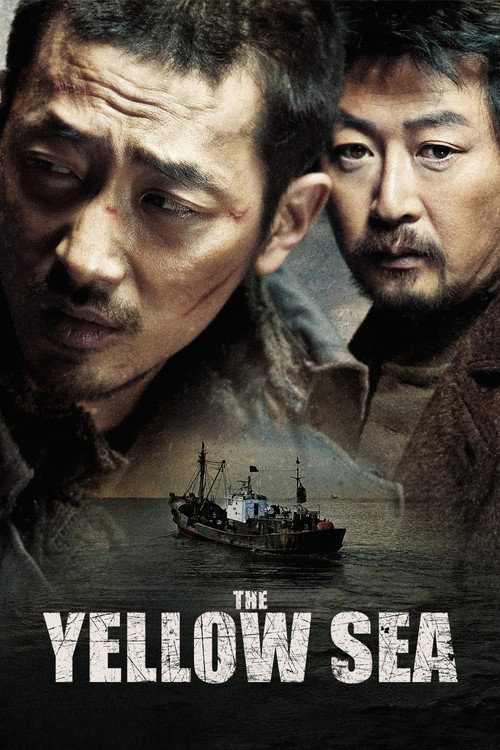
The Yellow Sea (2010)
Directed by Na Hong-jin
No — The Yellow Sea is not woke, scoring 7 out of 100 on our wokeness meter.
Na Hong-jin's second feature follows Gu-nam, a Joseonjok taxi driver in Yanji who accepts a contract killing in Seoul to clear a gambling debt and locate a wife who stopped writing.
Consciousness Markers
The Joseonjok diaspora experience—marginalized ethnic Koreans from China treated as disposable in South Korea—is a genuine backdrop, but it is atmospheric texture rather than an explicit racial-justice thesis.
A wholly Korean cast populates a Korean production, including ethnic Joseonjok characters, but this is organic to the setting rather than a self-conscious diversity statement.
Debt, gambling, and desperate contract killing drive the plot, but the film offers no systemic critique of capital; it is bleak crime fatalism, not eat-the-rich polemic.
Women exist largely as catalysts for male violence—an unfaithful wife and a cuckolded widow—with no feminist framework or critique offered.
No LGBTQ+ characters, themes, or subtext appear anywhere in the film.
No environmental themes or climate concerns are present.
No body-positivity themes; the film is defined by visceral bodily destruction.
No neurodivergent characters or themes are present.
The film is a contemporary fictional crime thriller with no historical revisionism.
Na Hong-jin delivers chaos and violence without moral instruction; the film never pauses to lecture its audience.
Why it received this score
Na Hong-jin's second feature follows Gu-nam, a Joseonjok taxi driver in Yanji who accepts a contract killing in Seoul to clear a gambling debt and locate a wife who stopped writing. What follows is a two-and-a-half-hour sprint through stairwells, cargo holds, and mahjong parlors, conducted almost entirely at the volume of a collapsing building. The cast is Korean because the story is Korean, and the ethnic Korean characters from Yanbian are present because the plot requires them to be marginal. Nobody pauses to explain the diaspora to us. The film simply assumes we can keep up, which is its own kind of courtesy.
There is a lived-in texture to the Joseonjok experience here: the smuggled boat, the disposable labor, the way Seoul treats these arrivals as inventory. It functions as atmosphere, not argument. The same holds for the money. Debt, gambling, a severed thumb, a banker's business card: capital is the machine that feeds everyone into the grinder, but the film never steps back to name the machine. It is fatalism, wet and red, not polemic. Na is interested in what desperation does to a body, not in who arranged the desperation.
The women fare worse, which is to say they exist as motives. A cheating wife and a cuckolded widow set the plot in motion and then recede. The film offers no framework for thinking about them, and does not seem to want one. There is no romance of inclusion here, no environmental sermon, no lecture. The film is a knife fight with a runtime problem, and it knows it. We are left with the haunting image of a man beating other men with a gnawed meat bone, and with the quiet suspicion that this is all the meaning we were ever going to get.
Analysis generated by our Consciousness Algorithm


Synopsis
A Korean man in China takes an assassination job in South Korea to make money and find his missing wife. But when the job is botched, he is forced to go on the run from the police and the gangsters who paid him.
Questions about The Yellow Sea
Is The Yellow Sea woke?
No — The Yellow Sea is not woke, scoring 7 out of 100 on our wokeness meter. That earns it a verdict of Ultra Based.
Does The Yellow Sea have any woke elements?
Very few. None of the 10 markers reaches 30, the level where a marker counts as present; the highest is Racial Consciousness at 18.
How does The Yellow Sea compare to other 2010 movies?
It ranks #125 of the 238 films from 2010 we've scored; their average is 11. The wokest is My Name Is Khan (84).
How is the Woke Score calculated?
An AI-assisted process researches the film and its reception, scores it 0–100 on ten markers, then combines those into one 0–100 Woke Score. It measures a specific set of 2020s cultural themes, not film quality.