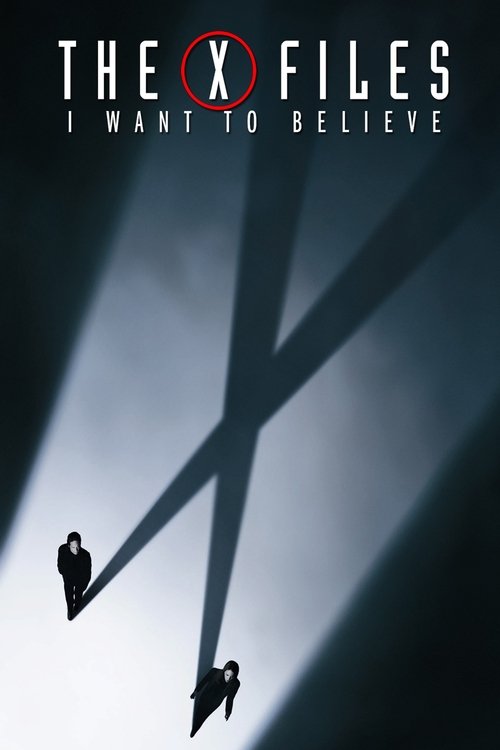
The X-Files: I Want to Believe (2008)
Directed by Chris Carter
No — The X-Files: I Want to Believe is not woke, scoring 15 out of 100 on our wokeness meter.
The second X-Files feature arrived in 2008 with the franchise's mythology set aside in favor of a snowbound abduction case, a defrocked priest with psychic visions, and an organ-harvesting operation in rural Virginia.
Consciousness Markers
The cast includes Gillian Anderson and Amanda Peet in prominent FBI/medical roles and Xzibit as a Black FBI agent, but diversity is incidental rather than a modern representation-casting statement.
A same-sex married couple appears in the plot—Dacyshyn and his husband Franz—but the relationship is a grim plot device, not an identity-focused theme.
Scully is a capable co-lead and physician, and Agent Whitney is a female FBI agent, but the film does not advance a feminist agenda.
The film debates faith versus science and medical ethics around stem-cell treatment, but it is not a modern social-justice lecture.
Xzibit appears as an FBI agent, but race is never addressed or made a theme.
No climate or environmental themes are present.
No critique of capitalism or wealth; the organ-trafficking plot is criminal horror, not economic allegory.
No body-positivity themes are present.
No neurodivergence themes; psychic visions are supernatural, not neurodivergent representation.
No historical revisionism is present.
Why it received this score
The second X-Files feature arrived in 2008 with the franchise's mythology set aside in favor of a snowbound abduction case, a defrocked priest with psychic visions, and an organ-harvesting operation in rural Virginia. Chris Carter directs with the patience of a television veteran, letting Mulder and Scully bicker about faith and science between grisly discoveries. The result is a monster-of-the-week episode stretched to feature length, which is either a modest virtue or a structural problem depending on how much affection the viewer retains for the duo.
On the matter of modern social consciousness, the film is a period piece that happens to be contemporary with its own release. Amanda Peet's Agent Whitney and Xzibit's Agent Drummy occupy prominent Bureau roles, though the screenplay never remarks on either. A same-sex married couple sits at the center of the plot, and their relationship is treated as a grim mechanism for horror instead of an identity worth exploring. Scully remains a physician and a capable co-lead, and her fight with a Catholic hospital board over experimental stem cell treatment gives the film its only sustained argument. That argument concerns medical ethics and religious authority, not the culture-war vocabulary that would arrive a few years later.
The lecture energy here is mild and chiefly theological. Father Joe's visions prompt talk of belief, redemption, and the limits of evidence, and the script resolves these questions with a shrug. There is no economic allegory in the organ trade, no environmental subtext in the snow, no commentary on race, body image, or neurodivergence. The remainder is a moody, somewhat lethargic thriller about two people who cannot quite quit each other or the paranormal. It asks for patience and offers atmosphere. That is a fair trade for devotees and a thin one for everyone else.
Analysis generated by our Consciousness Algorithm


Synopsis
Mulder and Scully are called back to duty by the FBI when a former priest claims to be receiving psychic visions pertaining to a kidnapped agent.
Questions about The X-Files: I Want to Believe
Is The X-Files: I Want to Believe woke?
No — The X-Files: I Want to Believe is not woke, scoring 15 out of 100 on our wokeness meter. That earns it a verdict of Ultra Based.
Does The X-Files: I Want to Believe have any woke elements?
Very few. None of the 10 markers reaches 30, the level where a marker counts as present; the highest is LGBTQ+ Themes at 25.
How does The X-Files: I Want to Believe compare to other 2008 movies?
It ranks #56 of the 212 films from 2008 we've scored; their average is 12. The wokest is Milk (68).
How is the Woke Score calculated?
An AI-assisted process researches the film and its reception, scores it 0–100 on ten markers, then combines those into one 0–100 Woke Score. It measures a specific set of 2020s cultural themes, not film quality.