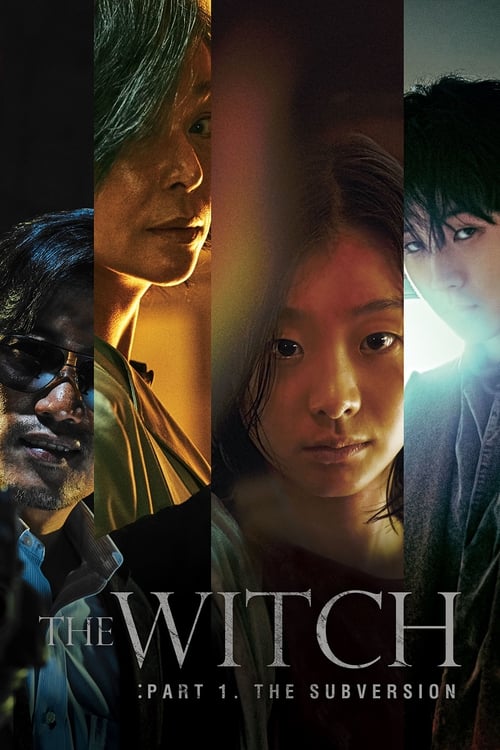
The Witch: Part 1. The Subversion (2018)
Directed by Park Hoon-jung
No — The Witch: Part 1. The Subversion is not woke, scoring 6 out of 100 on our wokeness meter.
Park Hoon-jung's "The Witch: Part 1. The Subversion" arrives dressed as a quiet rural drama and departs as a slaughterhouse.
Consciousness Markers
The film centers on a young female superhuman and features a female scientist antagonist, but it offers no explicit feminist commentary or gender-politics agenda.
The cast is entirely Korean, which is natural for a Korean production rather than a deliberate modern diversity-casting initiative.
There are no LGBTQ+ characters, themes, or subtext.
The story does not engage with racial identity, racism, or racial justice themes.
There is no environmental or climate-related messaging.
The film's conflict involves unethical scientific experimentation, not a critique of capitalism or wealth inequality.
There is no body-positivity theme or commentary on body image.
The protagonist's memory loss and headaches are plot devices tied to genetic experimentation, not neurodivergence representation.
The film is a fictional sci-fi thriller and does not revise or reinterpret historical events.
The film is a genre-driven action thriller and does not pause for moralizing or preachy exposition.
Why it received this score
Park Hoon-jung's "The Witch: Part 1. The Subversion" arrives dressed as a quiet rural drama and departs as a slaughterhouse. A girl with no memory is taken in by a farming couple, grows into a high schooler with headaches and a talent for making microphones float, and is soon dragged back toward the laboratory that manufactured her. The film is Korean, cast entirely with Korean performers, which is simply what a Korean production looks like. No casting directive was consulted. The result is a brisk, brutal genre exercise that knows exactly what it wants and pursues it with a knife.
Kim Da-mi's Ja-yoon is a young woman with superhuman abilities, and Jo Min-su's Dr. Baek is the scientist who made her, so the film passes the crude arithmetic of female prominence. That is where the matter rests. There is no argument being advanced about gender, no thesis tucked into the violence. Ja-yoon wants to survive and Dr. Baek wants her specimen back, and the screenplay treats this as machinery, not manifesto. A film can put a woman at the center and still have nothing to say about women. This one does not pretend otherwise.
The remaining categories sit empty, and honestly so. The villain is a geneticist, not a hedge fund, so no economic sermon emerges. The heroine's amnesia and migraines are plot devices, not a statement about the mind. There is no environmental allegory, no racial reckoning, no meditation on body image, no revision of any historical record. The finished product is a lean thriller with a genuinely unsettling final scene and a sequel waiting in the wings. We score what is there. Very little of the contemporary catechism is.
Analysis generated by our Consciousness Algorithm


Synopsis
Ja-yoon is a high school student who struggles with memory loss after she endured some unknown trauma during her childhood. While trying to uncover the truth, she is unwittingly dragged into a world of crime and finds herself on a journey that will awaken many secrets hidden deep within.
Questions about The Witch: Part 1. The Subversion
Is The Witch: Part 1. The Subversion woke?
No — The Witch: Part 1. The Subversion is not woke, scoring 6 out of 100 on our wokeness meter. That earns it a verdict of Ultra Based.
Does The Witch: Part 1. The Subversion have any woke elements?
Very few. None of the 10 markers reaches 30, the level where a marker counts as present; the highest is Feminist Agenda at 10.
How does The Witch: Part 1. The Subversion compare to other 2018 movies?
It ranks #244 of the 325 films from 2018 we've scored; their average is 20. The wokest is Return (92).
How is the Woke Score calculated?
An AI-assisted process researches the film and its reception, scores it 0–100 on ten markers, then combines those into one 0–100 Woke Score. It measures a specific set of 2020s cultural themes, not film quality.