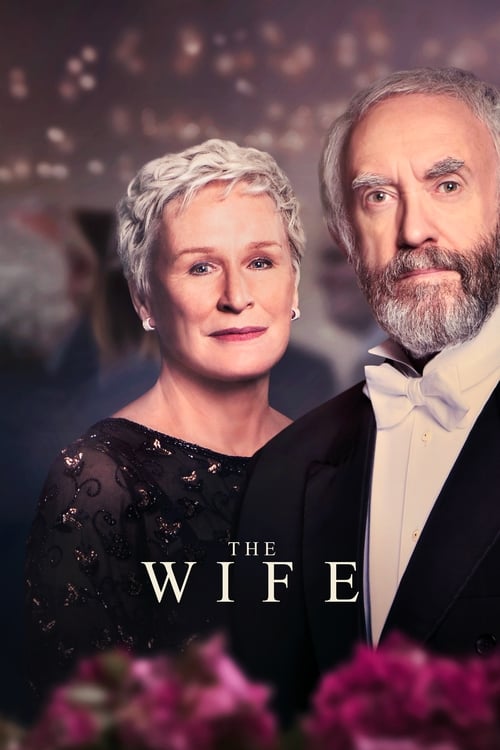
The Wife (2017)
Directed by Björn Runge
No — The Wife is not especially woke, scoring 35 out of 100 on our wokeness meter.
The Wife arrives with the calm of a film that knows exactly what it is doing and intends to take its time doing it.
Consciousness Markers
The film's central thesis is that a brilliant woman's authorship was erased and subsumed into her husband's fame, with explicit scenes of 1960s male editors dismissing women writers and the heroine trapped in the 'The Wife' role. It was even marketed as a '#MeToo film.'
The film is a restrained, character-driven drama that largely shows rather than tells; its feminist critique emerges through performance and flashback rather than overt sermonizing, though the final act sharpens the message.
The cast is overwhelmingly white and European, with no deliberate diversity casting; the ensemble reflects the literary Stockholm milieu rather than any representational agenda.
There are no LGBTQ+ characters or themes; the marital drama is entirely heterosexual.
Race is not a subject of the film; the story concerns gender and authorship within a white literary elite.
No environmental or climate themes appear.
The publishing industry is portrayed as elitist and sexist, but there is no economic critique of capitalism or class-based 'eat the rich' messaging.
Body image and physical appearance are not thematic concerns.
No neurodivergent characters or themes are present.
The film is a fictional adaptation of a novel, not a reworking of historical events.
Why it received this score
The Wife arrives with the calm of a film that knows exactly what it is doing and intends to take its time doing it. Glenn Close plays Joan Castleman, a woman who has spent four decades polishing her husband's prose and, more to the point, writing it. The Nobel committee hands Joseph Castleman a medal for work his wife produced, and the film watches her watch him accept it. This is a study in quiet erasure, built with the patience of a good novel adaptation, which it is, drawn from Meg Wolitzer's book. The screenplay by Jane Anderson keeps the flashbacks tidy: Smith College in 1958, a cynical alumna warning a young Joan that the door for women writers is barely ajar, and a publishing house of male editors who glance past manuscripts submitted by women. These scenes do the thematic lifting with a light hand. The film rarely stops to explain itself.
The performances carry the argument. Close works in small increments, a tightened jaw, a long look across a banquet table, the accumulated weight of a marriage that has been a career. Jonathan Pryce makes the husband a charming parasite, which is the correct approach. There is little sermonizing here. The film trusts us to assemble the indictment from behavior and memory, and when the final act sharpens its point, it has earned the sharpening.
The cast is uniformly white and European, which suits the Stockholm literary set and signals no representational ambition whatsoever. Race, economic class, environmental concern, and physical self-image are simply not on the agenda. What remains is a domestic tragedy about credit, authorship, and the long con of a marriage, delivered with restraint and one devastating performance. It is a well-made film that knows its single subject and refuses to wander. Whether that constitutes a rich meal or a very elegant single course depends entirely on appetite.
Analysis generated by our Consciousness Algorithm


Synopsis
A wife questions her life choices as she travels to Stockholm with her husband, where he is slated to receive the Nobel Prize for Literature.
Questions about The Wife
Is The Wife woke?
No — The Wife is not especially woke, scoring 35 out of 100 on our wokeness meter. That earns it a verdict of Based.
Does The Wife have any woke elements?
1 of the 10 markers register at 30 or above, led by Feminist Agenda (72). On Feminist Agenda: The film's central thesis is that a brilliant woman's authorship was erased and subsumed into her husband's fame, with explicit scenes of 1960s male editors dismissing women writers and the heroine trapped in the 'The Wife' role.
How does The Wife compare to other 2017 movies?
It ranks #55 of the 309 films from 2017 we've scored; their average is 19. The wokest is I Am Not Your Negro (92).
How is the Woke Score calculated?
An AI-assisted process researches the film and its reception, scores it 0–100 on ten markers, then combines those into one 0–100 Woke Score. It measures a specific set of 2020s cultural themes, not film quality.