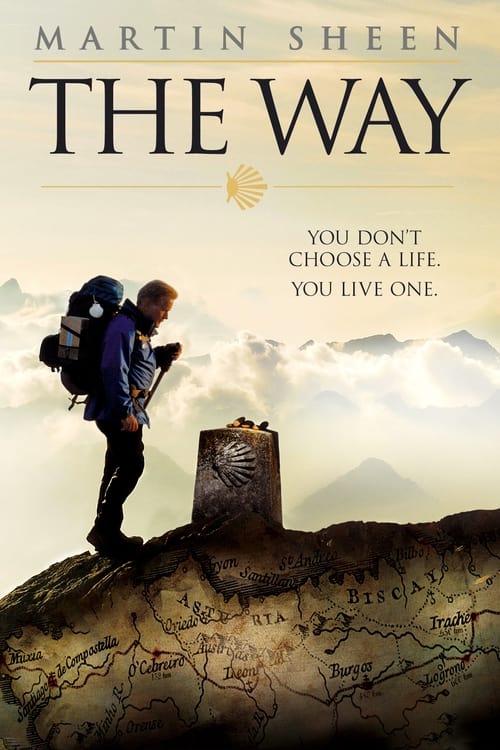
The Way (2010)
Directed by Emilio Estevez
No — The Way is not woke, scoring 7 out of 100 on our wokeness meter.
Emilio Estevez's The Way (2010) follows an American ophthalmologist up the Camino de Santiago with his dead son's ashes in a backpack, collecting three fellow pilgrims along the route.
Consciousness Markers
The cast is a naturalistic international ensemble (Dutch, Canadian, Irish, French, Spanish) and the production used real pilgrims and actual Romani people from Burgos, but this reflects authentic on-location casting rather than a modern representation agenda.
A brief episode involves a young Romani thief whose father returns the stolen backpack with apologies and an invitation to a Romani street party, a warm but incidental cultural gesture rather than a racial-consciousness thesis.
The film carries a gentle spiritual and humanist message about loss and connection, but it dramatizes rather than preaches and lacks the didactic modern-issue sermonizing the marker describes.
Sarah is a Canadian woman fleeing an abusive husband and given a measure of interiority, but the film is a male-centered grief journey and offers no feminist critique or agenda.
No LGBTQ+ characters, themes, or subtext appear anywhere in the pilgrimage narrative.
The film is a spiritual walking drama with no environmental or climate themes whatsoever.
No economic critique or eat-the-rich sentiment; the story is about grief, faith, and community.
Joost's arc is explicitly framed around losing weight so his wife will desire him again, which runs counter to body-positivity messaging rather than embodying it.
No neurodivergent characters or themes are present.
The film engages Catholic pilgrimage tradition reverently and makes no revisionist historical claims.
Why it received this score
Emilio Estevez's The Way (2010) follows an American ophthalmologist up the Camino de Santiago with his dead son's ashes in a backpack, collecting three fellow pilgrims along the route. It is a patient, sunlit film about grief and slow walking, the kind of picture that trusts landscape and silence to do the heavy lifting. The cast is a naturalistic international ensemble: Dutch, Canadian, Irish, French, Spanish. The production leaned on real pilgrims and actual Romani people from Burgos. That reflects a commitment to authenticity on location, not a casting agenda. The result feels like a documentary that wandered into a drama.
The film's progressive content is modest and mostly incidental. Sarah, the Canadian, is fleeing an abusive husband and is granted some interiority, though the story remains a male grief journey with no interest in feminist argument. A young Romani thief steals Tom's backpack, and his father returns it with apologies and an invitation to a street party. It is a warm gesture, offered without thesis. The film's spiritual humanism arrives as drama, not sermon, which keeps the preaching to a minimum. The characters search for meaning, and the film lets them.
Many modern markers are simply absent. No LGBTQ characters appear. No climate concerns intrude on a 500-mile walk through the Pyrenees. No economic critique surfaces, no neurodivergent figures, no revisionist history. Joost's stated goal, losing weight so his wife will desire him, sits opposite any body-acceptance messaging. The remainder is a reverent Catholic pilgrimage, tastefully photographed, and a reminder that a film can be humane without being current.
Analysis generated by our Consciousness Algorithm


Synopsis
When his son dies while hiking the famed Camino de Santiago pilgrimage route in the Pyrenees, Tom flies to France to claim the remains. Looking for insights into his estranged child’s life, he decides to complete the 500-mile mountain trek to Spain. Tom soon joins up with other travelers and realizes they’re all searching for something.
Questions about The Way
Is The Way woke?
No — The Way is not woke, scoring 7 out of 100 on our wokeness meter. That earns it a verdict of Ultra Based.
Does The Way have any woke elements?
Very few. None of the 10 markers reaches 30, the level where a marker counts as present; the highest is Lecture Energy at 12.
How does The Way compare to other 2010 movies?
It ranks #125 of the 238 films from 2010 we've scored; their average is 11. The wokest is My Name Is Khan (84).
How is the Woke Score calculated?
An AI-assisted process researches the film and its reception, scores it 0–100 on ten markers, then combines those into one 0–100 Woke Score. It measures a specific set of 2020s cultural themes, not film quality.