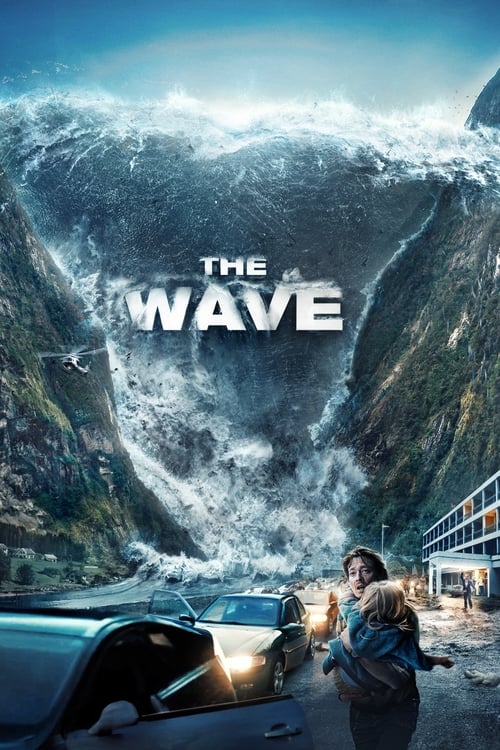
The Wave (2015)
Directed by Roar Uthaug
No — The Wave is not woke, scoring 6 out of 100 on our wokeness meter.
Roar Uthaug's The Wave arrives with the modest ambition of drowning a Norwegian fjord town and little else on its mind.
Consciousness Markers
The boss refuses to sound the evacuation alarm to avoid disrupting the tourist season, a mild profit-over-safety critique, but it is a plot device rather than an ideological argument.
Idun is a capable, resourceful woman who saves her son, but this is natural disaster-movie characterization rather than a feminist thesis.
The film is a straightforward genre thriller with essentially no preachy or didactic messaging.
The cast is entirely Norwegian and white, with no diversity-conscious casting agenda at play.
No LGBTQ+ characters or themes appear anywhere in the film.
The film engages no racial themes or commentary whatsoever.
The tsunami stems from a geological rockslide, not climate change; no environmental messaging is present.
No body-positivity themes or messaging are present.
No neurodivergent characters or themes are depicted.
Though inspired by the real 1934 Tafjord disaster, the film presents a fictional scenario without reinterpreting history.
Why it received this score
Roar Uthaug's The Wave arrives with the modest ambition of drowning a Norwegian fjord town and little else on its mind. A geologist named Kristian watches sensors fail, warns a boss who will not act, and then spends the back half of the picture running uphill from water. That is the entire architecture. The film has no interest in telling us how to feel about anything beyond the immediate problem of a very large wave. Refreshing, in its way.
The one concession to social commentary is Arvid, the tourism-minded administrator who declines to sound the evacuation alarm because the season is still open. It is a profit-over-safety beat, delivered as plot mechanics and never as argument. Nobody delivers a speech about the moral bankruptcy of the hospitality industry. The film simply needs a reason for the alarm to be late, and a cautious bureaucrat is the cheapest available reason. Idun, meanwhile, evacuates a hotel, searches for her son, and drowns a panicking man to save him. She is resourceful and unsentimental. The film treats this as ordinary competence, which is what it is.
The cast is Norwegian and white. The geology is geology. The disaster is a rockslide, not a warming planet, and the script resists the temptation to append a lesson about the environment to a mountain that merely fell. Norway submitted it for the foreign language Oscar, which it did not receive, and the logic of the submission and the logic of the snub are visible in the same gesture. This is a well-made genre machine with no agenda to speak of. It wants to thrill you for ninety minutes and then release you. A sommelier might call it a clean, unpretentious vintage with no additives. There is almost nothing here to classify, which is itself a kind of classification.
Analysis generated by our Consciousness Algorithm


Synopsis
Although theorised, no one is really ready when a mountain pass above the scenic and narrow Geiranger fjord in Norway collapses and creates a tsunami over 300 feet high. A geologist is one of those caught in the middle of it.
Questions about The Wave
Is The Wave woke?
No — The Wave is not woke, scoring 6 out of 100 on our wokeness meter. That earns it a verdict of Ultra Based.
Does The Wave have any woke elements?
Very few. None of the 10 markers reaches 30, the level where a marker counts as present; the highest is Eat the Rich at 15.
How does The Wave compare to other 2015 movies?
It ranks #200 of the 289 films from 2015 we've scored; their average is 15. The wokest is Chi-Raq (78).
How is the Woke Score calculated?
An AI-assisted process researches the film and its reception, scores it 0–100 on ten markers, then combines those into one 0–100 Woke Score. It measures a specific set of 2020s cultural themes, not film quality.