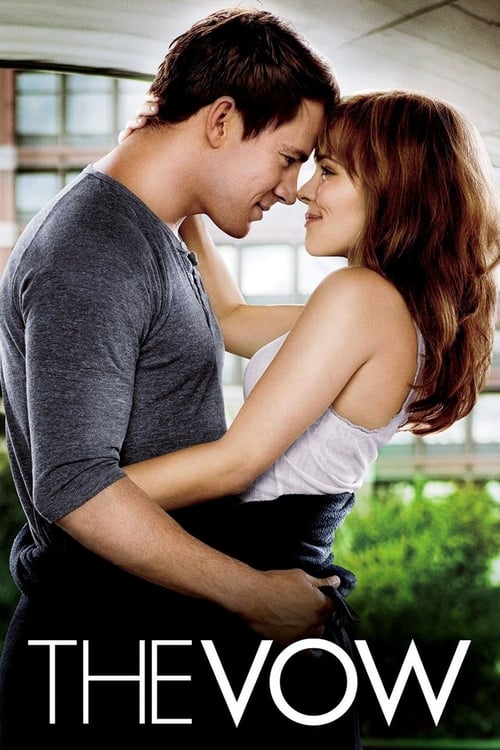
The Vow (2012)
Directed by Michael Sucsy
No — The Vow is not woke, scoring 6 out of 100 on our wokeness meter.
The Vow arrives in the long tradition of the February romance, a film engineered for the Valentine's Day crowd and duly rewarded at the box office.
Consciousness Markers
Paige is a woman with some agency in rebuilding her identity and pursuing art over law, but the film is a traditional heteronormative romance without a feminist thesis.
The cast is overwhelmingly white, with no meaningful effort at diverse representation; the story is a conventional white-centric romance.
The film is a straightforward tearjerker romance that plays its emotional beats rather than delivering didactic social messaging.
There are no LGBTQ+ characters or themes whatsoever; the narrative is exclusively heterosexual.
No engagement with race or racial politics; the story is entirely about a white couple's relationship.
No climate or environmental themes appear anywhere in the film.
No critique of capitalism or wealth; a Trader Joe's serves merely as a setting, not a statement.
No body positivity themes; the film is a conventional romance with no commentary on body image.
Amnesia and traumatic brain injury are depicted but not framed as neurodivergence or explored through a neurodiversity lens.
The film is loosely based on a real couple but makes no historical revisionist claims or reinterpretations.
Why it received this score
The Vow arrives in the long tradition of the February romance, a film engineered for the Valentine's Day crowd and duly rewarded at the box office. A salt truck, a coma, five erased years: the machinery is familiar, and director Michael Sucsy operates it with the solemnity of a man assembling a bookshelf from instructions. Channing Tatum broods handsomely. Rachel McAdams suffers beautifully. The snow falls on cue. What we have here is a weepie that knows its audience and asks nothing difficult of them.
The cultural inventory is thin. The cast is white, the romance is heterosexual, and the film shows no interest in expanding either fact. Paige does possess a flicker of self-determination, abandoning law school for sculpture and declining her ex-fiance's late appeal, which registers as a modest feminine gesture inside an otherwise traditional courtship narrative. It is not a thesis. It is a woman choosing clay over torts. Race goes unmentioned, the environment goes unmentioned, and a Trader Joe's appears purely so that a plot revelation can occur beside the frozen foods. No one eats the rich. No one discusses the body, the mind, or the planet.
Amnesia and traumatic brain injury drive the plot, though the film treats them as a device for generating longing, not as a window into how minds differ. The real Kim and Krickitt Carpenter inspired this, and the film rewrites their story freely without making any claim about history itself. The emotional beats land where they are supposed to land. Nobody lectures. The film wants tears, not converts, and on that narrow errand it succeeds well enough.
Analysis generated by our Consciousness Algorithm


Synopsis
Happy young married couple Paige and Leo are, well, happy. Then a car accident puts Paige into a life-threatening coma. Upon awakening she has lost the previous five years of memories, including those of her beloved Leo, her wedding, a confusing relationship with her parents, or the ending of her relationship with her ex-fiance. Despite these complications, Leo endeavors to win her heart again and rebuild their marriage.
Questions about The Vow
Is The Vow woke?
No — The Vow is not woke, scoring 6 out of 100 on our wokeness meter. That earns it a verdict of Ultra Based.
Does The Vow have any woke elements?
Very few. None of the 10 markers reaches 30, the level where a marker counts as present; the highest is Feminist Agenda at 12.
How does The Vow compare to other 2012 movies?
It ranks #128 of the 230 films from 2012 we've scored; their average is 12. The wokest is Killing Them Softly (92).
How is the Woke Score calculated?
An AI-assisted process researches the film and its reception, scores it 0–100 on ten markers, then combines those into one 0–100 Woke Score. It measures a specific set of 2020s cultural themes, not film quality.