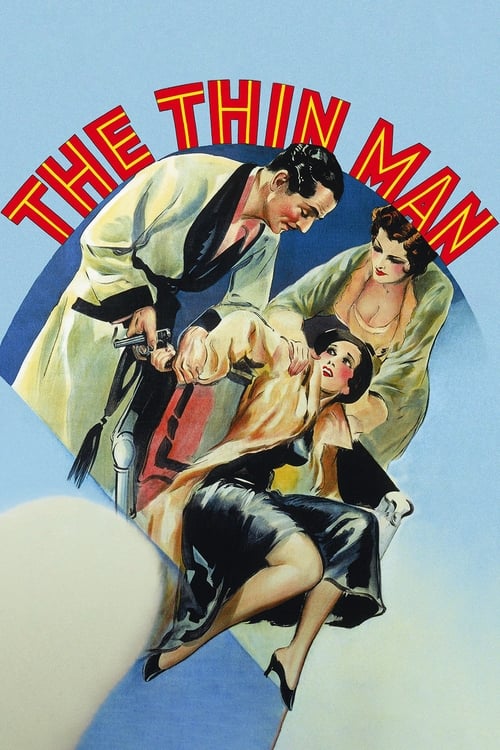
The Thin Man (1934)
Directed by W.S. Van Dyke
No — The Thin Man is not woke, scoring 0 out of 100 on our wokeness meter.
The Thin Man arrives from 1934 with a martini in each hand and no interest whatsoever in improving anyone.
Consciousness Markers
No deliberate modern representation casting; the cast reflects the default demographics of 1934 Hollywood.
No LGBTQ+ themes, characters, or subtext are present.
Nora is a witty and active wife, but the film does not advance a modern feminist agenda or critique patriarchal structures.
No engagement with racial consciousness, systemic racism, or racial identity.
No climate, environmental, or ecological themes appear.
Greed and embezzlement drive the mystery, but the film is not an eat-the-rich critique; wealth is mostly a backdrop for comedy.
No body positivity themes or messaging are present.
No neurodivergence themes or neurodiverse representation are present.
No revisionist history; the film is a contemporary 1934 mystery based on a then-recent novel.
No preachy lecture energy; the film prioritizes sparkling banter, cocktails, and mystery plotting.
Why it received this score
The Thin Man arrives from 1934 with a martini in each hand and no interest whatsoever in improving anyone. W.S. Van Dyke's comedy-mystery follows Nick and Nora Charles, a retired detective and his wealthy wife, through a Christmas holiday of cocktails, a wire-haired terrier, and a corpse with shrapnel in its leg. The screenplay, adapted from Dashiell Hammett's novel, exists to deliver banter at speed. Nick shoots ornaments off the tree. Nora matches him drink for drink and quip for quip. The mystery resolves at a dinner party where the oysters have begun to turn. This is a film about pleasure, and it is unapologetic about the matter.
Assessing the picture against contemporary progressive markers proves a brisk exercise in absence. The casting reflects the default demographics of 1934 Hollywood, and the film makes no comment on it. Race, sexuality, climate, and body image go entirely unaddressed. Nora is a witty, active, and thoroughly modern wife for her era, though the film has no interest in critiquing patriarchy. She is too busy enjoying herself. Greed drives the plot, since bonds are embezzled and a lawyer kills to protect an inheritance, but wealth here is a backdrop for comedy, not a target for indictment. Nobody lectures. The film has no thesis to advance and no audience to correct.
The result is a picture that predates the entire apparatus of contemporary cultural instruction and seems untroubled by that fact. It took no competitive Academy Award, though it was nominated for Best Picture and later preserved by the Library of Congress. Its pleasures are the pleasures of craft: timing, chemistry, and a director who shot first takes because actors lose their fire on the fourth. A viewer seeking moral instruction will find none here. A viewer seeking a martini recipe and a murder will do rather well.
Analysis generated by our Consciousness Algorithm


Synopsis
Former detective Nick Charles has retired from police work, preferring a life of cocktails, parties, and relaxation with his wealthy wife, Nora. Their holiday is interrupted when the daughter of Nick’s former client asks for help finding her missing father, eccentric inventor Clyde Wynant. When Wynant’s body is discovered, Nick is drawn back into the investigation, with Nora eagerly joining him. As the couple questions Wynant’s family, friends, and business associates, a tangled web of greed, deception, and murder begins to unravel.
Questions about The Thin Man
Is The Thin Man woke?
No — The Thin Man is not woke, scoring 0 out of 100 on our wokeness meter. That earns it a verdict of Ultra Based.
Does The Thin Man have any woke elements?
No. All 10 markers score zero.
How does The Thin Man compare to other 1934 movies?
It ranks #4 of the 4 films from 1934 we've scored; their average is 3. The wokest is L'Atalante (4).
How is the Woke Score calculated?
An AI-assisted process researches the film and its reception, scores it 0–100 on ten markers, then combines those into one 0–100 Woke Score. It measures a specific set of 2020s cultural themes, not film quality.