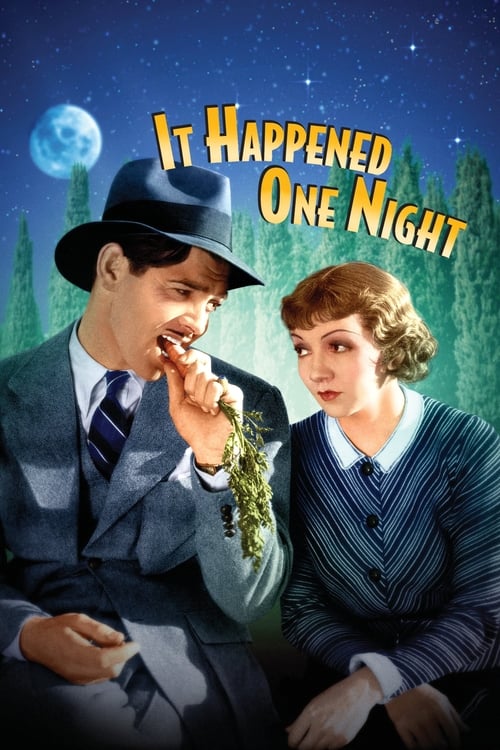
It Happened One Night (1934)
Directed by Frank Capra
No · Ultra Based
How we score movies →Consciousness Markers
Mild class critique through mockery of wealthy elites and celebration of working-class resourcefulness, but this is Depression-era populism rather than systematic anti-capitalist analysis.
The female lead is spirited and refuses to be controlled, which was notable for 1934, but her arc culminates in marriage as the ultimate goal. No interrogation of patriarchal structures.
Claudette Colbert was a major star and her character is competent, but the film makes no deliberate effort toward diverse representation. The cast is entirely white.
No LGBTQ+ themes or characters present. The narrative is entirely heteronormative romance.
No racial consciousness evident. The film depicts a world of white characters without acknowledgment of or engagement with racial dynamics.
No climate or environmental themes present. The narrative is entirely unconcerned with ecological questions.
No engagement with body positivity or fat acceptance. The film operates within conventional 1930s beauty standards without comment.
No representation of neurodivergent characters or themes. The concept would not emerge in cinema for decades.
Not a historical film. No attempt to reframe or reexamine historical events through contemporary lenses.
The film is entertainment first. While Capra's work often contained social commentary, it is woven into the narrative rather than presented as explicit instruction.


Synopsis
A runaway heiress makes a deal with the rogue reporter trailing her but the mismatched pair end up stuck with each other when their bus leaves them behind.
Why it received this score
Frank Capra's 1934 romantic comedy exists in a cinema world that predates the cultural vocabulary we now use to measure progressive consciousness. The film is notably competent: Claudette Colbert's heiress is spirited, witty, and refuses to be managed by either her father or her eventual love interest, which was refreshing for the era. The plot mechanics depend on class friction and the mockery of wealthy elites, tapping into Depression-era populist sentiment that Capra would explore throughout his career. Yet none of this constitutes what we might call modern progressive sensibility.
The representation of women here, while ahead of many contemporary films, operates within entirely different assumptions about gender, sexuality, and romance. Colbert's character is independent but her independence is ultimately framed as a stepping stone to marriage and domestic partnership. There are no marginalized communities present in meaningful ways, no interrogation of systemic inequality beyond surface-level class comedy, and certainly no awareness of the specific cultural consciousness that emerged nearly a century after this film's release.
We must be careful not to project backward, awarding points for being progressive in 1934 when we are measuring something entirely different. "It Happened One Night" is a well-crafted entertainment that happens to feature a capable female lead. This is not the same as cultural consciousness in the contemporary sense. The film deserves its historical reputation without requiring us to retrofit it into categories that did not exist in its moment.
Analysis generated by our Consciousness Algorithm
Critic Reviews
“It’s every goddamn romantic comedy you’ve ever seen. They can all be traced back here, virtually without exception, for eight straight decades now. Technically, the film has never been remade, but that’s largely because, in spirit, it has never stopped being remade. Something so perfectly structured can support nearly endless variations. It’s timeless.”
“As buoyant and elegant as bubbles in a glass of champagne, Frank Capra's sublime 1934 comedy, written by long-time collaborator Robert Riskin, survives triumphantly because of its wit, charm, romantic idealism and its shrewd sketch of married life.”
“The direction is excellent. Frank Capra never lets his picture lag for a moment. It is never very exciting, but it moves along snappily and it is full of amusing situations.”