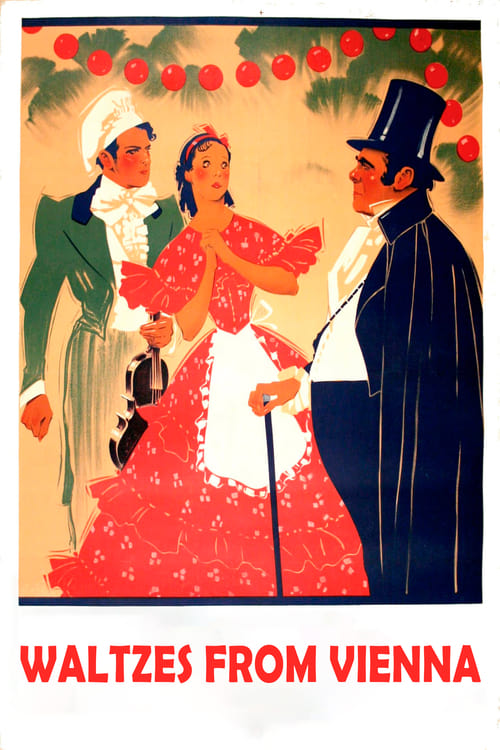
Waltzes from Vienna (1934)
Directed by Alfred Hitchcock
No · Ultra Based
How we score movies →Consciousness Markers
The film presents a fictionalized romantic account of Strauss's life and the composition of 'The Blue Danube,' prioritizing dramatic narrative over historical accuracy in minor ways.
The entire cast is white and European, reflecting the historical setting but showing no contemporary consciousness regarding representation or casting diversity.
No LGBTQ+ themes, characters, or subtext are present in this traditional romantic biography.
Female characters exist within conventional 1930s romantic dynamics as love interests and obstacles rather than autonomous agents with their own narrative weight.
The film contains no engagement with racial consciousness or any awareness of racial issues whatsoever.
No climate-related themes or environmental consciousness appear in this period romantic drama.
The film contains no critique of capitalism or class structures, despite the presence of wealthy and working-class characters.
No body positivity themes or discussions of body image are present in this 1934 film.
No neurodivergence representation or themes appear in the film.
The film contains no preachy lecturing about social issues or progressive values.

Synopsis
In Vienna, aspiring composer Johann Strauss Jr. clashes with his domineering father, who wants him to abandon music for a steady job in a bakery. Torn between his love for the baker's daughter, Resi, and the encouragement of a wealthy countess, Strauss finds inspiration that leads to the creation of "The Blue Danube."
Why it received this score
This 1934 Hitchcock confection remains a period piece in the most literal sense, a biographical operetta about the composition of "The Blue Danube" that concerns itself entirely with the romantic and professional tribulations of Johann Strauss Jr. The film operates within the aesthetic and social parameters of early 1930s British cinema, which is to say it concerns itself not at all with the progressive sensibilities that would not crystallize for another eight decades. The central dramatic tension revolves around Strauss choosing between music and family obligation, with the obligatory romantic entanglements between the baker's daughter and a wealthy countess serving as narrative scaffolding.
The cast is entirely white and European, which reflects historical accuracy for a film set in 19th century Vienna but also reflects the complete absence of any consciousness regarding representation or diversity. There are no LGBTQ+ themes, no racial consciousness, no feminist agenda that extends beyond the traditional romantic rivalry between two women competing for a man's affection. The film's treatment of its female characters, while not hostile, operates entirely within conventional 1930s parameters: women exist as romantic objects or obstacles, not as autonomous agents with their own narrative weight.
This is simply not a film concerned with modern social consciousness. It is a straightforward romantic biography set in a European court, interested in music, melodrama, and the conflict between artistic passion and filial duty. To score it for markers that would not exist in cultural discourse for another seventy years would be absurd. It represents the baseline of pre-modern cinema, and it should be judged as such.
Analysis generated by our Consciousness Algorithm
Critic Reviews
“This anomaly of a musical biopic is one of Hitchcock's few weak films that even he did not like.”
“Charmingly screened British-Gaumont picture which dramatizes the creation of the Strauss waltz.”
“The perception of it as a fumbled trifle is dismissed as soon as Hitchcock lays out the artist's dilemma: 'Either you're a musician, or a confectioner.'”
“Dull costume drama directed by a young Alfred Hitchcock during what he has called 'the lowest ebb' of his career.”