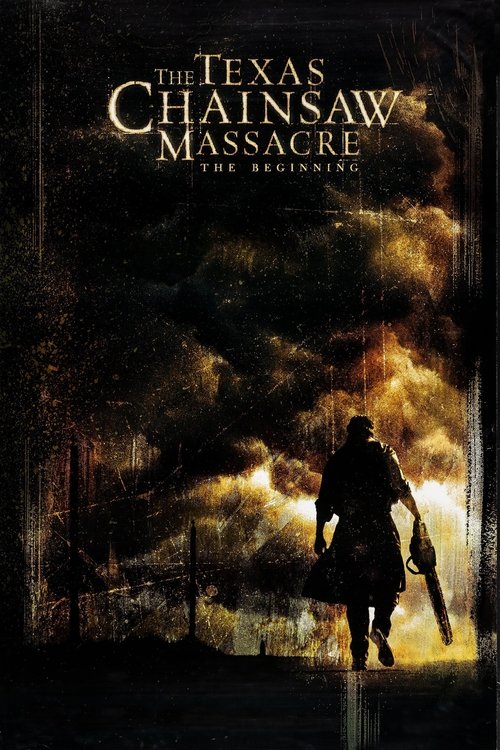
The Texas Chainsaw Massacre: The Beginning (2006)
Directed by Jonathan Liebesman
No — The Texas Chainsaw Massacre: The Beginning is not woke, scoring 0 out of 100 on our wokeness meter.
The Texas Chainsaw Massacre: The Beginning arrives as a prequel to the 2003 remake, and it carries the weary confidence of a franchise that has already run out of fresh terrors.
Consciousness Markers
The cast is overwhelmingly white, with no meaningful representation casting choices or diverse ensemble framing.
No LGBTQ+ characters, themes, or subtext appear anywhere in the film.
Female characters exist as standard slasher victims and a final-girl survivor, but the film advances no feminist agenda or commentary.
No engagement with racial consciousness or racial themes; the Vietnam-era setting is used only for period texture.
No environmental or climate themes whatsoever.
The slaughterhouse closure and 'decay of the American dream' imagery are aesthetic mood-setting, not an anti-capitalist critique.
No body positivity themes; the film trades in gore and dismemberment, not body-acceptance messaging.
Leatherface is portrayed as a monstrous killer, not as a neurodivergent character framed with awareness or sensitivity.
The 1969 setting and Vietnam draft subplot are period backdrop, not historical revisionism.
The film makes no attempt to lecture or moralize; it is a straightforward exercise in sadistic horror.
Why it received this score
The Texas Chainsaw Massacre: The Beginning arrives as a prequel to the 2003 remake, and it carries the weary confidence of a franchise that has already run out of fresh terrors. In 1969, two brothers and their girlfriends drive toward Vietnam enlistment, cross paths with a biker gang, and end up at the Hewitt homestead. Young Leatherface learns his trade. Meat hooks, chainsaws, and a dinner table follow. The film has no interest in social instruction. It wants to hurt its characters and unsettle its audience. That is the whole agenda.
The slaughterhouse closure could be mistaken for an economic lament, but the film treats it as atmosphere. The Vietnam draft is period texture, not historical revision. The cast is overwhelmingly white, and the film has no racial argument to make. The women are slasher victims and one final girl, with no feminist argument attached. Leatherface is a monster, not a sensitive portrait of neurodivergence. There is no LGBTQ subtext, no climate concern, no body-acceptance message. The film does not lecture. It simply revs the engine and lets the blood spatter.
By the closing scene, Leatherface walks home triumphant, and the film has said nothing beyond its own cruelty. It does not ask us to rethink capitalism, history, identity, or the human condition. It asks us to watch. That is a legitimate horror ambition, though not a socially conscious one. As a cultural document, it is remarkably free of modern progressive signifiers. It is ugly, efficient, and utterly uninterested in being good for us. The chainsaw remains the only thesis.
Analysis generated by our Consciousness Algorithm


Synopsis
Chrissie and her friends set out on a road trip for a final fling before one is shipped off to Vietnam. Along the way, bikers harass the foursome and cause an accident that throws Chrissie from the vehicle. The lawman who arrives on the scene kills one of the bikers and brings Chrissie's friends to the Hewitt homestead, where young Leatherface is learning the tools of terror.
Questions about The Texas Chainsaw Massacre: The Beginning
Is The Texas Chainsaw Massacre: The Beginning woke?
No — The Texas Chainsaw Massacre: The Beginning is not woke, scoring 0 out of 100 on our wokeness meter. That earns it a verdict of Ultra Based.
Does The Texas Chainsaw Massacre: The Beginning have any woke elements?
No. All 10 markers score zero.
How does The Texas Chainsaw Massacre: The Beginning compare to other 2006 movies?
It ranks #177 of the 211 films from 2006 we've scored; their average is 11. The wokest is An Inconvenient Truth (92).
How is the Woke Score calculated?
An AI-assisted process researches the film and its reception, scores it 0–100 on ten markers, then combines those into one 0–100 Woke Score. It measures a specific set of 2020s cultural themes, not film quality.