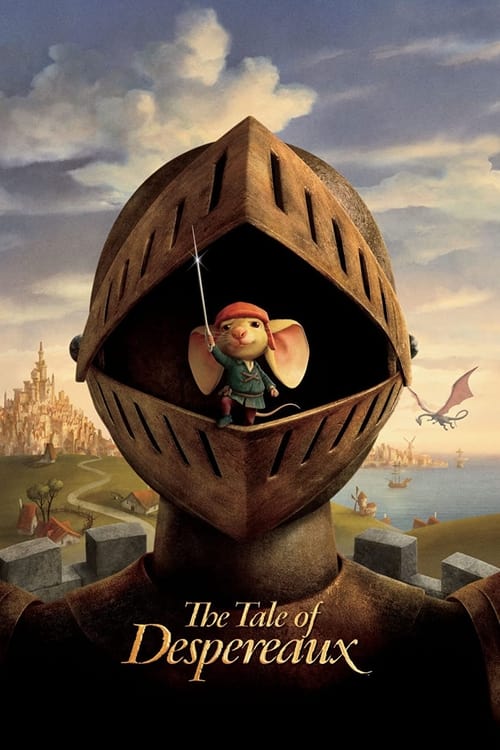
The Tale of Despereaux (2008)
Directed by Sam Fell
No — The Tale of Despereaux is not woke, scoring 3 out of 100 on our wokeness meter.
The Tale of Despereaux arrives from 2008, a year when animated features could still concern themselves with soup.
Consciousness Markers
The voice cast and character roster are overwhelmingly white, with no deliberate inclusive or race-conscious casting choices.
There are no LGBTQ+ characters, relationships, or themes in the film.
Female characters exist, including Princess Pea and Mig, but the film does not advance a feminist agenda or critique patriarchy.
The film contains no racial themes, commentary, or consciousness.
There is no environmental or climate-related messaging in the story.
The king's ban on soup creates hardship, but the film does not critique capitalism or wealth inequality.
Despereaux's oversized ears are a distinguishing trait, but the film does not engage with body positivity as a social theme.
Despereaux is different from other mice, but his bravery and curiosity are not framed as neurodivergence.
The film is a fantasy tale and does not revise or reinterpret historical events.
The story offers gentle moral lessons about forgiveness and courage, but it does not deliver modern social-justice lectures.
Why it received this score
The Tale of Despereaux arrives from 2008, a year when animated features could still concern themselves with soup. The kingdom of Dor loses its queen to a rat in a bowl, the grieving king bans broth and rodents alike, and the realm sinks into damp misery. A mouse with oversized ears reads books and dreams of knighthood. A rat with a conscience wants to apologize. There is a deaf servant girl who longs to be a princess, a jailer who is her father, and a genie who lives in a cooking pot. The film is loosely adapted from Kate DiCamillo's novel. It keeps the gentleness and discards the shape, and it imports no contemporary instruction whatsoever.
Consider the ledger. The cast is almost entirely white and almost entirely British, a fact the film treats as unremarkable. Princess Pea and Mig exist as characters, not arguments, and the film never interrogates the arrangement that puts one above the other. Despereaux's ears are a running visual gag and a mark of his difference, but the story frames that difference as courage, which is a virtue the mouse council finds inconvenient, not a category of identity. The rats live under a warlike regime, and the film's objection to it is moral, not economic. When the king lifts his ban and the rain stops, we are watching a fable about grief and forgiveness, the oldest machinery in the storytelling shed.
The result is a film made in a different cultural decade, because it was. It has a tabby cat, a heart-shaped locket, and a climactic beam of sunlight, and it asks nothing beyond a mild sympathy for small creatures who want to be brave. Critics at the time found it handsome and thin. Audiences agreed, more or less, and the box office was unkind. We are left with a pleasant, well-drawn artifact whose moral instruction is confined to the proposition that soup should be legal. That is a position we can all endorse.
Analysis generated by our Consciousness Algorithm


Synopsis
Once upon a time... in the far away kingdom of Dor... lived a brave and virtuous mouse with comically oversized ears who dreamt of becoming a knight. Banished from his home for having such lofty ambitions, Despereaux sets off on an amazing adventure with his good-hearted rat friend Roscuro, who leads him, at long last, on a very noble quest to rescue an endangered princess and save an entire kingdom from darkness.
Questions about The Tale of Despereaux
Is The Tale of Despereaux woke?
No — The Tale of Despereaux is not woke, scoring 3 out of 100 on our wokeness meter. That earns it a verdict of Ultra Based.
Does The Tale of Despereaux have any woke elements?
No. All 10 markers score zero.
How does The Tale of Despereaux compare to other 2008 movies?
It ranks #160 of the 212 films from 2008 we've scored; their average is 12. The wokest is Milk (68).
How is the Woke Score calculated?
An AI-assisted process researches the film and its reception, scores it 0–100 on ten markers, then combines those into one 0–100 Woke Score. It measures a specific set of 2020s cultural themes, not film quality.