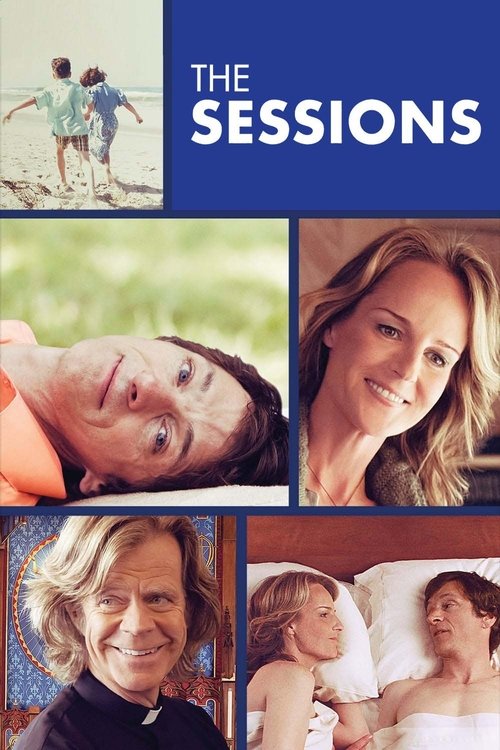
The Sessions (2012)
Directed by Ben Lewin
No — The Sessions is not especially woke, scoring 29 out of 100 on our wokeness meter.
The Sessions, directed by Ben Lewin, arrives with the weight of a true story and the lightness of a chamber piece.
Consciousness Markers
The film and its cast openly foreground body acceptance, including Hunt's commentary about loving one's body and the mikvah scene's 'This is the body God has crafted for you.' Unapologetic full nudity of a middle-aged woman carries a genuine body-positivity thread.
The film is centered almost entirely on a severely disabled protagonist and his sexual agency, which is meaningful disability representation. However, the role was ultimately given to able-bodied John Hawkes after disabled actors were auditioned and reportedly 'didn't feel quite right,' capping the score.
Helen Hunt's Cheryl is a self-possessed, sex-positive professional woman with genuine complexity, and the film treats her work and agency seriously. There is no explicit feminist thesis driving the narrative, so the score stays modest.
The film is widely described as understated, tender, and light-hearted rather than preachy; its themes are explored through character rather than sermon. Some critics even felt it softened the source's complexity rather than lecturing about it.
The film contains no LGBTQ+ characters or themes. O'Brien's essays are described as taking a 'crip/queer' academic perspective, but that framing is absent from the screen.
Race is not a meaningful theme in the film; the cast and story are essentially all white, with no engagement with racial consciousness whatsoever.
A power outage serves as a third-act plot device (to fail the iron lung), not as any commentary on climate or environment.
There is no economic critique or class-based theme in the film; its focus is entirely personal and relational.
The protagonist's condition is a physical disability (polio/paralysis), not neurodivergence, and no character is depicted with neurodivergent traits as a focus.
It is a true story but makes no attempt to revise or reinterpret established history; it simply dramatizes a documented personal experience.
Why it received this score
The Sessions, directed by Ben Lewin, arrives with the weight of a true story and the lightness of a chamber piece. Mark O'Brien, a poet confined to an iron lung after childhood polio, decides at thirty-eight to lose his virginity. He hires a sex surrogate, Cheryl Cohen-Greene, and the film follows their six sessions with a tenderness that borders on the clinical. John Hawkes gives a remarkable performance, though the decision to cast an able-bodied actor in a role that disabled actors auditioned for leaves a residue of discomfort.
Helen Hunt's Cheryl is the film's most compelling figure. She is a professional sex surrogate, a wife, a mother, and a woman comfortable with her own desires. The script grants her complexity without turning her into a symbol. Hunt's willingness to appear fully nude, a middle-aged woman's body presented without apology, carries a genuine message of body acceptance. The mikvah scene, where an attendant tells her 'This is the body God has crafted for you,' is the film's most direct statement on self-love. Yet the film stops short of any explicit feminist argument. It observes Cheryl's agency but does not theorize it. The source material's 'crip/queer' perspective is nowhere on screen. There is no LGBTQ content, no racial consciousness, no environmental or economic critique. The film is resolutely personal, a study of a man's late sexual awakening.
The Sessions is a true story, but it makes no attempt to revise history. It simply dramatizes a documented experience. There is no neurodivergent focus, as the protagonist's condition is physical. The film's tone is understated and tender, praised by critics for being light-hearted and accessible. It avoids sermonizing. The priest, Father Brendan, offers platitudes that a reviewer compared to the self-help section of a bookstore, but the film itself does not lecture. Its social consciousness is modest, centered on disability and body acceptance. It is a gentle, well-acted chamber piece that earns its emotional beats without pounding a drum.
Analysis generated by our Consciousness Algorithm


Synopsis
Though a childhood bout with polio left him dependent on an iron lung, Mark O'Brien maintains a career as a journalist and poet. A writing assignment dealing with sex and the disabled piques Mark's curiosity, and he decides to investigate the possibility of experiencing sex himself. When his overtures toward a caregiver scare her away, he books an appointment with sex surrogate Cheryl Cohen-Greene to lose his virginity.
Questions about The Sessions
Is The Sessions woke?
No — The Sessions is not especially woke, scoring 29 out of 100 on our wokeness meter. That earns it a verdict of Based.
Does The Sessions have any woke elements?
2 of the 10 markers register at 30 or above, led by Body Positivity (58) and Representation Casting (50). On Body Positivity: The film and its cast openly foreground body acceptance, including Hunt's commentary about loving one's body and the mikvah scene's 'This is the body God has crafted for you.' Unapologetic full nudity of a middle-aged woman carries a genuine body-positivity thread.
How does The Sessions compare to other 2012 movies?
It ranks #24 of the 230 films from 2012 we've scored; their average is 12. The wokest is Killing Them Softly (92).
How is the Woke Score calculated?
An AI-assisted process researches the film and its reception, scores it 0–100 on ten markers, then combines those into one 0–100 Woke Score. It measures a specific set of 2020s cultural themes, not film quality.