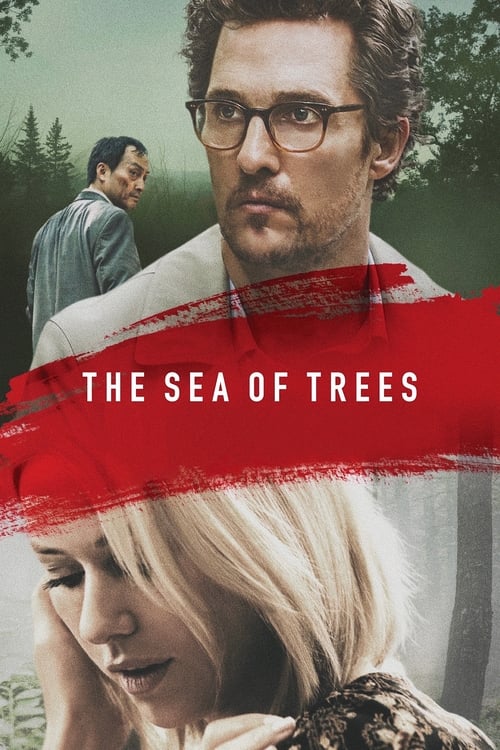
The Sea of Trees (2016)
Directed by Gus Van Sant
No — The Sea of Trees is not especially woke, scoring 20 out of 100 on our wokeness meter.
Gus Van Sant's Sea of Trees presents a protracted meditation on grief and marital malaise that ultimately achieves little more than a sense of sentimental exhaustion.
Consciousness Markers
Ken Watanabe is second-billed and the film features Japanese supporting actors and a Japanese setting, though the narrative remains centered on a white American protagonist.
The film is heavily sentimental and moralizing about grief, love, and appreciating one's spouse, with a mystical purgatory lesson.
No LGBTQ+ characters or themes are present.
Naomi Watts's character is largely defined by marital resentment, alcoholism, and terminal illness; the film offers no feminist critique or agenda.
The film does not engage with racial identity or systemic racism; the Japanese setting functions as a mystical backdrop rather than racial commentary.
No environmental or climate themes are present.
A demotion at work motivates Takumi's despair, but the film does not mount an anti-capitalist argument.
No body positivity themes are present.
No neurodivergence themes are present.
The film is a fictional contemporary story with no historical revisionism.
Why it received this score
Gus Van Sant's Sea of Trees presents a protracted meditation on grief and marital malaise that ultimately achieves little more than a sense of sentimental exhaustion. The narrative relies heavily on the lush backdrop of Aokigahara to facilitate its emotional arc, yet the film remains stubbornly resistant to contemporary social introspection. We observe a protagonist navigating a profoundly sorrowful journey, but the storytelling avoids any meaningful engagement with racial dynamics or systemic social critiques. The Japanese setting serves merely as a picturesque stage for a domestic tragedy. The film’s core themes of despair and reconciliation are delivered with a high degree of moral earnestness, though it never elevates these personal failings into a broader commentary on societal structures or progressive sensibilities.
The film’s attempt at profound emotional resonance relies on a heavy dose of earnest sentiment. While there is a degree of effort in its international casting, the central character remains resolutely defined by his internal struggles. The narrative offers no insight into feminist perspectives on domestic life or explores any intersectional issues concerning identity. This focus on spiritual purgatory is a deeply preachy endeavor, wrapped in the glossy aesthetic of the forest. It is a film built on the premise that a man's guilt is the only thing that matters, a narrow perspective that feels both dated and ultimately uninspired. The only real achievement here is the sheer endurance required to watch it.
This is a meditation on sorrow, nothing more. It is a predictable exercise in longing and forgiveness. The journey ends with the protagonist planting a flower in a garden, a gesture that feels painfully obvious after two hours of philosophical wandering. The sheer lack of friction or unexpected social commentary renders the entire experience tedious. The production delivers a slow-motion tragedy, one that finds its greatest strength in its atmosphere rather than its thematic complexity.
Analysis generated by our Consciousness Algorithm


Synopsis
In Japan's Aokigahara Forest, a troubled teacher meets a mysterious lost stranger who takes him on a life-changing journey of love and redemption.
Questions about The Sea of Trees
Is The Sea of Trees woke?
No — The Sea of Trees is not especially woke, scoring 20 out of 100 on our wokeness meter. That earns it a verdict of Based.
Does The Sea of Trees have any woke elements?
1 of the 10 markers register at 30 or above, led by Representation Casting (40). On Representation Casting: Ken Watanabe is second-billed and the film features Japanese supporting actors and a Japanese setting, though the narrative remains centered on a white American protagonist.
How does The Sea of Trees compare to other 2016 movies?
It ranks #78 of the 285 films from 2016 we've scored; their average is 16. The wokest is 13th (92).
How is the Woke Score calculated?
An AI-assisted process researches the film and its reception, scores it 0–100 on ten markers, then combines those into one 0–100 Woke Score. It measures a specific set of 2020s cultural themes, not film quality.