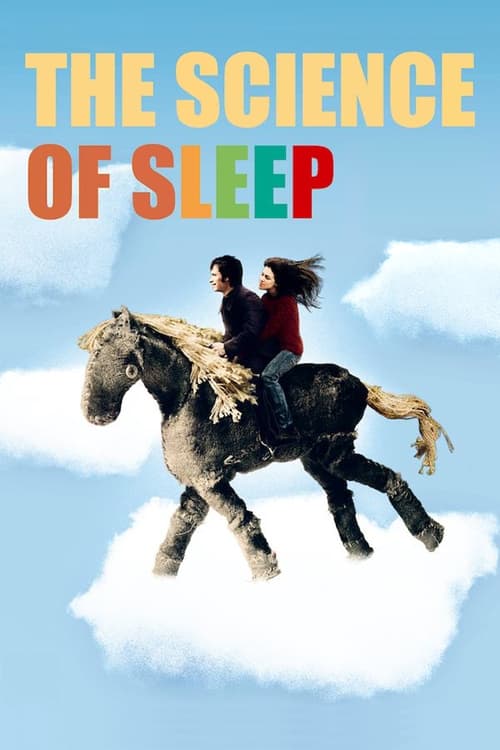
The Science of Sleep (2006)
Directed by Michel Gondry
No — The Science of Sleep is not woke, scoring 0 out of 100 on our wokeness meter.
Michel Gondry's The Science of Sleep arrives from 2006, a year when a filmmaker could still build a feature around a man whose hands swell to enormous size in his sleep and call it a love story.
Consciousness Markers
The cast is international, but the film does not frame this as representation or comment on diversity.
There are no LGBTQ+ themes or characters in the film.
Female characters are present and artistic, but the film does not advance a feminist agenda or critique patriarchy.
Race and racial identity are not addressed in the film.
There is no environmental or climate-related content.
The protagonist is frustrated by unfulfilling office work, but this is personal creative dissatisfaction rather than an anti-capitalist critique.
The film does not engage with body positivity or body-image themes.
Stéphane’s dream life and social awkwardness are surreal character traits, not framed as neurodivergence.
The film does not revise or reinterpret historical events.
The film is whimsical and personal rather than preachy or message-driven.
Why it received this score
Michel Gondry's The Science of Sleep arrives from 2006, a year when a filmmaker could still build a feature around a man whose hands swell to enormous size in his sleep and call it a love story. Gael García Bernal plays Stéphane, a shy illustrator who moves from Mexico to Paris, takes a typesetting job his mother arranged, and falls for the artistic neighbor one wall away. The film drifts between his dreams and his waking hours with no interest in telling us which is which. A calendar company, a toy pony, a one-second time machine, a band of people in cat costumes. The inventory is whimsical and the inventory is the point.
The film carries no message, and this is not a complaint. Stéphane's social clumsiness and his elaborate interior life are presented as the texture of a particular man, not as a condition to be diagnosed or a lesson to be delivered. His frustration at the calendar office reads as one artist's disappointment, not an indictment of labor or capital. His mother works, his neighbor works, and the film observes all of it without argument. The cast is international by accident of production, and the film lets that fact sit there unremarked. Nobody in this story is asked to represent anyone.
Two decades on, the picture feels like a relic of a different dispensation, one in which a director could follow a private dream logic to its end and trust an audience to come along. Critics at the time called it messy, and they were right, though the mess is deliberate and the beauty is real. This is a film that preaches nothing, corrects nothing, and improves no one. It simply dreams, and asks us to watch. The classification is straightforward. A clean slate, and a rare one.
Analysis generated by our Consciousness Algorithm


Synopsis
A man entranced by his dreams and imagination is lovestruck with a French woman and feels he can show her his world.
Questions about The Science of Sleep
Is The Science of Sleep woke?
No — The Science of Sleep is not woke, scoring 0 out of 100 on our wokeness meter. That earns it a verdict of Ultra Based.
Does The Science of Sleep have any woke elements?
No. All 10 markers score zero.
How does The Science of Sleep compare to other 2006 movies?
It ranks #177 of the 211 films from 2006 we've scored; their average is 11. The wokest is An Inconvenient Truth (92).
How is the Woke Score calculated?
An AI-assisted process researches the film and its reception, scores it 0–100 on ten markers, then combines those into one 0–100 Woke Score. It measures a specific set of 2020s cultural themes, not film quality.