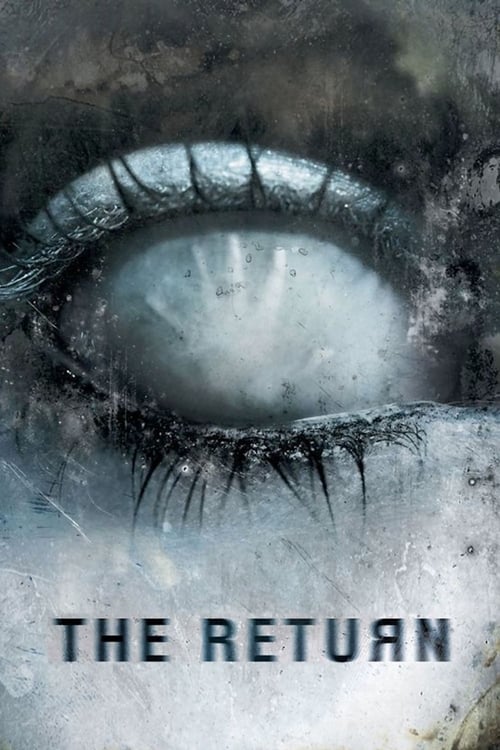
The Return (2006)
Directed by Asif Kapadia
No — The Return is not woke, scoring 3 out of 100 on our wokeness meter.
Asif Kapadia's The Return arrives from 2006, a psychological horror film about a trucking-company representative named Joanna Mills who is haunted by visions of a murder she never witnessed.
Consciousness Markers
A female protagonist exists, but she is a conventional horror victim/avenger with no feminist thesis or gendered critique driving the narrative.
The cast is overwhelmingly white, led by Sarah Michelle Gellar, with no meaningful diverse representation and no commentary on it.
No LGBTQ+ characters, themes, or subtext appear anywhere in the film.
The film engages no racial themes or consciousness whatsoever; the Texas setting and cast are uniformly white.
No environmental or climate themes are present.
No economic critique or anti-capitalist messaging; the corporate trucking job is mere backdrop.
The film depicts self-mutilation and bodily harm as horror imagery, the opposite of any body-positivity message.
The protagonist's visions and self-harm are framed as supernatural/psychological horror, not as a neurodivergence-affirming narrative.
No historical revisionism; the story is a fictional supernatural thriller with no real-history subject matter.
The film delivers no moralizing or social messaging; it is a slow-burn supernatural mystery with no lecture.
Why it received this score
Asif Kapadia's The Return arrives from 2006, a psychological horror film about a trucking-company representative named Joanna Mills who is haunted by visions of a murder she never witnessed. Sarah Michelle Gellar plays her with a weary competence. The Texas setting is flat, the pace is glacial, and the film collected a 15 percent rating on Rotten Tomatoes before quietly vanishing from the conversation. We have seen many such curiosities. This one is notable chiefly for how little it asks of the culture around it.
On the matter of social consciousness, the film is a vacuum. The cast is uniformly white and the screenplay never pauses to notice. No LGBTQ+ presence, no racial reckoning, no environmental lament, no economic critique of the trucking concern that employs our heroine. The body appears here as a site of self-mutilation and dread, which is the opposite of any affirmation. Visions and self-harm are framed as supernatural affliction, not as neurodivergence. No history gets rewritten. No sermon gets delivered. The film wants only to unsettle us, and mostly fails at that too.
A single faint signal remains. Joanna is a woman with a career, a stalker, and an estranged father, and she eventually takes a recovered knife to her own attacker. That is a female protagonist doing female-protagonist things. It is not a thesis. No gendered argument organizes the plot, no critique of the men who stalk and kill. She avenges a dead woman because a soul or a memory compels her, not because the film holds any position on women at all. The whole enterprise is a slow, somber exercise in atmosphere with nothing attached to it. We classify it accordingly, and we move on.
Analysis generated by our Consciousness Algorithm


Synopsis
Joanna Mills has a successful career but feels her personal life is spinning out of control. She has few friends, an estranged father, and a crazy ex-boyfriend who is stalking her. Joanna begins having terrifying visions of a woman's murder, and it seems that she is the killer's next target. Determined to solve the mystery and escape her apparent fate, Joanna follows her visions to the victim's hometown and finds that some secrets just do not stay buried.
Questions about The Return
Is The Return woke?
No — The Return is not woke, scoring 3 out of 100 on our wokeness meter. That earns it a verdict of Ultra Based.
Does The Return have any woke elements?
Very few. None of the 10 markers reaches 30, the level where a marker counts as present; the highest is Feminist Agenda at 5.
How does The Return compare to other 2006 movies?
It ranks #164 of the 211 films from 2006 we've scored; their average is 11. The wokest is An Inconvenient Truth (92).
How is the Woke Score calculated?
An AI-assisted process researches the film and its reception, scores it 0–100 on ten markers, then combines those into one 0–100 Woke Score. It measures a specific set of 2020s cultural themes, not film quality.