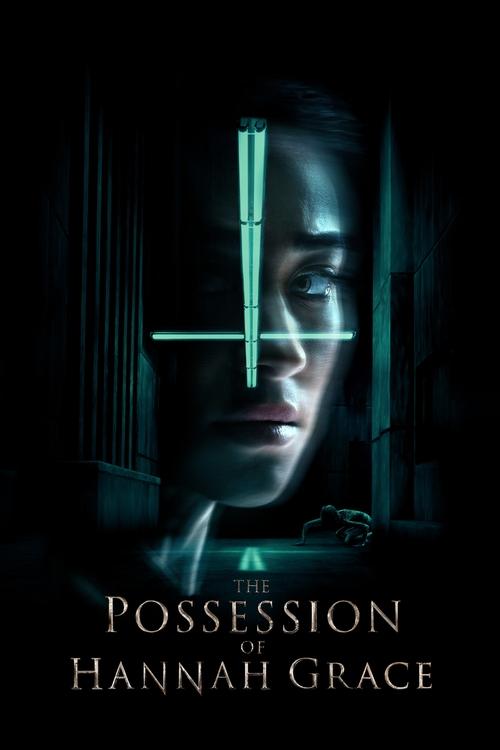
The Possession of Hannah Grace (2018)
Directed by Diederik Van Rooijen
No — The Possession of Hannah Grace is not woke, scoring 8 out of 100 on our wokeness meter.
The Possession of Hannah Grace arrives as a modest specimen: a 2018 supernatural chiller from Screen Gems, shot for a reported $7.7 million, blessed with a 22 percent approval rating, and dismissed by most critics as a stitched-together mess.
Consciousness Markers
Shay Mitchell, of Filipino descent, headlines as the troubled ex-cop protagonist, and Jacob Ming-Trent appears as a security guard, but the film casts diversely without ever commenting on it.
A woman anchors the film as both protagonist and demonic antagonist, but the gender dynamics are pure genre mechanics with no feminist argument attached.
No LGBTQ+ characters, relationships, or themes appear anywhere in the film.
Race is never raised, examined, or thematized; the film is a straightforward supernatural thriller.
No environmental themes or climate concerns are present.
The hospital morgue setting carries no critique of capitalism, privatization, or wealth.
The film's treatment of the body is strictly horror imagery—corpses, burns, and self-healing flesh—with no body-positive messaging.
Depression and pill addiction function as plot devices explaining the demon's foothold and Megan's arc, not as neurodivergent representation or advocacy.
The film makes no historical claims and revises no historical record.
There is no moralizing or sermonizing; the film is a lean, cliché-driven exorcism chiller interested only in scares.
Why it received this score
The Possession of Hannah Grace arrives as a modest specimen: a 2018 supernatural chiller from Screen Gems, shot for a reported $7.7 million, blessed with a 22 percent approval rating, and dismissed by most critics as a stitched-together mess. It concerns Megan Reed, an ex-Boston cop fresh from rehab, who takes the graveyard shift in a hospital morgue and finds her newest intake, a burned and stabbed young woman named Hannah Grace, refusing to stay respectfully dead. The film is lean, cheap in a budget-conscious way, and entirely uninterested in the moral instruction of its audience.
On the matter of representation, the film casts with a certain quiet diversity. Shay Mitchell, of Filipino descent, headlines as the troubled protagonist, and Jacob Ming-Trent appears as a hospital security guard. Neither performance arrives carrying a thesis. The film simply casts, and moves on, declining to remark upon what it has done. A woman anchors the story as both hero and demonic vessel, which is pleasant enough, though the arrangement owes everything to genre mechanics and nothing to argument. Depression and pill addiction supply the demon with its foothold and Megan with her arc, functioning as plot furniture instead of advocacy.
Elsewhere the ledger is bare. No LGBTQ characters appear. Race goes unexamined. The brutalist morgue, portrayed by Boston City Hall, is a fine piece of architecture and not a critique of anything. There is no sermon here, no lecture, no finger wagging. The film wants only to make us jump, and mostly fails, per the consensus. We are left with a corpse that heals itself with each kill, a father with a pillow, and a final fly landing on a mirror. It is not a meaningful film. It is not trying to be.
Analysis generated by our Consciousness Algorithm


Synopsis
When a cop who is just out of rehab takes the graveyard shift in a city hospital morgue, she faces a series of bizarre, violent events caused by an evil entity in one of the corpses.
Questions about The Possession of Hannah Grace
Is The Possession of Hannah Grace woke?
No — The Possession of Hannah Grace is not woke, scoring 8 out of 100 on our wokeness meter. That earns it a verdict of Ultra Based.
Does The Possession of Hannah Grace have any woke elements?
Very few. None of the 10 markers reaches 30, the level where a marker counts as present; the highest is Representation Casting at 25.
How does The Possession of Hannah Grace compare to other 2018 movies?
It ranks #217 of the 325 films from 2018 we've scored; their average is 20. The wokest is Return (92).
How is the Woke Score calculated?
An AI-assisted process researches the film and its reception, scores it 0–100 on ten markers, then combines those into one 0–100 Woke Score. It measures a specific set of 2020s cultural themes, not film quality.