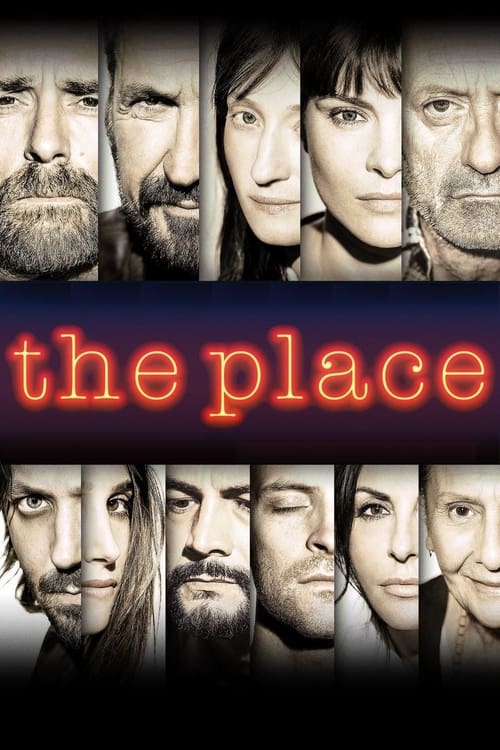
The Place (2017)
Directed by Paolo Genovese
No — The Place is not woke, scoring 0 out of 100 on our wokeness meter.
Paolo Genovese, fresh from the triumph of Perfect Strangers, chose for his follow-up a single table in a cheap restaurant and nine strangers who queue up to sit at it.
Consciousness Markers
The film is a philosophical moral parable that poses the question of how far one would go to get what one wants, but its lecture energy is existential and ethical rather than a modern social-justice sermon.
The cast is entirely Italian and white, with no diversity-conscious casting choices or commentary on representation.
No LGBTQ+ characters, relationships, or themes appear anywhere in the Faustian-pact narrative.
Female characters exist (the nun, the waitress, the young woman), and Angela ultimately assumes the mysterious man's role, but this is a narrative twist rather than a feminist statement; the tasks assigned to women are dark moral dilemmas, not empowerment.
The film engages no racial themes or commentary; the moral dilemmas are universal and colorblind in framing.
No environmental or climate themes are present in this dialogue-driven moral parable.
The film concerns ethical and spiritual bargains, not economic critique or class warfare; capitalism is not a subject.
Martina's wish to become more beautiful touches on beauty standards, but it is treated as a dark Faustian temptation rather than a body-positivity message.
A character's husband suffers from Alzheimer's, but this is depicted as illness rather than a neurodivergence-affirming theme.
No historical revisionism or reframing of past events is present.
Why it received this score
Paolo Genovese, fresh from the triumph of Perfect Strangers, chose for his follow-up a single table in a cheap restaurant and nine strangers who queue up to sit at it. A man in a business suit keeps a thick leather notebook and an expensive pen. He grants wishes. He asks for tasks in return. A police officer must beat a man bloody. A nun who has lost her faith must get pregnant. A blind man must rape a woman. An elderly widow must assemble a bomb and set it off in a crowd. The film is a closed-room exercise in moral arithmetic, and it plays its cards with a straight face.
The engine here is theological, not sociological. Every bargain is Faustian, and the questions raised are ancient ones about sin, duty, and the price of desire. The film has no interest in auditing the viewer's politics. The cast is entirely Italian and white, and nobody remarks on it. The dilemmas are colorblind in framing. No economic critique hides in the restaurant's modest prices. No climate anxiety. No LGBTQ subplot. No affirmation of any kind. A character's husband has Alzheimer's, and the film treats this as illness and grief instead of an identity to be honored. Martina wants to be more beautiful, and her wish is a trap, not a commentary on beauty standards. The film's ethical universe is older than the decade that produced it.
The ending belongs to Angela, the waitress, who takes the notebook, takes the pen, and assumes the man's post at the empty table while a torn page burns in the ashtray. The succession is a twist of fate, not a statement of empowerment. The film does lecture, in its way, and its sermon concerns the soul. It asks how far a person would go to get what they want, then declines to answer, which is the oldest trick in the parable business. Genovese's camera never leaves the room, and neither does his argument. The result is a tidy, chilly exercise in ethical brinkmanship, well acted and unbothered by the cultural weather of 2017.
In the ledger of contemporary sensitivities, this one is a blank page. It is a well-made film about damnation, and damnation, as ever, remains apolitical. I scored it accordingly and went home to a light supper.
{"thematic_tags": []}
Analysis generated by our Consciousness Algorithm

Synopsis
The fates of an apparently random group of strangers who each come into contact with a mysterious figure who they believe possesses the power to grant any wish, in return for which they must carry out a task he assigns them.
Questions about The Place
Is The Place woke?
No — The Place is not woke, scoring 0 out of 100 on our wokeness meter. That earns it a verdict of Ultra Based.
Does The Place have any woke elements?
Very few. None of the 10 markers reaches 30, the level where a marker counts as present; the highest is Lecture Energy at 10.
How does The Place compare to other 2017 movies?
It ranks #281 of the 309 films from 2017 we've scored; their average is 19. The wokest is I Am Not Your Negro (92).
How is the Woke Score calculated?
An AI-assisted process researches the film and its reception, scores it 0–100 on ten markers, then combines those into one 0–100 Woke Score. It measures a specific set of 2020s cultural themes, not film quality.