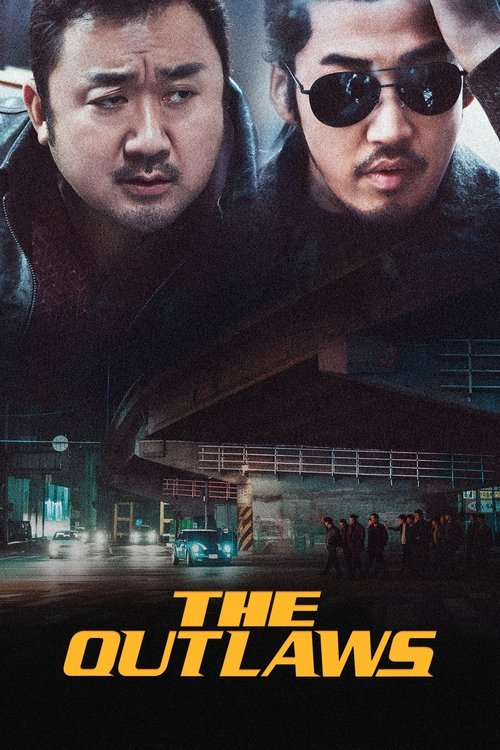
The Outlaws (2017)
Directed by Kang Yun-sung
No — The Outlaws is not woke, scoring 3 out of 100 on our wokeness meter.
The Outlaws arrives with a title that promises a great deal and delivers a man punching a car.
Consciousness Markers
An entirely Korean cast in a Korean production is the natural default, not a deliberate diversity initiative; the Chinese-Korean characters are framed as menacing outsiders rather than as representation.
Ethnic tension between Korean and Chinese-Korean gangs exists as plot machinery, but the film treats the Joseonjok as feral villains rather than engaging any racial-justice consciousness.
The film delivers punches, not sermons; there is no didactic messaging or moralizing to the audience.
No LGBTQ+ characters, themes, or subtext of any kind.
A hyper-masculine cops-and-gangsters brawl with no feminist framing; women appear only in passing roles such as a fiancée or a merchant.
No environmental or climate themes whatsoever.
Loan sharks and gangsters are simply criminals to be punched, not a critique of capitalism or wealth inequality.
Ma Dong-seok's imposing physique is deployed as brute force, not as any body-positivity statement.
No neurodivergent characters or themes.
Drawn from real 2004 and 2007 Garibong-dong gang incidents, but presented as straightforward crime drama rather than a revisionist reframing of history.
Why it received this score
The Outlaws arrives with a title that promises a great deal and delivers a man punching a car. This 2017 South Korean crime picture concerns Detective Ma Seok-do, a slab of a human being patrolling the Garibong-dong district in 2004, who finds himself mediating between two Chinese-Korean gangs until a third and considerably worse gang arrives to take everything. It draws on actual police files from 2004 and 2007, which the film treats as a supply of raw material for fistfights. Nothing in the runtime addresses the environment, the economy, or the human condition beyond the human condition of being struck repeatedly in the head.
The cast is uniformly Korean, which in a Korean production is not a statement so much as a payroll. Chinese-Korean characters appear as feral invaders, and the film has no interest in their circumstances beyond how efficiently they can be subdued. No queer presence. No feminist argument. No body-positivity platform, no neurodivergent interiority. Ma Dong-seok's physique is deployed as a battering ram and nothing more. The picture adds a light historical dimension by sourcing real incidents, though it reframes nothing and critiques nothing. It simply stages the events with better lighting.
The film ends with a commissioner congratulating everyone while a new case waits on the phone. The sequel machinery is already turning. There is no lecture, no sermon, no invitation to examine our assumptions about anything at all. A meat-and-potatoes genre exercise, executed with competence and zero interest in the cultural conversation of the present decade. Its only real provocation is its complete indifference.
Analysis generated by our Consciousness Algorithm


Synopsis
In Chinatown, law and order is turned upside down when a trio of feral Chinese gangsters arrive, start terrorizing civilians, and usurping territory. The beleaguered local gangsters team up with the police, lead by the badass loose cannon Ma Seok-do, to bring them down. Based on a true story.
Questions about The Outlaws
Is The Outlaws woke?
No — The Outlaws is not woke, scoring 3 out of 100 on our wokeness meter. That earns it a verdict of Ultra Based.
Does The Outlaws have any woke elements?
Very few. None of the 10 markers reaches 30, the level where a marker counts as present; the highest is Representation Casting at 8.
How does The Outlaws compare to other 2017 movies?
It ranks #272 of the 309 films from 2017 we've scored; their average is 19. The wokest is I Am Not Your Negro (92).
How is the Woke Score calculated?
An AI-assisted process researches the film and its reception, scores it 0–100 on ten markers, then combines those into one 0–100 Woke Score. It measures a specific set of 2020s cultural themes, not film quality.