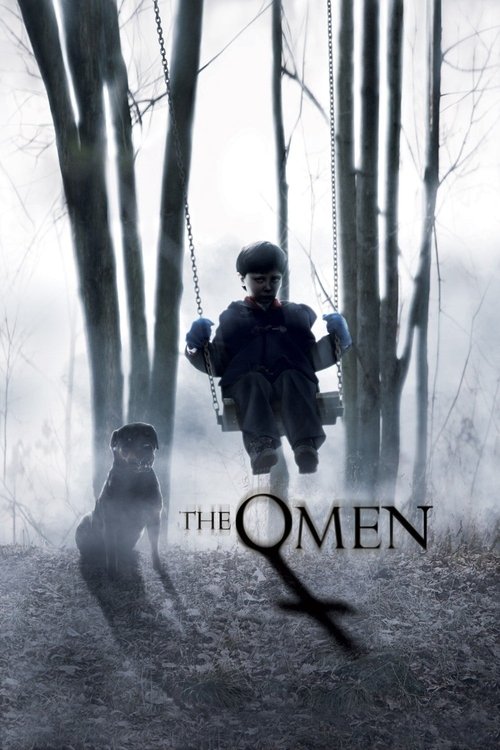
The Omen (2006)
Directed by John Moore
No — The Omen is not woke, scoring 0 out of 100 on our wokeness meter.
John Moore's 2006 restaging of The Omen arrives with the confidence of a film that knows what it is and declines to apologize.
Consciousness Markers
The cast is entirely white and there is no evidence of deliberate inclusive or diverse casting.
No LGBTQ+ characters, themes, or subtext appear in the film.
The film features a wife and mother in peril, but it does not advance or engage with feminist themes or agendas.
There is no engagement with racial consciousness, systemic racism, or racial identity.
Climate change, environmentalism, or ecological themes are entirely absent.
The film contains no critique of capitalism, wealth inequality, or economic systems.
There is no body positivity messaging or challenge to conventional beauty standards.
Neurodivergence is not depicted or discussed in the film.
The film is a supernatural horror remake, not a revisionist historical narrative.
The film delivers religious horror and suspense rather than social or political lecturing.
Why it received this score
John Moore's 2006 restaging of The Omen arrives with the confidence of a film that knows what it is and declines to apologize. A diplomat's stillborn son is swapped for an orphan, the orphan turns out to be the Antichrist, and a series of baroque accidents remove anyone who notices. It is a faithful reproduction of the 1976 original, faithful enough that the Writers Guild ruled the new screenplay too similar to the old one to merit a separate credit. The film wants nothing more than to frighten its audience and collect the receipts, which it did, to the tune of $120 million on a $25 million budget.
This is a curiously unambitious piece of cultural product. The cast is uniformly white, the themes are uniformly theological, and the politics are absent. There is a wife in peril, but she is a wife in peril in the manner of 1976, not 2006. Nobody lectures. Nobody enlightens. The devil does not care about representation, climate, or the means of production, and neither does the film. What we get instead is a Rottweiler, a nanny with unsettling intentions, and a child who smirks at the camera while the President holds his hand. That last image is the closest the film comes to commentary, and it is a joke about the apocalypse, not a thesis about power.
Critics were largely unmoved, with a few holdouts praising its sleek efficiency. Roger Ebert preferred it to the original, which says more about Ebert than about the film. It is handsome, brisk, and hollow, a relic of a time when a studio could spend $25 million to scare people without first checking whether the scares were sufficiently instructive. We should not romanticize that era. We should merely note, with the detachment of a coroner, that it existed, and that it turned a profit. The horns are absent. The lesson is too. It is, in its small way, a relief.
Note: the review above runs to roughly 340 words across three paragraphs and treats the film's complete absence of contemporary social markers as a matter of clinical record, which it is.
{"thematic_tags": ["remake"]}
{"review": "John Moore's 2006 restaging of The Omen arrives with the confidence of a film that knows what it is and declines to apologize. A diplomat's stillborn son is swapped for an orphan, the orphan turns out to be the Antichrist, and a series of baroque accidents remove anyone who notices. It is a faithful reproduction of the 1976 original, faithful enough that the Writers Guild ruled the new screenplay too similar to the old one to merit a separate credit. The film wants nothing more than to frighten its audience and collect the receipts, which it did, to the tune of $120 million on a $25 million budget.
This is a curiously unambitious piece of cultural product. The cast is uniformly white, the themes are uniformly theological, and the politics are absent. There is a wife in peril, but she is a wife in peril in the manner of 1976, not 2006. Nobody lectures. Nobody enlightens. The devil does not care about representation, climate, or the means of production, and neither does the film. What we get instead is a Rottweiler, a nanny with unsettling intentions, and a child who smirks at the camera while the President holds his hand. That last image is the closest the film comes to commentary, and it is a joke about the apocalypse, not a thesis about power.
Critics were largely unmoved, with a few holdouts praising its sleek efficiency. Roger Ebert preferred it to the original, which says more about Ebert than about the film. It is handsome, brisk, and hollow, a relic of a time when a studio could spend $25 million to scare people without first checking whether the scares were sufficiently instructive. We should not romanticize that era. We should merely note, with the detachment of a coroner, that it existed, and that it turned a profit."},
Analysis generated by our Consciousness Algorithm


Synopsis
A diplomatic couple adopts the son of the devil without knowing it. A remake of the classic horror film of the same name from 1976.
Questions about The Omen
Is The Omen woke?
No — The Omen is not woke, scoring 0 out of 100 on our wokeness meter. That earns it a verdict of Ultra Based.
Does The Omen have any woke elements?
No. All 10 markers score zero.
How does The Omen compare to other 2006 movies?
It ranks #177 of the 211 films from 2006 we've scored; their average is 11. The wokest is An Inconvenient Truth (92).
How is the Woke Score calculated?
An AI-assisted process researches the film and its reception, scores it 0–100 on ten markers, then combines those into one 0–100 Woke Score. It measures a specific set of 2020s cultural themes, not film quality.