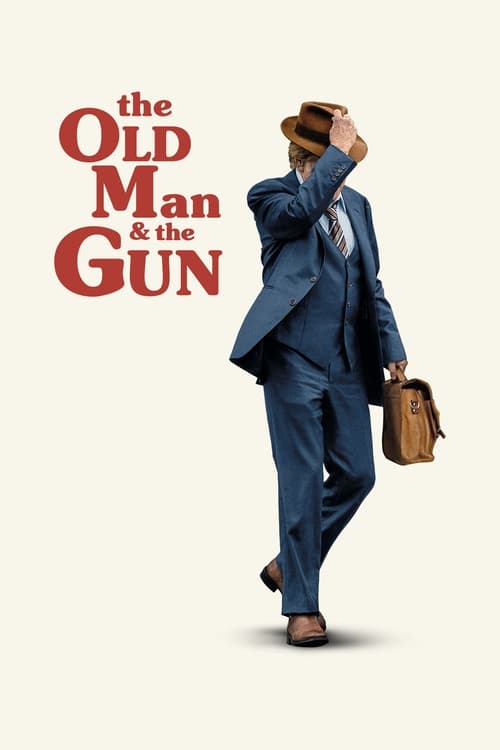
The Old Man & the Gun (2018)
Directed by David Lowery
No — The Old Man & the Gun is not woke, scoring 7 out of 100 on our wokeness meter.
The Old Man & the Gun is a gentle period picaresque about Forrest Tucker, an elderly bank robber, and Robert Redford's farewell to the screen.
Consciousness Markers
The cast includes Danny Glover, Tika Sumpter, and John David Washington in supporting roles, but their presence is unremarked and incidental to a period crime story centered on a white protagonist.
Sissy Spacek's Jewel is a quietly self-possessed woman with her own farm and agency, but the film is a male-centered character study with no feminist argument to make.
Forrest robs banks and is mildly thwarted by mortgage bureaucracy, but the heists are played as charming mischief rather than class warfare or an indictment of capital.
The film is a gentle, unhurried character piece with essentially no preaching or moral instruction.
No LGBTQ+ characters, themes, or subtext appear anywhere in the film.
The film engages no racial themes whatsoever; it is a nostalgic white-outlaw picaresque set in 1980s Texas.
No environmental or climate content of any kind.
No body-positivity themes; the film's only physical motif is the novelty of an elderly man still pulling heists.
No neurodivergent characters or themes are present.
The film is a faithful, affectionate adaptation of a true story rather than a revisionist reframing of history.
Why it received this score
The Old Man & the Gun is a gentle period picaresque about Forrest Tucker, an elderly bank robber, and Robert Redford's farewell to the screen. It has no interest in arguing with you. Lowery treats 1980s Texas as a soft-focus postcard. The film's politics are almost homeopathic. Danny Glover, Tika Sumpter, and John David Washington appear in supporting roles, but their presence is unremarked. They occupy the frame without the film making a civic announcement about it. This is representation by occupancy, not by sermon.
Sissy Spacek's Jewel owns a farm and carries herself with quiet self-possession, but the movie remains a male-centered character study. She is a warm adult in a film about a charming man's last ride. There is no LGBTQ content, no racial consciousness, no climate crusade, no body positivity, and no neurodivergence. The bank robbing is played as mischief, not an indictment of capital. Mortgage paperwork is a minor obstacle to a romantic gesture, which is as close as the film comes to class conflict. The true-story material is treated with affection, not revisionist reframing.
Lecture energy is near zero. The film never stops to explain virtue. It is nostalgic and soft, maybe too pleased with Redford's smile. The closest it gets to a thesis is that some men cannot stop being themselves, which is not a political program. As a cultural artifact, it is a low-temperature item: pleasant, well acted, and nearly free of contemporary sermonizing. It asks nothing of us except to watch a legend exit with grace. That is a modest ask, and the film meets it.','thematic_tags':['true_story']}{
Analysis generated by our Consciousness Algorithm


Synopsis
The true story of Forrest Tucker, from his audacious escape from San Quentin at the age of 70 to an unprecedented string of heists that confounded authorities and enchanted the public. Wrapped up in the pursuit are a detective, who becomes captivated with Forrest’s commitment to his craft, and a woman, who loves him in spite of his chosen profession.
Questions about The Old Man & the Gun
Is The Old Man & the Gun woke?
No — The Old Man & the Gun is not woke, scoring 7 out of 100 on our wokeness meter. That earns it a verdict of Ultra Based.
Does The Old Man & the Gun have any woke elements?
Very few. None of the 10 markers reaches 30, the level where a marker counts as present; the highest is Representation Casting at 20.
How does The Old Man & the Gun compare to other 2018 movies?
It ranks #233 of the 325 films from 2018 we've scored; their average is 20. The wokest is Return (92).
How is the Woke Score calculated?
An AI-assisted process researches the film and its reception, scores it 0–100 on ten markers, then combines those into one 0–100 Woke Score. It measures a specific set of 2020s cultural themes, not film quality.