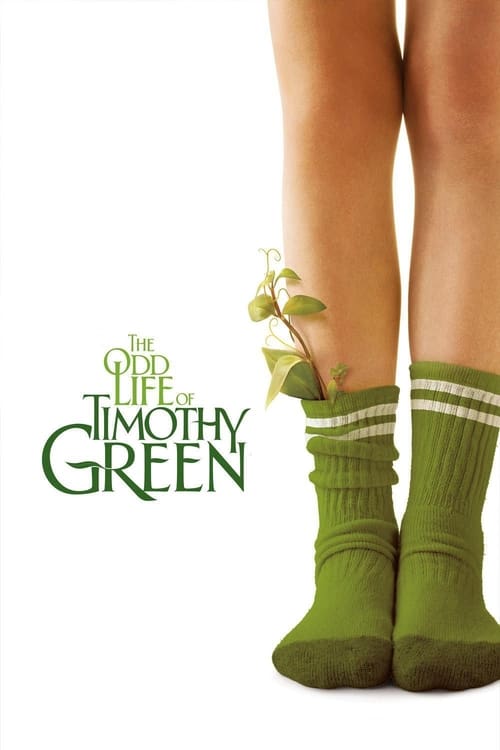
The Odd Life of Timothy Green (2012)
Directed by Peter Hedges
No — The Odd Life of Timothy Green is not woke, scoring 0 out of 100 on our wokeness meter.
The Odd Life of Timothy Green arrives from Walt Disney Pictures in 2012 with a premise that sounds like a fable workshopped by a greeting card company.
Consciousness Markers
Supporting cast includes actors of color, but they exist naturally in the story without any commentary or deliberate representation framing; no modern representation-casting marker.
No LGBTQ+ characters, themes, or subtext.
The film centers on a heterosexual couple's desire for a child and adoption; no feminist agenda or gender-power critique.
No engagement with racial identity, systemic racism, or racial consciousness.
Nature and leaves are magical/fantasy elements, not a climate crusade or environmentalist message.
The pencil-factory layoffs are treated as a local community problem to solve through ingenuity, not as an anti-capitalist indictment of wealth or class.
Timothy's leaves are a magical secret, not a body-positivity narrative about accepting diverse bodies.
Timothy's oddness is supernatural, not a depiction of neurodivergence or neurodiversity advocacy.
No historical revisionism; the story is a contemporary fantasy fable.
The film is sentimental and family-friendly but does not lecture the audience on modern social-justice themes.
Why it received this score
The Odd Life of Timothy Green arrives from Walt Disney Pictures in 2012 with a premise that sounds like a fable workshopped by a greeting card company. A childless couple bury their hopes in a box, a storm answers, and a boy with leaves on his legs appears. Peter Hedges directs with soft light and sincere intentions. The result is sentimental, occasionally cloying, and entirely convinced of its own warmth. It is the kind of film where a pencil factory layoff becomes an opportunity for family ingenuity, not a reason to interrogate capital.
On the question of contemporary social consciousness, the film is a quiet zero across the board. Its supporting cast includes actors of color, but they exist inside the story without commentary, which is representation as background texture, not thesis. There are no LGBTQ themes, no feminist critique of the family structure, no racial consciousness, no climate crusade. Timothy's leaves are magical, not a metaphor for body acceptance or environmental stewardship. His oddness is supernatural, not a study of neurodivergence. The narrative treats the pencil factory as a community problem solved by a better pencil, so any anti-capitalist reading would be a critical imposition.
What remains is an old-fashioned family weepie with Capra aspirations and a mixed critical reception. It wants us to believe in wonder, adoption, and the transformative power of a polite child. That is humanist, not progressive in the modern sense. The film never lectures, never updates its cultural vocabulary, and never asks the audience to examine systems of power. It is too busy being nice. For a certain kind of viewer, that niceness is enough. For the rest of us, it is a reminder that sentimentality can be its own form of anesthesia.
Analysis generated by our Consciousness Algorithm
Part of


Synopsis
A childless couple bury a box in their backyard, containing all of their wishes for an infant. Soon, a child is born, though Timothy Green is not all that he appears.
Questions about The Odd Life of Timothy Green
Is The Odd Life of Timothy Green woke?
No — The Odd Life of Timothy Green is not woke, scoring 0 out of 100 on our wokeness meter. That earns it a verdict of Ultra Based.
Does The Odd Life of Timothy Green have any woke elements?
No. All 10 markers score zero.
How does The Odd Life of Timothy Green compare to other 2012 movies?
It ranks #193 of the 230 films from 2012 we've scored; their average is 12. The wokest is Killing Them Softly (92).
How is the Woke Score calculated?
An AI-assisted process researches the film and its reception, scores it 0–100 on ten markers, then combines those into one 0–100 Woke Score. It measures a specific set of 2020s cultural themes, not film quality.