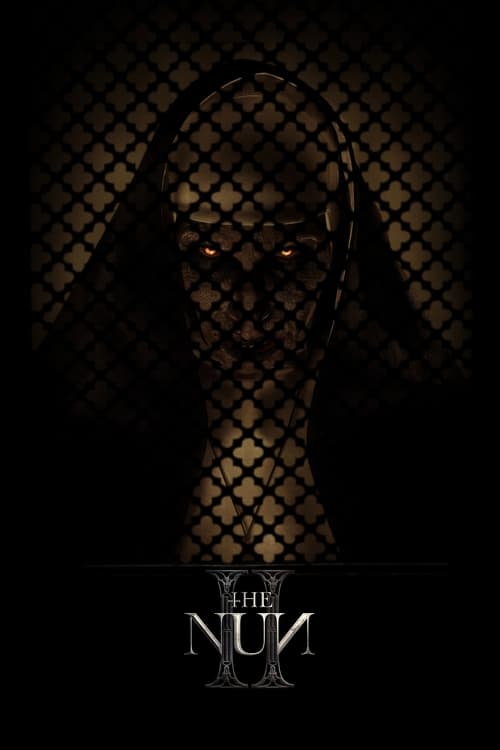
The Nun II (2023)
Directed by Michael Chaves
No — The Nun II is not woke, scoring 13 out of 100 on our wokeness meter.
The Nun II arrives as the eighth installment in a franchise that has, by now, developed the reliable metabolism of a chain restaurant.
Consciousness Markers
The cast includes Storm Reid as a novice nun and a largely female ensemble, but the diversity is incidental to the horror premise rather than a self-conscious representational statement.
Two women (Sister Irene and Sister Debra) drive the investigation and climax, but this is inherent to the nun premise rather than an articulated feminist thesis.
The film is a straightforward supernatural horror with no preachy messaging or moralizing aside from generic religious imagery.
No LGBTQ+ characters, themes, or subtext appear anywhere in the film.
A Black actress appears in a lead role in a 1956 French setting, but the film makes no comment on race, racism, or racial identity whatsoever.
No environmental or climate themes are present in this gothic demonic-possession horror.
No economic critique, class commentary, or anti-wealth messaging appears in the film.
No body-positive themes or messaging about body image are present.
No neurodivergent characters or themes of neurodiversity are explored.
The film uses a 1956 French setting and Catholic martyr lore (St. Lucy) purely as horror atmosphere, with no revisionist reframing of history.
Why it received this score
The Nun II arrives as the eighth installment in a franchise that has, by now, developed the reliable metabolism of a chain restaurant. Michael Chaves directs with competence and no particular urgency, sending Sister Irene (Taissa Farmiga) into 1956 France to investigate a priest who has been set ablaze by the demon Valak. The film knows its business: dark corridors, deconsecrated chapels, a stained-glass goat whose eyes glow red when the sun cooperates. It is a haunted clock, and it ticks.
Storm Reid appears as Sister Debra, a novice who accompanies Irene on the investigation, and the ensemble is largely female. This deserves a modest acknowledgment and nothing further. The film never pauses to announce what it is doing, because it is not doing anything in that register. There is no commentary on race, no engagement with the religious politics of its setting, no romantic subtext, no environmental lament, no economic grievance. The demon is simply a demon. The 1956 backdrop and the martyrdom of St. Lucy function as texture, not as argument. When a horror film declines to lecture, the silence is itself a data point.
Where the film lands is in the register of pure mechanism. The climax converts wine barrels into the blood of Christ and banishes the demon through prayer, which is spectacle rather than sermon. Critics were mixed, audiences graded it a C+, and it nonetheless opened at number one and cleared $269 million worldwide. The franchise endures. The demon returns. Nobody learns anything, least of all the viewer, and the film seems content with that arrangement.
Thematic tags: sequel, box_office_number_one.
Analysis generated by our Consciousness Algorithm


Synopsis
In 1956 France, a priest is violently murdered, and Sister Irene begins to investigate. She once again comes face-to-face with a powerful evil.
Questions about The Nun II
Is The Nun II woke?
No — The Nun II is not woke, scoring 13 out of 100 on our wokeness meter. That earns it a verdict of Ultra Based.
Does The Nun II have any woke elements?
Very few. None of the 10 markers reaches 30, the level where a marker counts as present; the highest is Representation Casting at 25.
How does The Nun II compare to other 2023 movies?
It ranks #128 of the 200 films from 2023 we've scored; their average is 24. The wokest is Origin (84).
How is the Woke Score calculated?
An AI-assisted process researches the film and its reception, scores it 0–100 on ten markers, then combines those into one 0–100 Woke Score. It measures a specific set of 2020s cultural themes, not film quality.