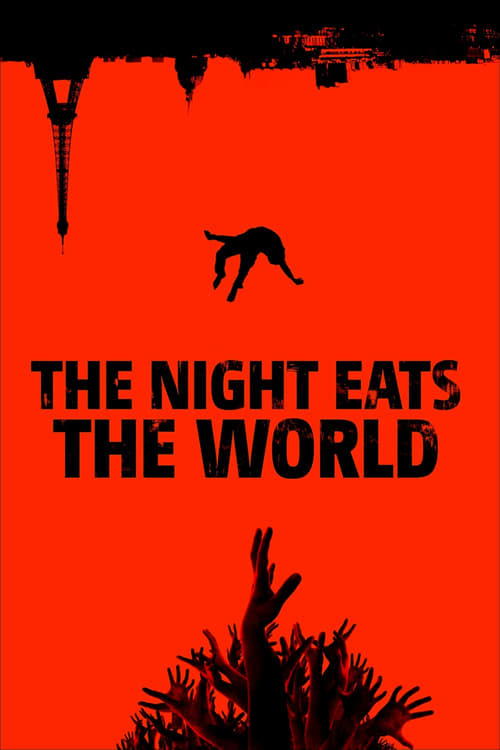
The Night Eats the World (2018)
Directed by Dominique Rocher
No — The Night Eats the World is not woke, scoring 6 out of 100 on our wokeness meter.
The Night Eats the World arrives from France with a title that promises appetite and a film that delivers mostly silence.
Consciousness Markers
The cast includes Iranian-French actress Golshifteh Farahani and Norwegian lead Anders Danielsen Lie, but this is natural international casting for a French production with no commentary on identity or representation.
Sarah is a resourceful rooftop-traveling survivor, but the film offers no feminist thesis or gendered critique; she functions as a plot device and possible hallucination for Sam's arc.
No LGBTQ+ characters, themes, or subtext appear anywhere in the film.
Race is never addressed or thematized; the apocalypse is raceless and the film makes no racial commentary.
The zombie outbreak has no climate or environmental framing whatsoever.
No economic critique or eat-the-rich messaging; the film is a solitary survival study.
No body-positivity themes or messaging present.
Sam's loneliness and hallucinations are depicted as psychological deterioration from isolation, not as neurodivergence framed positively or as identity.
No historical events are reinterpreted or revised.
The film is a quiet, atmospheric, near-dialogue-free meditation with no didactic messaging or moralizing.
Why it received this score
The Night Eats the World arrives from France with a title that promises appetite and a film that delivers mostly silence. Dominique Rocher's 2018 adaptation of Pit Agarman's novel follows Sam, played by Anders Danielsen Lie, who sleeps through a party and wakes to a Paris overrun by fast, quiet undead. The cast includes Golshifteh Farahani and Denis Lavant, and this international assembly is unremarkable for a French production. Nobody in the film discusses identity, heritage, or representation. The apocalypse here is raceless and untheorized. There are no LGBTQ characters or themes. The climate is not a concern. The outbreak has no environmental origin or message. Capitalism is not indicted. The building Sam fortifies is simply a building, not a symbol of late-stage anything.
Sarah, played by Farahani, crosses rooftops with a grapple hook and offers practical advice. She is capable. She is also a plot device and possibly a hallucination, which means the film cannot sustain a feminist argument even if it wanted to. No gendered critique organizes the narrative. Race never enters the conversation. Body positivity does not apply to a story about rationing supplies and avoiding infection. Sam's deteriorating mental state reads as isolation psychosis, not as neurodivergence presented for affirmation. History is not revised. The dead are not metaphors for colonialism, patriarchy, or carbon emissions. They are just dead, and they are hungry.
Most importantly, the film refuses to lecture. It is nearly dialogue-free, patient, and atmospheric. There are no speeches, no moralizing voiceovers, no scenes designed to instruct the audience on proper social conduct. The camera watches Sam talk to a zombified man named Alfred, play drums in defiance, and mourn a woman who may never have been there. This is a survival study with an emphasis on loneliness. The result is a low score on the cultural consciousness ledger, not because the film is bad, but because it is indifferent to the concerns that drive modern sermonizing. It wants to chill us, not educate us. That restraint is its own quiet virtue.
Analysis generated by our Consciousness Algorithm


Synopsis
After waking up to find himself all alone in an apartment where a massive party was being held the night before, Sam is immediately forced to face a terrifying reality: the living dead have invaded the streets of Paris.
Questions about The Night Eats the World
Is The Night Eats the World woke?
No — The Night Eats the World is not woke, scoring 6 out of 100 on our wokeness meter. That earns it a verdict of Ultra Based.
Does The Night Eats the World have any woke elements?
Very few. None of the 10 markers reaches 30, the level where a marker counts as present; the highest is Representation Casting at 12.
How does The Night Eats the World compare to other 2018 movies?
It ranks #244 of the 325 films from 2018 we've scored; their average is 20. The wokest is Return (92).
How is the Woke Score calculated?
An AI-assisted process researches the film and its reception, scores it 0–100 on ten markers, then combines those into one 0–100 Woke Score. It measures a specific set of 2020s cultural themes, not film quality.