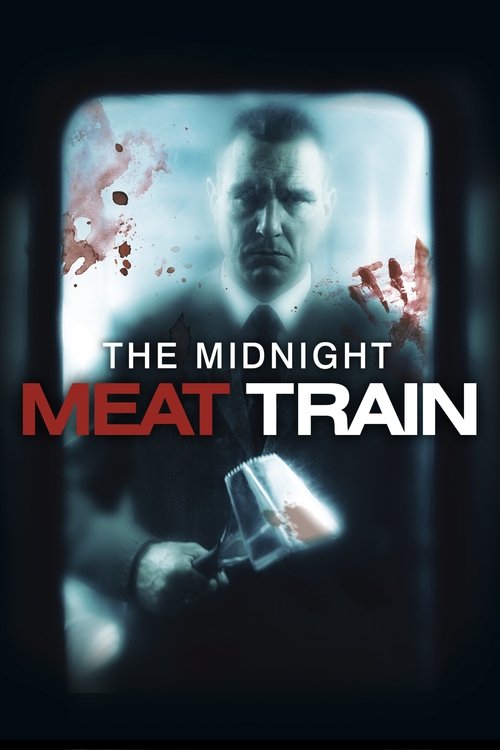
The Midnight Meat Train (2008)
Directed by Ryuhei Kitamura
No — The Midnight Meat Train is not woke, scoring 2 out of 100 on our wokeness meter.
A photographer with an appetite for grit wanders the late-night subway, finds a butcher in a suit, and ends up feeding something ancient beneath the city.
Consciousness Markers
The cast is predominantly white with one Black supporting character, but the film makes no comment on representation or diversity. Minority presence is incidental and not framed as a progressive casting statement.
There are no LGBTQ+ characters, relationships, or themes in the film.
Female characters exist mainly as a girlfriend, a gallery owner, and a detective, but the film advances no feminist critique or agenda. The girlfriend is ultimately fridged to motivate the male protagonist.
The film does not engage with race, racism, or racial identity as themes. A Black detective appears in a functional role without any racial commentary.
There is no environmental or climate-related messaging in the film.
The art-world criticism of Leon's photography is incidental and not part of an anti-capitalist or eat-the-rich thesis.
The film's treatment of bodies is grotesque and horrific, with no body-positive or size-acceptance themes.
Leon's obsession is presented as psychological deterioration, not as neurodivergence or neurodiversity representation.
The film is a supernatural horror story and does not revise or reinterpret historical events.
The film is a gory horror adaptation with no preachy or didactic social messaging.
Why it received this score
A photographer with an appetite for grit wanders the late-night subway, finds a butcher in a suit, and ends up feeding something ancient beneath the city. Ryuhei Kitamura's adaptation of Clive Barker's 1984 short story arrives in 2008 with hooks, femurs, and a finale involving reptiles and an abrupt career change. It is a splatter film with a meat-packing aesthetic and no interest whatsoever in improving anyone.
This bears stating plainly, because a modern viewer conditioned to extract a lesson from every text will find nothing to extract here. The cast is largely white; a Black detective named Hadley functions as a plot device and is never invited to discuss her identity. Women appear as a girlfriend, a gallery owner, and a police officer, and the girlfriend is eventually opened up like a suitcase so the hero can be motivated. Cooper's Leon spirals into obsession, which the film treats as psychological collapse, not as a neurological identity. Nobody lectures. Nobody recycles. The villain's labor arrangement, feeding subterranean carnivores each night to keep the morning commute safe, gestures at a metaphor about public infrastructure, but the film declines to develop it into a position on municipal budgets.
Brooke Shields plays the gallery owner who tells the hero he is not taking enough risks. She is correct. The film takes enormous risks and they are all anatomical. Blood and gristle are the argument, and the argument holds up on its own terms.
The ledger comes back empty. A horror picture can be cruel, stylish, and memorable without carrying a single item of social instruction, and this one files its report with nothing to declare. What remains is a man on a train with a meat hook, and honestly, that has always been enough.
Analysis generated by our Consciousness Algorithm
Part of


Synopsis
A photographer's obsessive pursuit of dark subject matter leads him into the path of a serial killer who stalks late night commuters, ultimately butchering them in the most gruesome ways.
Questions about The Midnight Meat Train
Is The Midnight Meat Train woke?
No — The Midnight Meat Train is not woke, scoring 2 out of 100 on our wokeness meter. That earns it a verdict of Ultra Based.
Does The Midnight Meat Train have any woke elements?
No. All 10 markers score zero.
How does The Midnight Meat Train compare to other 2008 movies?
It ranks #168 of the 212 films from 2008 we've scored; their average is 12. The wokest is Milk (68).
How is the Woke Score calculated?
An AI-assisted process researches the film and its reception, scores it 0–100 on ten markers, then combines those into one 0–100 Woke Score. It measures a specific set of 2020s cultural themes, not film quality.