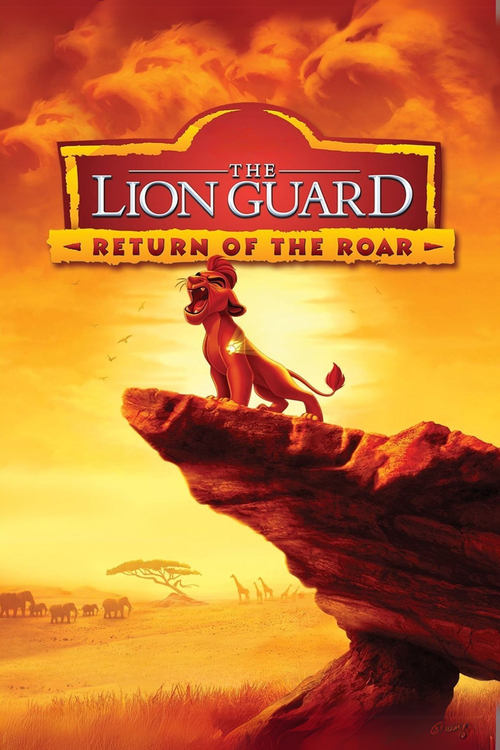
The Lion Guard: Return of the Roar (2016)
Directed by Howy Parkins
No — The Lion Guard: Return of the Roar is not woke, scoring 0 out of 100 on our wokeness meter.
The Lion Guard: Return of the Roar arrives as a television movie, a pilot for a series that extends the commercial life of a 1994 animated property well past its natural span.
Consciousness Markers
The film offers gentle moral lessons about teamwork and protecting the balance of nature, but the messaging is light and not overtly political or preachy.
No evidence of a modern representation-casting agenda; the diverse team of animals is a narrative element, not a social justice casting statement.
No LGBTQ+ characters, relationships, or themes are present.
Female characters exist (e.g., Fuli, Kiara, Nala), but the film does not advance an explicit feminist agenda or critique patriarchy.
The African setting and animal characters do not engage with contemporary racial consciousness or racial justice themes.
The Circle of Life and ecological balance serve as world-building, not a climate change crusade or environmental activism.
No anti-capitalist, eat-the-rich, or economic justice themes are present.
No body positivity themes or messaging about body image are present.
No neurodivergence representation or themes are present.
The film is a fictional sequel in the Lion King universe and makes no revisionist historical claims.
Why it received this score
The Lion Guard: Return of the Roar arrives as a television movie, a pilot for a series that extends the commercial life of a 1994 animated property well past its natural span. Kion, the younger son of Simba and Nala, assembles a squad of young animals, each with a designated talent, to protect the Pride Lands and uphold the Circle of Life. The animation is serviceable, the songs are brief, and the whole enterprise carries the air of a franchise being gently milked. It is a children's program, and it knows it.
Our survey of contemporary social markers finds this savannah curiously barren. The diverse team of creatures is a narrative convenience, not a statement about casting. Female characters such as Fuli and Kiara are present and competent, though the film mounts no argument about patriarchy. No romantic pairings venture beyond the conventional. The African setting supplies scenery and a vague sense of grandeur; it does not engage with racial justice, climate activism, or economic grievance. There is no messaging about bodies, no neurodivergent representation, no revisionist account of history. On these axes the film is a flat line, and we record it as such without complaint.
What remains is a mild ethical hum. Teamwork matters. Nature has a balance worth keeping. These lessons are delivered softly, aimed at viewers who have not yet learned to read subtext, and they carry no political charge. The film lectures, but it lectures the way a nursery rhyme lectures. We assign it a low grade for sermonizing and move on, unshaken, to the next title in the queue.
Analysis generated by our Consciousness Algorithm
Synopsis
Set in the African savannah, the film follows Kion as he assembles the members of the 'Lion Guard'. Throughout the film, the diverse team of young animals will learn how to utilize each of their unique abilities to solve problems and accomplish tasks to maintain balance within the Circle of Life, while also introducing viewers to the vast array of animals that populate the prodigious African landscape.
Questions about The Lion Guard: Return of the Roar
Is The Lion Guard: Return of the Roar woke?
No — The Lion Guard: Return of the Roar is not woke, scoring 0 out of 100 on our wokeness meter. That earns it a verdict of Ultra Based.
Does The Lion Guard: Return of the Roar have any woke elements?
Very few. None of the 10 markers reaches 30, the level where a marker counts as present; the highest is Lecture Energy at 10.
How does The Lion Guard: Return of the Roar compare to other 2016 movies?
It ranks #264 of the 285 films from 2016 we've scored; their average is 16. The wokest is 13th (92).
How is the Woke Score calculated?
An AI-assisted process researches the film and its reception, scores it 0–100 on ten markers, then combines those into one 0–100 Woke Score. It measures a specific set of 2020s cultural themes, not film quality.