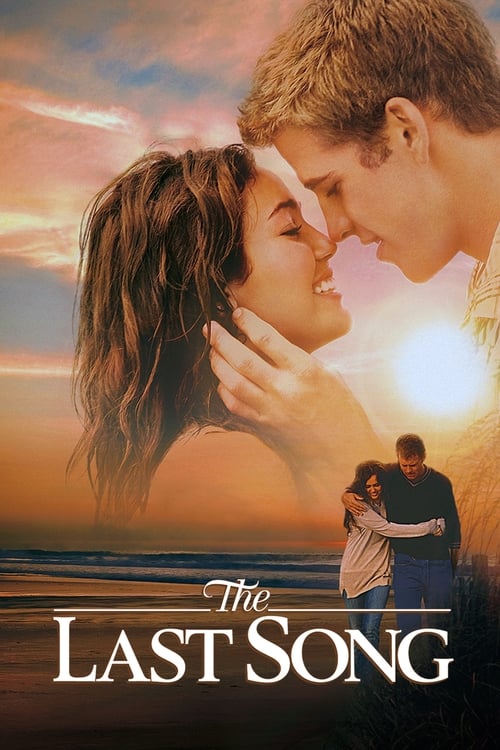
The Last Song (2010)
Directed by Julie Anne Robinson
No — The Last Song is not woke, scoring 2 out of 100 on our wokeness meter.
Here is a film assembled with the precision of a beach resort brochure.
Consciousness Markers
The cast is entirely white and no deliberate inclusive casting is evident; the film's only diversity marker is a female director, which does not fall under this category.
No LGBTQ+ characters, relationships, or themes appear in the film.
The story centers on a teenage girl's emotional growth and her bond with her father, but it does not advance a feminist agenda or critique patriarchal structures.
The film features an all-white principal cast and never engages with race or racial issues.
A loggerhead sea turtle nest is protected, but this is local wildlife conservation, not a climate-change crusade.
Wealthy families and class differences appear as backdrop, but the film offers no critique of capitalism or wealth inequality.
No body-positivity themes or diverse body representation are present.
No neurodivergent characters or themes are depicted.
The film is a contemporary fictional romance and does not revise historical narratives.
The film is a melodrama that aims for emotional engagement rather than didactic social messaging.
Why it received this score
Here is a film assembled with the precision of a beach resort brochure. The Last Song arrived in 2010 as a Disney star vehicle for Miley Cyrus, engineered to graduate her from the Hannah Montana persona into something resembling adult drama. Nicholas Sparks supplied both the screenplay and the novel, in that order, which tells you everything about the priorities involved. A rebellious teenager is shipped to a Georgia beach town, reunites with her estranged father, falls for a volleyball-playing aquarium volunteer, and learns several lessons about mortality. The machinery is familiar and it runs on schedule.
Surveying the film for contemporary social consciousness yields a series of empty drawers. The cast is uniformly white, the romance is heterosexual and unexamined, and the emotional architecture rests on a girl's reconciliation with her dying father. There is a loggerhead turtle nest, protected overnight from raccoons, which is local wildlife stewardship and not a statement about the planet's fate. There are wealthy families with gated mansions, presented as scenery instead of indictment. A church burns, a boy lets another man take the blame, and the moral resolution is forgiveness. Nobody lectures. The film has no interest in instructing its audience about anything beyond the proper way to grieve.
The picture earned poor reviews and a healthy profit, which is its own kind of verdict. It wants tears, not converts. Julie Anne Robinson directs with a steady hand, and the presence of a woman behind the camera is a fact about the production, not a thesis within it. What we have is a melodrama that knows exactly what it is, a summer romance with a terminal illness folded in, and it makes no attempt to be anything else. Refreshing, in a quiet way.
Analysis generated by our Consciousness Algorithm


Synopsis
A drama centered on a rebellious girl who is sent to a Southern beach town for the summer to stay with her father. Through their mutual love of music, the estranged duo learn to reconnect.
Questions about The Last Song
Is The Last Song woke?
No — The Last Song is not woke, scoring 2 out of 100 on our wokeness meter. That earns it a verdict of Ultra Based.
Does The Last Song have any woke elements?
No. All 10 markers score zero.
How does The Last Song compare to other 2010 movies?
It ranks #191 of the 238 films from 2010 we've scored; their average is 11. The wokest is My Name Is Khan (84).
How is the Woke Score calculated?
An AI-assisted process researches the film and its reception, scores it 0–100 on ten markers, then combines those into one 0–100 Woke Score. It measures a specific set of 2020s cultural themes, not film quality.