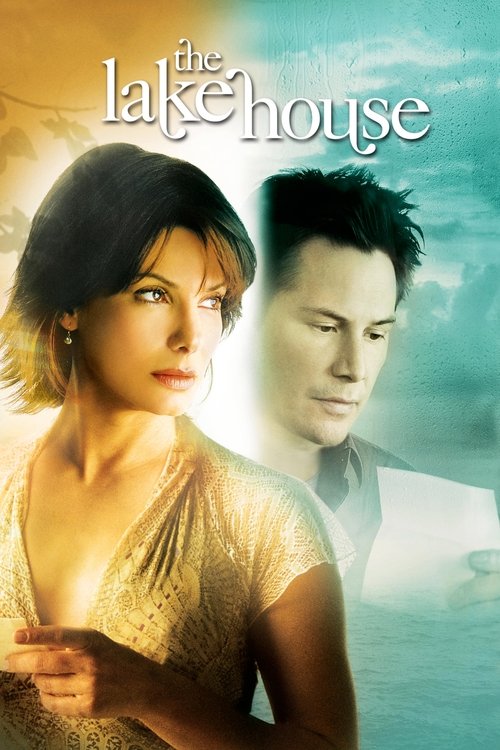
The Lake House (2006)
Directed by Alejandro Agresti
No — The Lake House is not woke, scoring 9 out of 100 on our wokeness meter.
The Lake House arrives from 2006, a year when a romance could still be built on a mailbox and a two-year temporal gap without anyone demanding an explanation.
Consciousness Markers
The cast is overwhelmingly white, with Shohreh Aghdashloo appearing in a supporting role as Kate's mentor; no particular emphasis on diverse or inclusive casting.
Kate is a professional physician who eventually leaves a controlling boyfriend, but this is standard romance plotting rather than a deliberate feminist statement.
The film is a gentle, sentimental romance that never lectures or moralizes; any thematic content is delivered through emotion rather than preaching.
No LGBTQ+ characters or themes appear anywhere in the film.
The film engages with no racial themes or commentary whatsoever.
There is no environmental or climate-related content in the film.
Architecture and real estate feature as setting and character detail, but no critique of wealth or capitalism is present.
No body positivity themes or messaging appear in the film.
No neurodivergent characters or themes are present.
The film is a contemporary romance with no historical subject matter to revise.
Why it received this score
The Lake House arrives from 2006, a year when a romance could still be built on a mailbox and a two-year temporal gap without anyone demanding an explanation. Alejandro Agresti directs Keanu Reeves and Sandra Bullock as an architect and a physician exchanging letters across time, and the whole enterprise rests on the notion that longing is sufficient. It is a remake of the South Korean film Il Mare, transplanted to Chicago's architectural glories, and it carries itself with the soft, unhurried confidence of a picture that has no interest in arguing with anyone. That is its most distinguishing feature.
On the matter of progressive sensibilities, the film is nearly barren, and this appears to be a question of constitution, not omission. Bullock's Kate is a working physician who sheds a controlling fiancé, a gesture that registers as ordinary romantic housekeeping instead of a statement. Shohreh Aghdashloo appears as Kate's mentor, and the cast otherwise remains a study in Chicago whiteness. There is no racial commentary, no environmental concern, no critique of the architecture trade's money, no inquiry into bodies or minds. The film has no interest in any of it.
What remains is a gentle, sentimental piece of work that delivers its themes through mood and Rachel Portman's piano, never through sermon. It does not lecture. It does not scold. It asks the audience to accept that a mailbox can bend physics and that two attractive people deserve each other across a paradox. Ebert liked it. Most critics did not. The film performed modestly and won a Teen Choice award for a kiss. There is very little here for the cultural archaeologist to excavate, which is itself a finding. Some vintages are simply quiet.
Analysis generated by our Consciousness Algorithm


Synopsis
When architect Alex Wyler moves into an unusual glass house on stilts over a lake, he discovers a note from the previous tenant in the mailbox--but no one's lived in the house for years. He replies and soon discovers that he's corresponding with a doctor named Kate Forster. Their correspondence, only through the 'magical' mailbox, turns romantic and their paths cross in unexpected ways, but when they try to truly connect, danger looms. They must try to unravel the mystery behind their extraordinary romance before it's too late.
Questions about The Lake House
Is The Lake House woke?
No — The Lake House is not woke, scoring 9 out of 100 on our wokeness meter. That earns it a verdict of Ultra Based.
Does The Lake House have any woke elements?
Very few. None of the 10 markers reaches 30, the level where a marker counts as present; the highest is Feminist Agenda at 15.
How does The Lake House compare to other 2006 movies?
It ranks #75 of the 211 films from 2006 we've scored; their average is 11. The wokest is An Inconvenient Truth (92).
How is the Woke Score calculated?
An AI-assisted process researches the film and its reception, scores it 0–100 on ten markers, then combines those into one 0–100 Woke Score. It measures a specific set of 2020s cultural themes, not film quality.