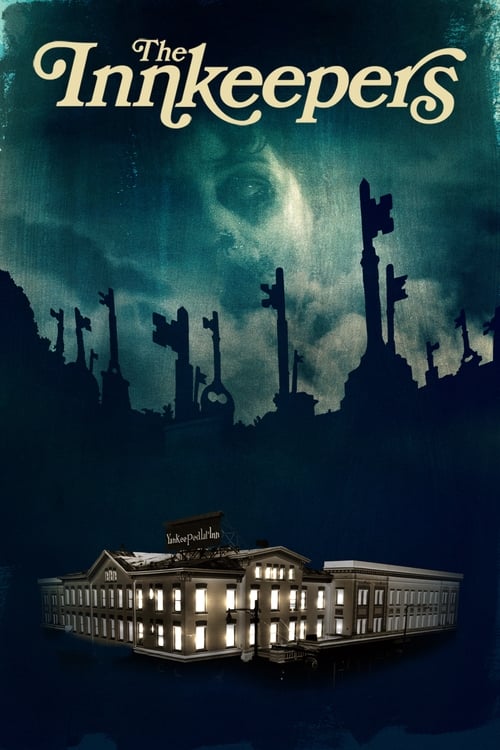
The Innkeepers (2012)
Directed by Ti West
No — The Innkeepers is not woke, scoring 5 out of 100 on our wokeness meter.
Ti West's The Innkeepers is a supernatural horror film about the last days of a decaying Connecticut inn and the two employees who hunt its ghosts.
Consciousness Markers
The cast is overwhelmingly white, with a female lead and a small supporting turn from Lena Dunham; there is no evident intent to assemble a diverse ensemble.
Claire is a female protagonist, but the film is a straightforward ghost story with no feminist argument or gendered critique.
The inn's closure is a melancholy backdrop for the haunting rather than a critique of capital or class.
No LGBTQ+ characters, relationships, or themes appear anywhere in the film.
Race is never a subject of the film; the haunting and its victims are presented without any racial dimension.
No environmental themes or climate concerns are present.
Body image and physical self-acceptance are not addressed.
Claire's asthma is a plot device for her death, not a depiction of neurodivergence or mental health advocacy.
The film invents its ghost story around a real inn's folklore without revising or reinterpreting any historical record.
The film is a slow-burn genre exercise with no messaging, moralizing, or direct address to the audience.
Why it received this score
Ti West's The Innkeepers is a supernatural horror film about the last days of a decaying Connecticut inn and the two employees who hunt its ghosts. Sara Paxton plays Claire, an asthmatic college dropout, and Pat Healy plays Luke, her fellow believer. The film is patient, atmospheric, and entirely content to be a genre exercise. Its cultural ambitions are minimal. The cast is overwhelmingly white, with a brief Lena Dunham appearance as a barista that does nothing to broaden the ensemble. Claire is a woman at the center of the story, but the screenplay offers no gendered argument, no critique of power, and no interest in turning her plight into a statement. The haunting is a haunting.
Race never enters the frame. The ghosts and the living are presented without racial context, and the film has no interest in historical memory or social commentary. LGBTQ themes are absent. Climate concerns are absent. Body image and self-acceptance are absent. Claire's asthma is a plot mechanism that leads to her death, not a portrait of neurodivergence or mental health advocacy. The inn's impending closure provides a melancholy backdrop, but the film does not use it to indict capital, class, or gentrification. It simply regrets the loss of a building.
The story draws on the real Yankee Pedlar Inn's folklore, yet it invents its ghost rather than revising any historical record. There is no lecture, no moral, no direct address to the audience. The film trusts slow burns, empty hallways, and a piano that plays itself. That restraint is admirable in a genre often given to noise. It also leaves the film with almost no contemporary social consciousness to measure. The final image of Claire's apparition at the window, followed by a slamming door, is a fine chill and nothing more. The Innkeepers is a well-made ghost story that asks nothing of its audience beyond patience and a tolerance for quiet dread.
Analysis generated by our Consciousness Algorithm


Synopsis
During the final days at the Yankee Pedlar Inn, two employees determined to reveal the hotel's haunted past begin to experience disturbing events as old guests check in for a stay.
Questions about The Innkeepers
Is The Innkeepers woke?
No — The Innkeepers is not woke, scoring 5 out of 100 on our wokeness meter. That earns it a verdict of Ultra Based.
Does The Innkeepers have any woke elements?
Very few. None of the 10 markers reaches 30, the level where a marker counts as present; the highest is Representation Casting at 10.
How does The Innkeepers compare to other 2012 movies?
It ranks #143 of the 230 films from 2012 we've scored; their average is 12. The wokest is Killing Them Softly (92).
How is the Woke Score calculated?
An AI-assisted process researches the film and its reception, scores it 0–100 on ten markers, then combines those into one 0–100 Woke Score. It measures a specific set of 2020s cultural themes, not film quality.