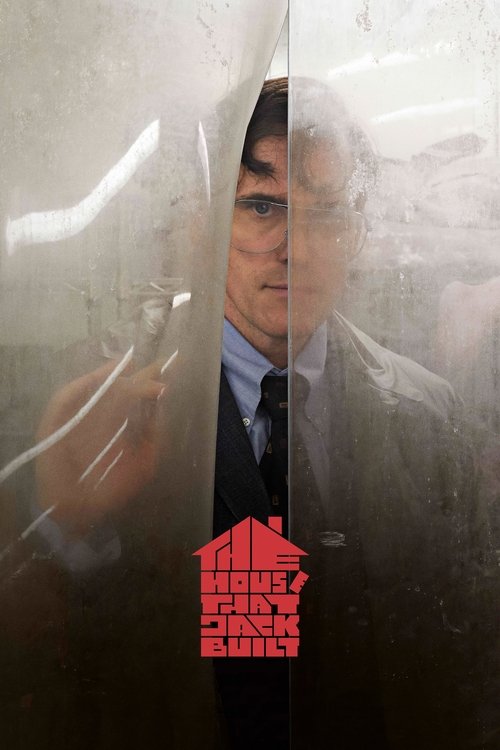
The House That Jack Built (2018)
Directed by Lars von Trier
No — The House That Jack Built is not woke, scoring 6 out of 100 on our wokeness meter.
Lars von Trier returns to Cannes, banned no longer, with a film about a serial killer who fancies himself an architect.
Consciousness Markers
Jack delivers philosophical monologues on art, murder, and misanthropy, but these are amoral provocations rather than social-justice moralizing. The lecture energy is aesthetic, not didactic.
Jack's obsessive-compulsive disorder is a genuine plot device, but it is framed as a symptom of his homicidal pathology rather than as affirming neurodivergent representation.
The cast is overwhelmingly white and European, assembled for von Trier's repertory rather than any representational intent. No deliberate diversity casting is present.
There are no LGBTQ+ characters, themes, or subtext anywhere in the film. Jack's pathology is entirely heterosexual and predatory.
The film is aggressively misogynistic in content: women are mutilated, tormented, and fashioned into objects. This is the antithesis of a feminist agenda.
No engagement with race, racism, or racial identity. The film's concerns are metaphysical and misanthropic, not racial.
No environmental or climate themes whatsoever. Nature appears only as a setting for hunting and disposal.
Jack is a failed architect and petty property owner, but the film offers no economic critique or class-consciousness. Its contempt is universal, not directed at capital.
No body-positivity themes. Bodies are treated as meat, trophies, and sculptural material.
The film is fictional, using Dante's Inferno as metatext rather than revising any historical record. No revisionist history is present.
Why it received this score
Lars von Trier returns to Cannes, banned no longer, with a film about a serial killer who fancies himself an architect. Matt Dillon plays Jack, who narrates his twelve years of murder to a patient figure named Verge, and the structure is Dante by way of a lecture hall. Bodies accumulate in a walk-in freezer. A duckling loses a leg. Uma Thurman loses an argument and then her life. The film offers all of this with the solemnity of a museum retrospective, and the audience at the premiere reportedly fled in droves before returning to applaud for ten minutes, which tells you most of what you need to know about the reception.
On the matter of social consciousness, the ledger is nearly blank. The cast is white and European, drawn from the director's standing repertory. Women exist to be tormented and then repurposed, one breast becoming a wallet, another pinned to a police car, which is the opposite of any feminist reading. Race goes unmentioned. The climate goes unmentioned. Capital goes unmentioned, though Jack does own a factory and a failing architectural practice, and the film has no interest in either as economics. Bodies are meat and trophies, so body positivity is absent. There is a genuine thread of obsessive-compulsive disorder running through the second chapter, where Jack's compulsion to clean a crime scene nearly gets him caught, but the film treats the condition as a symptom of his homicidal machinery, not as a portrait of a neurodivergent life.
The monologues are where the film reaches for gravity. Jack holds forth on art, engineering, murder, and the general rottenness of humanity, and Verge listens with the weariness of a man who has heard it all before. This is lecture energy of a kind, though it lectures toward misanthropy instead of virtue, which is its own sort of tedium. The film is fictional, borrowing from Dante and the Kola Superdeep Borehole, and revises no historical record. What remains is a provocation that punishes its protagonist in the final reel and calls it morality. The credits roll to Hit the Road Jack. Nobody learns anything, least of all the audience.
Analysis generated by our Consciousness Algorithm


Synopsis
Failed architect, engineer and vicious murderer Jack narrates the details of some of his most elaborately orchestrated crimes, each of them a towering piece of art that defines his life's work as a serial killer for twelve years.
Questions about The House That Jack Built
Is The House That Jack Built woke?
No — The House That Jack Built is not woke, scoring 6 out of 100 on our wokeness meter. That earns it a verdict of Ultra Based.
Does The House That Jack Built have any woke elements?
Very few. None of the 10 markers reaches 30, the level where a marker counts as present; the highest is Lecture Energy at 10.
How does The House That Jack Built compare to other 2018 movies?
It ranks #244 of the 325 films from 2018 we've scored; their average is 20. The wokest is Return (92).
How is the Woke Score calculated?
An AI-assisted process researches the film and its reception, scores it 0–100 on ten markers, then combines those into one 0–100 Woke Score. It measures a specific set of 2020s cultural themes, not film quality.