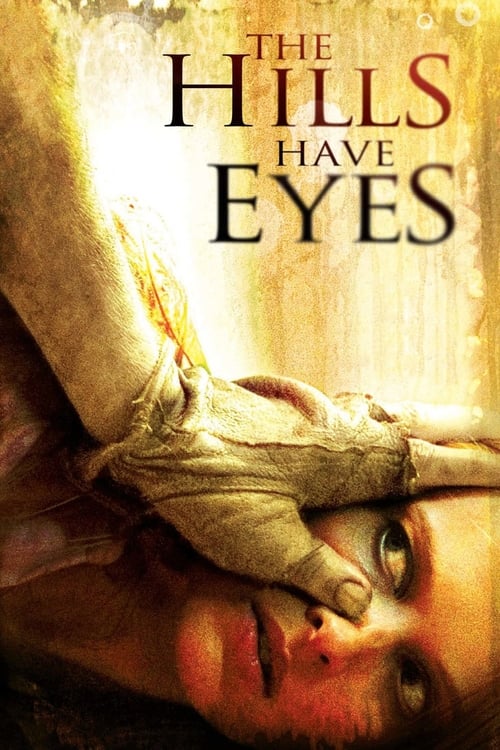
The Hills Have Eyes (2006)
Directed by Alexandre Aja
No — The Hills Have Eyes is not woke, scoring 0 out of 100 on our wokeness meter.
A family drives into the New Mexico desert, their tires meet a spike strip, and the Carter clan spends the rest of the running time being hunted, dismembered, and in one instance abducted by a clan of cannibalistic mutants born of government nuclear testing.
Consciousness Markers
The cast is overwhelmingly white, with no evident effort to diversify for representation's sake; the mutant family is a horror construct, not a diversity statement.
No LGBTQ+ characters, themes, or subtext of any kind appear in the film.
Female characters exist largely as victims and survivors within a brutal slasher framework; there is no feminist thesis or agenda at work.
The film engages no racial themes or commentary whatsoever.
Nuclear testing is used as a plot device to explain the mutants' deformities, not as an environmentalist or climate-crisis message.
No economic critique or anti-capitalist theme is present; the conflict is purely survival horror.
The mutants' deformities are deployed for horror and revulsion, the opposite of a body-positivity message.
No neurodivergent characters or themes are explored.
The film is a straightforward remake of a 1977 slasher and makes no revisionist historical claims.
The film offers no moralizing or didactic messaging; it is a gore-driven horror exercise with no lecture energy.
Why it received this score
A family drives into the New Mexico desert, their tires meet a spike strip, and the Carter clan spends the rest of the running time being hunted, dismembered, and in one instance abducted by a clan of cannibalistic mutants born of government nuclear testing. Alexandre Aja's 2006 remake of Wes Craven's 1977 cult item has no interest in argument. It is a machine for producing dread and viscera, and it operates with a craftsman's discipline. The mutants are photographed for revulsion. The violence is calibrated for discomfort. Nothing in the frame asks us to reconsider our assumptions about anything at all.
The film's sole gesture toward a theme is the nuclear testing backstory, which serves as a mechanism for explaining the mutants and nothing more. The deformed children glimpsed in the opening titles are victims of Agent Orange, borrowed for shock value from a real atrocity. Ruby, the sole sympathetic mutant, exists to hand the baby back at the end, a plot function dressed in prosthetics. When the film looks at a damaged body, it wants us to flinch. That is the opposite of a celebration of difference, and the film never pretends otherwise.
The Carter family is white, the mutant family is white, and the desert does not care about either of them. There is no economic critique in a gas station attendant's suicide, no feminist reading available in Brenda's assault beyond the obvious cruelty of the genre, no lesson about the climate in a radioactive crater full of abandoned cars. Aja has made a lean, mean, unpleasant piece of work, and he has made it without a single sermon. Horror in this decade often arrives with a thesis stapled to its chest. This one arrives with an axe.
Analysis generated by our Consciousness Algorithm
Part of


Synopsis
Based on Wes Craven's 1977 suspenseful cult classic, The Hills Have Eyes is the story of a family road trip that goes terrifyingly awry when the travelers become stranded in a government atomic zone. Miles from nowhere, the Carter family soon realizes the seemingly uninhabited wasteland is actually the breeding ground of a blood-thirsty mutant family...and they are the prey.
Questions about The Hills Have Eyes
Is The Hills Have Eyes woke?
No — The Hills Have Eyes is not woke, scoring 0 out of 100 on our wokeness meter. That earns it a verdict of Ultra Based.
Does The Hills Have Eyes have any woke elements?
No. All 10 markers score zero.
How does The Hills Have Eyes compare to other 2006 movies?
It ranks #177 of the 211 films from 2006 we've scored; their average is 11. The wokest is An Inconvenient Truth (92).
How is the Woke Score calculated?
An AI-assisted process researches the film and its reception, scores it 0–100 on ten markers, then combines those into one 0–100 Woke Score. It measures a specific set of 2020s cultural themes, not film quality.