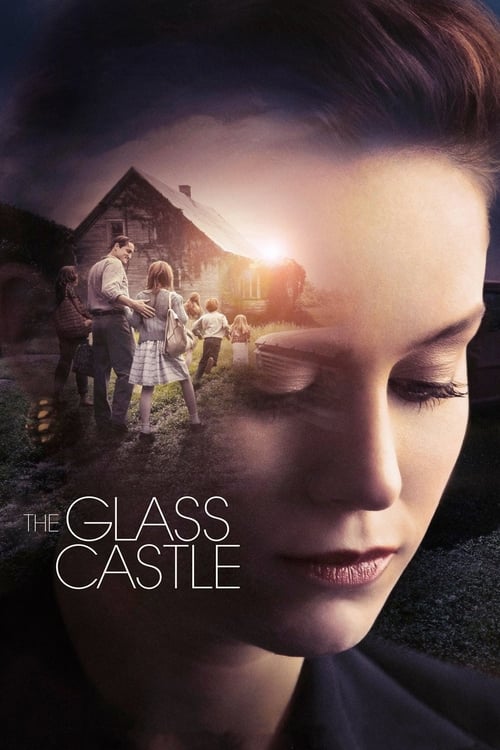
The Glass Castle (2017)
Directed by Destin Daniel Cretton
No — The Glass Castle is not woke, scoring 9 out of 100 on our wokeness meter.
Here is a film that arrives carrying a memoir, a respected director, and a cast doing honest work, and then spends two hours insisting that squalor is a personality.
Consciousness Markers
The film centers on a young woman's coming-of-age and escape from a dysfunctional home, and the mother is a willful nonconformist, but the story is framed as a family drama rather than an explicit feminist statement.
Poverty, squatting, and the family's refusal to sell valuable land gesture at a rejection of materialism, but the film treats this as personal eccentricity rather than a systemic critique of capitalism.
The film offers a sentimental moral about family and forgiveness, but it is delivered through drama rather than preachy sermonizing.
The cast is overwhelmingly white, reflecting the real Walls family of rural West Virginia; there is no colorblind or deliberately diverse casting to speak of.
No LGBTQ+ characters or themes appear anywhere in the narrative.
Race is entirely absent as a theme; the story concerns a white Appalachian family and makes no commentary on racial dynamics.
There is no environmental or climate-related content in the film.
No body-positivity themes are present.
Rex's alcoholism and erratic behavior are portrayed as addiction and irresponsibility, not framed through a neurodivergence lens.
As a straightforward adaptation of a personal memoir, the film makes no revisionist historical claims.
Why it received this score
Here is a film that arrives carrying a memoir, a respected director, and a cast doing honest work, and then spends two hours insisting that squalor is a personality. The Glass Castle concerns the Walls family, nomadic, broke, and governed by an alcoholic father who spins stories and a mother who paints while her children go hungry. The material is real, the performances are committed, and the whole enterprise radiates a soft, forgiving warmth that the events on screen have not earned. We are asked to admire resilience. We are shown neglect.
The film's social conscience, such as it is, stays domestic. Poverty is rendered as eccentricity, a choice the parents make and defend, which gestures vaguely at a rejection of materialism without ever indicting the structures that produce it. The mother's refusal to conform reads as a faint feminist flicker, though the story frames her as a family drama rather than a statement. Race, queerness, climate, body politics, neurodivergence: none of these enter the frame, and the film does not pretend otherwise. It is a white Appalachian childhood told straight, and the absence of a modern progressive vocabulary is neither a failing nor a virtue. It is simply the weather of the thing.
What remains is a moral about forgiveness, delivered through tears and reconciliations instead of sermons, which spares us the lectern but not the sentimentality. The film asks us to absolve Rex because he loved his daughter in his way. Reviewers at the time balked, and the balking was fair. A sommelier might call this vintage pleasant, forgettable, and slightly overripe. We file it under earnest humanism, pre-2015 vintage, and reach for the next bottle.
Analysis generated by our Consciousness Algorithm
Part of


Synopsis
A young girl is raised in a dysfunctional family constantly on the run from the FBI. Living in poverty, she comes of age guided by her drunkard, ingenious father who distracts her with magical stories to keep her mind off the family's dire state, and her selfish, nonconformist mother who has no intention of raising a family, along with her younger brother and sister, and her other older sister. Together, they fend for each other as they mature in an unorthodox journey that is their family life.
Questions about The Glass Castle
Is The Glass Castle woke?
No — The Glass Castle is not woke, scoring 9 out of 100 on our wokeness meter. That earns it a verdict of Ultra Based.
Does The Glass Castle have any woke elements?
Very few. None of the 10 markers reaches 30, the level where a marker counts as present; the highest is Feminist Agenda at 15.
How does The Glass Castle compare to other 2017 movies?
It ranks #171 of the 309 films from 2017 we've scored; their average is 19. The wokest is I Am Not Your Negro (92).
How is the Woke Score calculated?
An AI-assisted process researches the film and its reception, scores it 0–100 on ten markers, then combines those into one 0–100 Woke Score. It measures a specific set of 2020s cultural themes, not film quality.