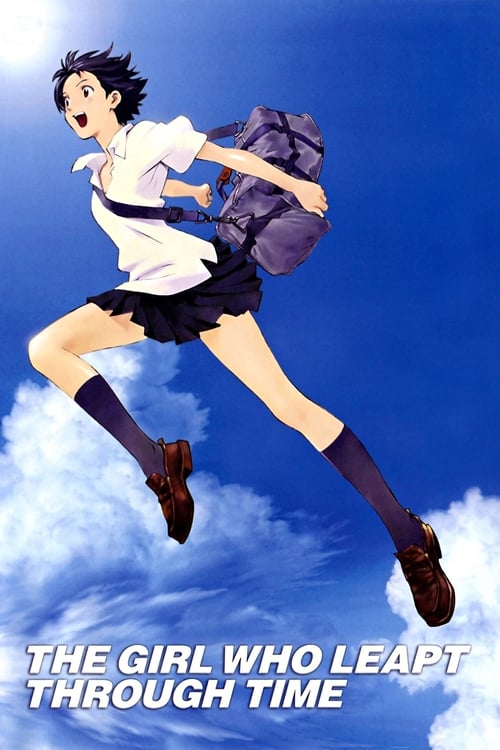
The Girl Who Leapt Through Time (2006)
Directed by Mamoru Hosoda
No — The Girl Who Leapt Through Time is not woke, scoring 0 out of 100 on our wokeness meter.
The Girl Who Leapt Through Time arrives from 2006 with the quiet confidence of a film that has no interest in being useful to anyone's cultural checklist.
Consciousness Markers
The film features an all-Japanese cast and characters, with no deliberate casting of underrepresented groups as a statement.
There are no LGBTQ+ characters, relationships, or themes in the film.
While the protagonist is a teenage girl, the film does not advance a feminist agenda or critique patriarchal structures.
The film does not engage with racial issues, systemic racism, or racial identity.
There is no environmental or climate change messaging in the film.
The film contains no anti-capitalist or eat-the-rich themes.
The film does not address body image, body positivity, or related themes.
There is no representation or discussion of neurodivergence in the film.
The film does not revise or reinterpret historical events through a modern ideological lens.
The film tells a personal coming-of-age story without preaching or lecturing the audience on social issues.
Why it received this score
The Girl Who Leapt Through Time arrives from 2006 with the quiet confidence of a film that has no interest in being useful to anyone's cultural checklist. Mamoru Hosoda's story follows Makoto Konno, a Tokyo high schooler who discovers time travel and promptly uses it for quizzes, karaoke, and avoiding an awkward confession. This is a coming-of-age romance with a walnut-shaped time device, not a seminar. The cast is Japanese because the story is Japanese, not because a casting director had a statement to make. No identity category is arranged around the plot like furniture in a showroom.
The social inventory is sparse to the point of asceticism. There are no LGBTQ+ threads, no racial consciousness, no climate sermon, no anti-capitalist arithmetic, no body positivity arc, and no neurodivergent representation. Makoto's gender matters to the story in the ordinary way that adolescence matters, but the film does not mount a critique of patriarchy or turn its heroine into a thesis. Chiaki's revelation from the future is narrative machinery, not revisionist history. The movie has the good manners to let its characters be teenagers first and symbols never.
The film's lasting impression is craft. It is warm, funny, and melancholy by turns, with a clean visual sense and a time-loop plot that respects both logic and feeling. It never stops to lecture. There is no voiceover explaining the correct social position, no villain who embodies an unacceptable political opinion, no scene designed to be clipped and applauded. The result is a film that could be described, in the old vocabulary, as humane. It asks only that we watch a girl learn that time waits for no one, and it makes that small lesson feel large. On the scale of modern cultural signaling, it registers as a clean slate, and it earns that silence without apology.
Analysis generated by our Consciousness Algorithm


Synopsis
When 17-year-old Makoto Konno gains the ability to 'leap' backwards through time, she immediately sets about improving her grades and preventing personal mishaps. However, she soon realises that changing the past isn't as simple as it seems, and eventually, will have to rely on her new powers to shape the future of herself and her friends.
Questions about The Girl Who Leapt Through Time
Is The Girl Who Leapt Through Time woke?
No — The Girl Who Leapt Through Time is not woke, scoring 0 out of 100 on our wokeness meter. That earns it a verdict of Ultra Based.
Does The Girl Who Leapt Through Time have any woke elements?
No. All 10 markers score zero.
How does The Girl Who Leapt Through Time compare to other 2006 movies?
It ranks #177 of the 211 films from 2006 we've scored; their average is 11. The wokest is An Inconvenient Truth (92).
How is the Woke Score calculated?
An AI-assisted process researches the film and its reception, scores it 0–100 on ten markers, then combines those into one 0–100 Woke Score. It measures a specific set of 2020s cultural themes, not film quality.