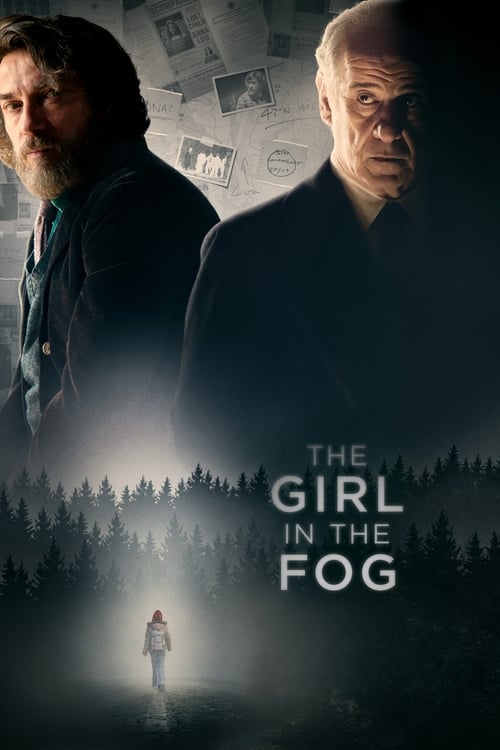
The Girl in the Fog (2017)
Directed by Donato Carrisi
No — The Girl in the Fog is not woke, scoring 0 out of 100 on our wokeness meter.
The Girl in the Fog arrives from Italy in 2017, directed by Donato Carrisi from his own novel, and it performs the work of a psychological thriller with the patience of a man who has read a great many of them.
Consciousness Markers
The cast is a uniformly white Italian ensemble with no evident effort toward diverse or inclusive representation.
No LGBTQ+ characters, themes, or subtext appear anywhere in the narrative.
The film concerns a missing girl but treats her as a plot device for a detective's media manipulation, with no feminist framing or commentary.
No engagement with race, racism, or racial identity; the story is set in an insular white Alpine village.
No environmental or climate themes whatsoever.
The film critiques media sensationalism and the machinery of public attention, but offers no class-based or anti-capitalist economic argument.
No body-positive themes or depictions of body image politics.
No neurodivergent characters or themes are present.
A fictional psychological thriller with no historical revisionism or reframing of real events.
The film is a moody procedural thriller that shows rather than preaches; it carries no didactic social messaging.
Why it received this score
The Girl in the Fog arrives from Italy in 2017, directed by Donato Carrisi from his own novel, and it performs the work of a psychological thriller with the patience of a man who has read a great many of them. A sixteen-year-old girl vanishes from Avechot, an Alpine village so insular that fog serves as both weather and civic policy. Inspector Vogel, played by Toni Servillo with the weary precision of a man disappointed by humanity since roughly 1994, stages a search for the cameras. Painter's overalls, a forest, a hungry press corps. The investigation becomes a television event, and the film's actual subject announces itself: the manufacture of public attention.
This is a story about media machinery, and it stops there. The screenplay holds no interest in the economics beneath the spectacle, no class argument, no systemic indictment beyond the obvious vanity of a detective who requires an audience. The village is white, the cast is white, and the film never turns to consider that fact, because it is not a film that considers facts of that kind. There are no queer characters, no feminist reading of the missing girl as anything but a prop in a man's career, no engagement with race, environment, body image, or neurological difference. The girl is a device. The fog is a device. The press is a device.
We are left with craft. Carrisi took the David di Donatello for best new director, and the film earns that modest honor through atmosphere and structure, not through sermonizing. It shows. It does not lecture. No lesson is appended to the final act, no plea issued on behalf of a cause. A viewer arriving in search of contemporary social instruction will find the cupboard bare, and the film seems untroubled by the emptiness. It is a procedural with cold weather and a colder protagonist, adapted from a book, content to be a book's adaptation. Nothing further is claimed. Nothing further is offered.
Analysis generated by our Consciousness Algorithm


Synopsis
A gripping and chilling thriller that brings us to a hazy mountain village where an enigmatic detective is investigating the sudden disappearance of fifteen-year-old girl.
Questions about The Girl in the Fog
Is The Girl in the Fog woke?
No — The Girl in the Fog is not woke, scoring 0 out of 100 on our wokeness meter. That earns it a verdict of Ultra Based.
Does The Girl in the Fog have any woke elements?
No. All 10 markers score zero.
How does The Girl in the Fog compare to other 2017 movies?
It ranks #281 of the 309 films from 2017 we've scored; their average is 19. The wokest is I Am Not Your Negro (92).
How is the Woke Score calculated?
An AI-assisted process researches the film and its reception, scores it 0–100 on ten markers, then combines those into one 0–100 Woke Score. It measures a specific set of 2020s cultural themes, not film quality.