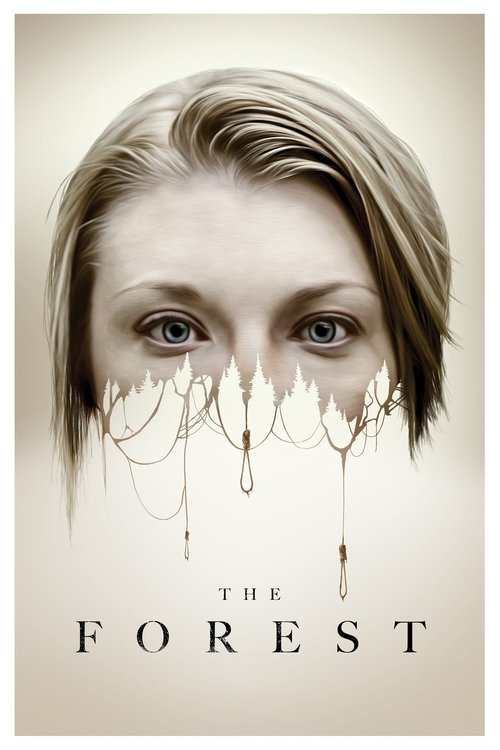
The Forest (2016)
Directed by Jason Zada
No — The Forest is not woke, scoring 7 out of 100 on our wokeness meter.
The Aokigahara forest is a real place where real people go to die, a fact the filmmakers discovered, by their own account, while reading a Wikipedia article.
Consciousness Markers
A white American actress headlines a story set in Japan, with Japanese performers relegated to supporting and antagonist roles — the inverse of representative casting, though a Japanese ensemble is present.
A female protagonist in a dual role and a sister-sister bond drive the plot, but this is standard horror convention rather than a feminist statement.
No LGBTQ+ characters, themes, or subtext appear anywhere in the film.
The film was criticized for racial insensitivity and trivializing Japanese suicide culture; it exhibits no racial consciousness, only cultural appropriation of a real site.
No environmental or climate themes are present.
No economic or class-based critique appears in the narrative.
No body positivity themes or messaging are present.
Mental illness and suicide are depicted as horror plot devices, not as neurodivergence advocacy or representation.
The film invents a fictional supernatural narrative around a real location without any historical revisionist intent.
The film is a straightforward supernatural horror with no didactic or preachy messaging.
Why it received this score
The Aokigahara forest is a real place where real people go to die, a fact the filmmakers discovered, by their own account, while reading a Wikipedia article. That origin story tells us most of what we need to know about The Forest, a 2016 supernatural horror picture that treats a site of genuine national grief as a scenic backdrop for an American woman's psychological unraveling. The production could not shoot in the actual forest, so it decamped to Serbia, where a stand-in woodland and a former warehouse did the work. Japan appears here as atmosphere: mist, a helpful local who explains the supernatural rules, and a great deal of moss.
Natalie Dormer heads the cast in dual roles, playing twin sisters separated by hair color and very little else. A capable Japanese ensemble surrounds her, though the screenplay assigns those performers to supporting duties and, in the case of the vengeful spirit Hoshiko, to the part of the menacing other. This is the inverse of representative casting, a white lead shepherding a story set in a country she is merely visiting. The film drew criticism on release for trivializing suicide in Japan, and the criticism was fair. Nothing in the narrative engages with the culture it borrows beyond the aesthetic of a haunted wood.
What the film offers, in the way of progressive sensibility, is a female protagonist and a sister-sister bond that carries the emotional weight. That is standard horror architecture, not a statement. There is no romantic reward waiting for the lead, no lecture, no sermon about the world outside the trees. The mental illness on display is a plot device, a condition that makes characters wander into caves and stab the wrong man. The result is a modest, muddled chiller that reached for topicality and came back with scenery.
Analysis generated by our Consciousness Algorithm


Synopsis
Set in the Aokigahara Forest, a real-life place in Japan where people go to end their lives. Against this backdrop, a young American woman comes in search of her twin sister, who has mysteriously disappeared.
Questions about The Forest
Is The Forest woke?
No — The Forest is not woke, scoring 7 out of 100 on our wokeness meter. That earns it a verdict of Ultra Based.
Does The Forest have any woke elements?
Very few. None of the 10 markers reaches 30, the level where a marker counts as present; the highest is Representation Casting at 15.
How does The Forest compare to other 2016 movies?
It ranks #190 of the 285 films from 2016 we've scored; their average is 16. The wokest is 13th (92).
How is the Woke Score calculated?
An AI-assisted process researches the film and its reception, scores it 0–100 on ten markers, then combines those into one 0–100 Woke Score. It measures a specific set of 2020s cultural themes, not film quality.