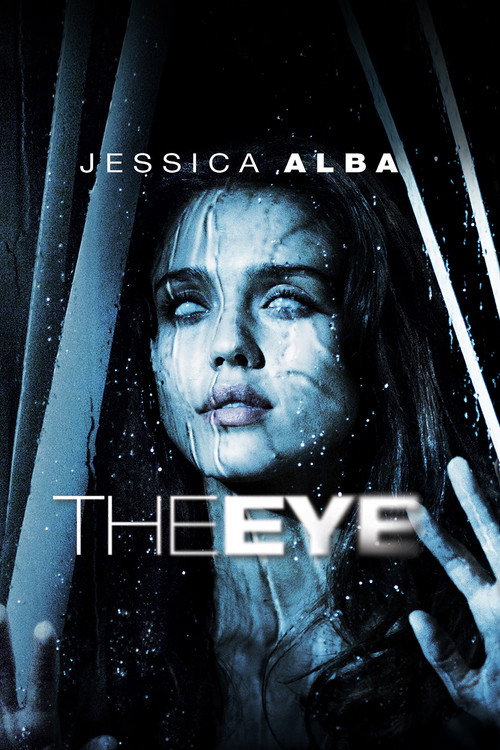
The Eye (2008)
Directed by Xavier Palud
No — The Eye is not woke, scoring 8 out of 100 on our wokeness meter.
The Eye is a 2008 American remake of the Pang brothers' 2002 Hong Kong horror film, and it arrives with the modest cultural footprint of a mid-budget studio chiller.
Consciousness Markers
A Latina lead (Jessica Alba) and a moderately diverse supporting cast, but the casting is unremarkable and carries no commentary or deliberate representational intent.
A female protagonist drives the story, but she is defined by victimhood and dependence on a male helper; no feminist thesis is advanced.
The Mexico-set third act touches on a donor's origins, but race and systemic inequality are never engaged as themes.
No LGBTQ+ characters, themes, or subtext of any kind.
No environmental or climate content whatsoever.
No economic critique or class commentary present.
No body-positivity messaging; the film treats blindness as a plot device rather than a subject of representation.
Blindness is a sensory disability, not neurodivergence, and the film makes no neurodivergent-themed argument.
No historical events are reinterpreted or revised.
A straightforward supernatural horror remake with no moralizing or didactic messaging.
Why it received this score
The Eye is a 2008 American remake of the Pang brothers' 2002 Hong Kong horror film, and it arrives with the modest cultural footprint of a mid-budget studio chiller. Jessica Alba plays Sydney Wells, a blind violinist who receives a cornea transplant and begins seeing the dead. The film offers a Latina lead and a supporting cast with some diversity, but the casting carries no argument and invites no reflection. The plot eventually travels to Mexico to trace the donor's origins, where a few lines acknowledge where Ana Cristina Martinez came from. Race and systemic inequality are never engaged as themes. A female protagonist drives the story, yet she is defined by victimhood and dependence on Paul, her male visual therapist. No feminist thesis is advanced. These are the only faint pulses of social consciousness the film registers, and they are faint indeed.
On every other front, the film is a clean slate. There are no LGBTQ characters, themes, or subtext. No climate concerns. No economic critique or class commentary. No body-positivity messaging, since blindness functions as a plot device and not as a subject of representation. No neurodivergence, because blindness is a sensory disability and the film makes no argument about neurodiverse experience. No historical revision. No sermonizing. It is a supernatural horror remake that wants to frighten us with fire, corpses, and corneal visions, not educate us about anything. That absence of moral instruction is almost quaint.
The film lands as a work of minimal progressive sensibilities. It has a female lead and a Latina actress, but the material treats both as commercial furniture. The Mexico sequence could have opened a door to cultural specificity. It closes that door politely. There is no lecture, no preachy monologue, no attempt to align itself with contemporary social causes. As a specimen of 2008 studio horror, it is undercooked and forgettable, but it is not guilty of the cultural agenda some viewers expect. It simply wants to be a creepy remake. It fails at that as well, but that is a separate ledger.
Analysis generated by our Consciousness Algorithm
Part of


Synopsis
Violinist Sydney Wells was accidentally blinded by her sister Helen when she was five years old. She submits to a cornea transplantation, and while recovering from the operation, she realizes that she is seeing dead people.
Questions about The Eye
Is The Eye woke?
No — The Eye is not woke, scoring 8 out of 100 on our wokeness meter. That earns it a verdict of Ultra Based.
Does The Eye have any woke elements?
Very few. None of the 10 markers reaches 30, the level where a marker counts as present; the highest is Representation Casting at 25.
How does The Eye compare to other 2008 movies?
It ranks #110 of the 212 films from 2008 we've scored; their average is 12. The wokest is Milk (68).
How is the Woke Score calculated?
An AI-assisted process researches the film and its reception, scores it 0–100 on ten markers, then combines those into one 0–100 Woke Score. It measures a specific set of 2020s cultural themes, not film quality.