The Extraordinary Adventures of Adèle Blanc-Sec (2010)
Directed by Luc Besson
No — The Extraordinary Adventures of Adèle Blanc-Sec is not woke, scoring 12 out of 100 on our wokeness meter.
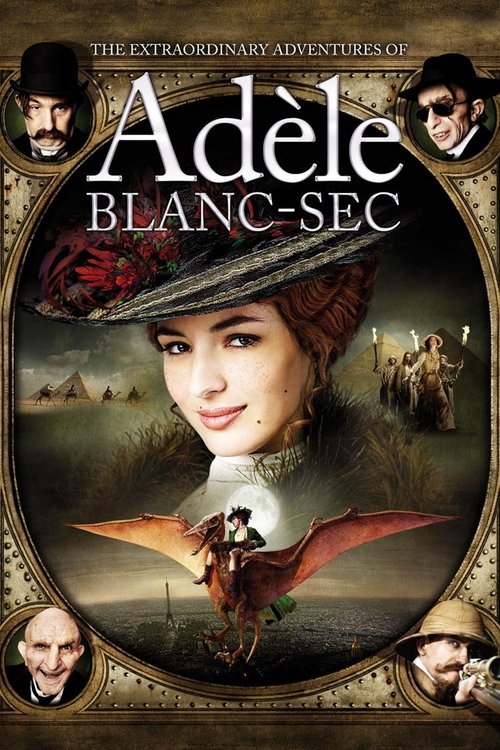
The film opens in 1912 Paris, where a pterosaur hatched from a 135-million-year-old egg terrorizes the city, a mummified Egyptian court waits in the Louvre, and a comatose twin sister lies felled by a hatpin.
Consciousness Markers
Adèle is a bold, self-directed journalist-adventurer who drives the plot and rescues others, giving the yarn a distaff spin, though it plays as genre convention rather than an ideological agenda.
A largely white French ensemble anchored by a female lead, with Youssef Hajdi as an Egyptian guide; the casting reflects the source material rather than any deliberate representational program.
No LGBTQ+ characters, themes, or subtext of any kind appear in the film.
The Egyptian setting and mummy plot are pure pulp adventure; the film offers no commentary on race, colonialism, or cultural identity.
No environmental or climate themes are present.
No critique of wealth, capitalism, or class structures; the villains are deranged scientists and pompous hunters.
No body-positivity themes; a padded costume is used purely for comedic effect on a bumbling inspector.
No exploration of neurodivergence; eccentric characters are played for whimsy, not as representation.
The 1912 Paris setting is fantastical pulp (pterosaurs, revived mummies) rather than a revisionist reframing of real history.
The film is a light, consequence-free adventure romp with no preaching or moral instruction.
Why it received this score
The film opens in 1912 Paris, where a pterosaur hatched from a 135-million-year-old egg terrorizes the city, a mummified Egyptian court waits in the Louvre, and a comatose twin sister lies felled by a hatpin. Luc Besson, adapting Jacques Tardi's comic, has built a machine for incident and little else. It is a romp in the old sense: consequence-free, and content to be so. No sermon waits at the end.
Louise Bourgoin's Adèle drives the plot with brash self-direction. She rescues a condemned scientist, rides the pterosaur through the sky, and negotiates with a pharaoh. This gives the yarn a distaff spin, and the picture is better for it. It reads as genre inheritance, not a program. The ensemble is a white French company, with Youssef Hajdi's Aziz as the Egyptian guide, and the Cairo sequence treats its mummies as pulp furniture. Nobody in the film has anything to say about empire. The film does not either.
The villains are a deranged scientist and a pompous big game hunter. Money is never the subject. Eccentricity is played for whimsy, and the padded costume on the bumbling inspector exists to land a gag. Nothing here lectures, nothing asks us to examine our assumptions, nothing arranges its characters into an argument about how we ought to live. The César for production design is the award this film earned. It closes with Adèle boarding a ship named Titanic, which is the sort of joke a picture makes when it has no thesis at all. Refreshing, in its way. Nearly extinct, too.
Analysis generated by our Consciousness Algorithm


Synopsis
An adventure set in the early part of the 20th century, focused on a popular novelist and her dealings with would-be suitors, the cops, monsters, and other distractions.
Questions about The Extraordinary Adventures of Adèle Blanc-Sec
Is The Extraordinary Adventures of Adèle Blanc-Sec woke?
No — The Extraordinary Adventures of Adèle Blanc-Sec is not woke, scoring 12 out of 100 on our wokeness meter. That earns it a verdict of Ultra Based.
Does The Extraordinary Adventures of Adèle Blanc-Sec have any woke elements?
1 of the 10 markers register at 30 or above, led by Feminist Agenda (30). On Feminist Agenda: Adèle is a bold, self-directed journalist-adventurer who drives the plot and rescues others, giving the yarn a distaff spin, though it plays as genre convention rather than an ideological agenda.
How does The Extraordinary Adventures of Adèle Blanc-Sec compare to other 2010 movies?
It ranks #71 of the 238 films from 2010 we've scored; their average is 11. The wokest is My Name Is Khan (84).
How is the Woke Score calculated?
An AI-assisted process researches the film and its reception, scores it 0–100 on ten markers, then combines those into one 0–100 Woke Score. It measures a specific set of 2020s cultural themes, not film quality.