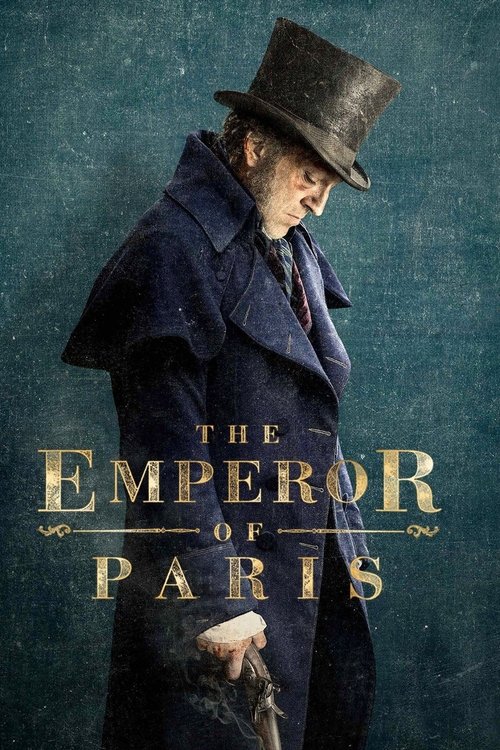
The Emperor of Paris (2018)
Directed by Jean-François Richet
No — The Emperor of Paris is not woke, scoring 0 out of 100 on our wokeness meter.
The Emperor of Paris transports the viewer to the gilded prisons and shadowed alleys of early nineteenth-century France.
Consciousness Markers
The cast is overwhelmingly white European, with no evident effort to diversify roles along modern identity lines.
No LGBTQ+ characters, relationships, or themes are present in the narrative.
Female characters exist within a 19th-century crime drama, but the film does not advance a feminist agenda or critique patriarchy.
The film is set in Napoleonic-era France and does not engage with racial consciousness or systemic racism.
There is no environmental or climate-related theme in the story.
The film deals with crime, policing, and historical intrigue, not economic inequality or anti-capitalist critique.
No body-positivity themes or body-diverse representation are present.
The film does not depict or comment on neurodivergence.
It is a historical drama about François Vidocq, but it does not reinterpret history through a modern progressive lens.
The film tells its story without overt moralizing or preachy contemporary messaging.
Why it received this score
The Emperor of Paris transports the viewer to the gilded prisons and shadowed alleys of early nineteenth-century France. We observe François Vidocq, the legendary escape artist, navigating a world governed by Napoleonic law and police bureaucracy. It is a study of charismatic criminality and the intricate workings of the Parisian underworld. The narrative commits entirely to the historical period, offering a vivid depiction of high-stakes intrigue and personal obsession without any attempt to import modern social concerns. The dramatic structure focuses on the clash between law and legendary genius, a contained conflict largely divorced from contemporary cultural debates.
We find the film to be an admirably self-contained piece of historical fiction. Its ambition remains limited to the confines of its period setting. There is no attempt to advance a modern progressive agenda or even to critique the systemic structures of its time using current socio-political frameworks. The visual style and narrative focus on the mechanics of crime and the evolution of a detective persona. It is a straightforward procedural, prioritizing the era's specific flavor of melodrama over any expansive social commentary. The production maintains its focus on the internal psychology of its characters and the historical backdrop of the criminal underworld.
This is cinema that simply exists outside the current cultural conversation. It does not lecture the audience on contemporary issues, nor does it attempt to recontextualize the past through a progressive lens. The film remains an artifact of its time, a specific piece of European historical drama that operates with its own defined internal logic. We leave the viewing experience with a complete lack of modern cultural baggage, which is perhaps its most reliable quality. It is a competent piece of period entertainment that asks nothing of the viewer other than to watch the caper unfold.
Analysis generated by our Consciousness Algorithm


Synopsis
Paris, France, early 19th century. The legendary convict François Vidocq lives in disguise trying to escape from a tragic past that torments him. When, after an unfortunate event, he crosses paths with the police chief, he makes a bold decision that will turn the ruthless mastermind of the Parisian underworld against him.
Questions about The Emperor of Paris
Is The Emperor of Paris woke?
No — The Emperor of Paris is not woke, scoring 0 out of 100 on our wokeness meter. That earns it a verdict of Ultra Based.
Does The Emperor of Paris have any woke elements?
No. All 10 markers score zero.
How does The Emperor of Paris compare to other 2018 movies?
It ranks #291 of the 325 films from 2018 we've scored; their average is 20. The wokest is Return (92).
How is the Woke Score calculated?
An AI-assisted process researches the film and its reception, scores it 0–100 on ten markers, then combines those into one 0–100 Woke Score. It measures a specific set of 2020s cultural themes, not film quality.