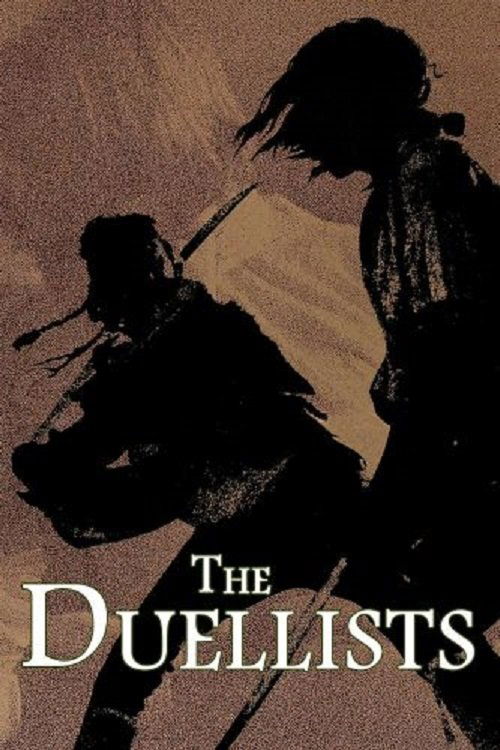
The Duellists (1977)
Directed by Ridley Scott
No — The Duellists is not woke, scoring 0 out of 100 on our wokeness meter.
Ridley Scott's directorial debut arrives from 1977 with the confidence of a much older hand, and it asks almost nothing of the modern viewer beyond patience and a tolerance for cavalry sabers.
Consciousness Markers
The cast is entirely white European characters played by white actors; no deliberate inclusive or diverse casting agenda is present.
No LGBTQ+ characters, relationships, or themes appear in the film.
Women appear only in supporting roles as mistresses, lovers, and sisters; the narrative is focused on male honor and dueling, with no feminist critique or agenda.
The film is set in Napoleonic Europe and features no engagement with racial identity, racism, or racial justice.
No environmental or climate-change themes are present.
The film concerns military honor and personal obsession, not economic inequality or anti-capitalist critique.
No body-positivity themes or diverse body representation are present.
No neurodivergent characters or themes are present.
The film is a historically authentic adaptation of a Conrad story, not a revisionist reframing of history for modern ideological purposes.
The film is a visual, action-driven historical drama with no preachy or didactic modern messaging.
Why it received this score
Ridley Scott's directorial debut arrives from 1977 with the confidence of a much older hand, and it asks almost nothing of the modern viewer beyond patience and a tolerance for cavalry sabers. Two French officers, Feraud and d'Hubert, spend two decades insulting each other with escalating formality, and the film tracks their grudge across Strasbourg, Augsburg, Lubeck, a frozen Russia, and a final field in 1816. The camera lingers on uniforms, dust, and the way sunlight falls across a dueling ground. Nobody pauses to explain why any of this matters, which is its own quiet virtue.
Based on Joseph Conrad's novella The Duel, itself drawn from the real quarrels of two Grande Armee officers, the picture concerns honor, obsession, and the strange intimacy of men who cannot stop trying to kill each other. Women drift through as mistresses and sisters, offering sensible advice that goes unheeded. The cast is uniformly European in appearance and temperament, which suits a story set in Napoleonic France. There is no sermon here, no moment where a character turns to the lens to instruct us on how to feel. The film trusts its audience to find the melancholy unaided.
Scott would go on to make larger and louder things, and we can sense him rehearsing here. The duels are staged with an accuracy that fight historians still cite, and the whole enterprise has the texture of a painting we are permitted to walk through. It is a cold film, and a patient one. It offers no lesson, no cause, no corrective to the present. For that, and for the sheer unapologetic specificity of its concerns, it stands as a relic from a period when a director's first feature could simply be about two stubborn men and the weather.
Analysis generated by our Consciousness Algorithm
Part of


Synopsis
In 1800, as Napoleon Bonaparte rises to power in France, a rivalry erupts between Armand and Gabriel, two lieutenants in the French Army, over a perceived insult. For over a decade, they engage in a series of duels amidst larger conflicts, including the failed French invasion of Russia in 1812, and shifts in the political and social systems of Europe.
Questions about The Duellists
Is The Duellists woke?
No — The Duellists is not woke, scoring 0 out of 100 on our wokeness meter. That earns it a verdict of Ultra Based.
Does The Duellists have any woke elements?
No. All 10 markers score zero.
How does The Duellists compare to other 1977 movies?
It ranks #25 of the 27 films from 1977 we've scored; their average is 8. The wokest is A Special Day (60).
How is the Woke Score calculated?
An AI-assisted process researches the film and its reception, scores it 0–100 on ten markers, then combines those into one 0–100 Woke Score. It measures a specific set of 2020s cultural themes, not film quality.