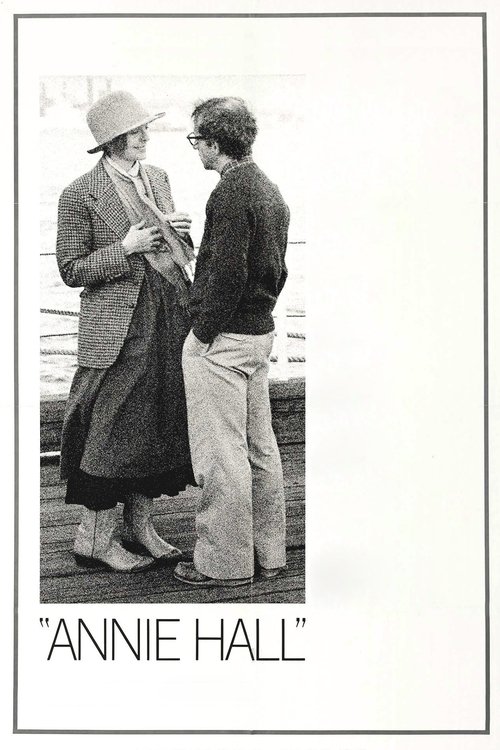
Annie Hall (1977)
Directed by Woody Allen
No · Ultra Based
How we score movies →Consciousness Markers
Annie has agency and career ambitions, progressive for 1977, but the film ultimately centers male neurosis and treats female independence as a problem to be solved through romance.
Diane Keaton is a significant female lead, but her character is defined largely through male perspective and romantic availability. Supporting cast is uniformly white.
Alvy frequently lectures Annie and others about culture, art, and relationships. The film presents his pedantry as charming rather than off-putting, though some self-awareness exists.
The film gently critiques materialism and consumer culture through Alvy's alienation, but without systematic examination of economic structures or class dynamics.
Alvy's neurotic anxiety is portrayed sympathetically but not coded as neurodivergence in any contemporary sense. His mental state is treated as individual quirk rather than systematic condition.
No LGBTQ+ themes or characters present in the film. The narrative is entirely heteronormative.
The film contains no meaningful engagement with race or racial representation. It reflects the racial homogeneity of its filmmakers' social circles.
Climate concerns are entirely absent from the film's thematic universe. This is a romantic comedy about urban neurosis, not environmental consciousness.
No engagement with body positivity concepts. Female beauty standards are presented without irony or critique.
The film contains no historical revisionism. It is set in contemporary 1970s New York without engagement with historical narratives.


Synopsis
New York comedian Alvy Singer falls in love with the ditsy Annie Hall.
Why it received this score
Annie Hall remains a monument to 1970s romanticism and neurotic introspection, yet it operates in a cultural moment distant from contemporary social consciousness markers. The film does feature a female lead with professional ambitions and romantic autonomy, which was progressive for 1977, but this reflects general liberal attitudes of the era rather than the specific constellation of modern progressive sensibilities we now recognize. Diane Keaton's Annie is presented as somewhat scatterbrained, her intelligence filtered through male anxiety rather than allowed to stand on its own terms.
The narrative structure itself poses interpretive challenges. We experience the relationship primarily through Alvy's consciousness and neuroses, rendering Annie largely a projection of his desires and disappointments. His casual dismissal of her concerns, his infidelity, and his ultimate inability to accept her growth are presented with a lightness that the film seems to expect we will find charming. The gender dynamics, while not hostile by the standards of the time, reflect a male perspective that treats female subjectivity as secondary to male emotional development.
What cultural awareness the film possesses emerges almost accidentally, through its honest portrayal of 1970s New York intellectual life and its acknowledgment of therapy culture. The film is not hostile to progressive values, but neither does it center them. It is simply a product of a pre-2015 liberalism that assumed certain attitudes were self-evident without requiring explicit articulation. By the standards of modern progressive cinema, it reads as charmingly quaint.
Analysis generated by our Consciousness Algorithm
Critic Reviews
“Annie Hall is a movie about a man who is always looking for the loopholes in perfection. Who can turn everything into a joke, and wishes he couldn't.”
“This is the film that the movie world had been anticipating since the man born Allen Stewart Konigsberg had signaled his raw comedic talents with mad-cap directorial debut, Take The Money And Run, nine years earlier. Marrying the free-flowing sketch form of those early comedies with real emotional and psychological depth for the first, and, arguably, most successful, time.”
“After slapstick farces as exuberant and hilarious as Sleeper and Love and Death, it comes as a soft, fuzzy, mildly diverting letdown.”