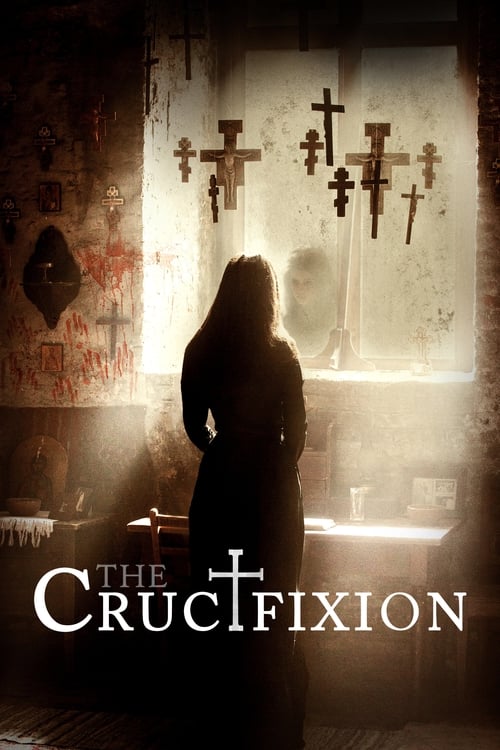
The Crucifixion (2017)
Directed by Xavier Gens
No — The Crucifixion is not woke, scoring 7 out of 100 on our wokeness meter.
The Crucifixion arrives with grim tidings attached: the Tanacu exorcism of 2005, in which a young nun died under the care of a priest who believed a demon had taken up residence in her.
Consciousness Markers
The cast is predominantly Romanian, which is organic to the film's Romanian setting rather than a deliberate diversity initiative; a female journalist leads, but this is standard genre casting.
The plot hinges on whether the nun was mentally ill (diagnosed schizophrenic) or possessed, engaging mental illness as a central question, though it frames it as a debate rather than advocacy.
A female investigative journalist serves as protagonist, but the film offers no feminist critique or commentary; her gender is incidental to the exorcism plot.
The film is a straightforward horror-thriller with no preachy or didactic messaging; any thematic content is delivered through plot rather than sermon.
No LGBTQ+ characters, themes, or subtext appear anywhere in the film.
The film engages no racial themes or commentary; a Roma character appears but is treated as a plot device rather than a subject of racial consciousness.
No environmental or climate themes are present.
No economic critique or anti-capitalist messaging exists in the film.
No body positivity themes are present.
While based on the real Tanacu exorcism, the film dramatizes events without any ideological rewriting of history.
Why it received this score
The Crucifixion arrives with grim tidings attached: the Tanacu exorcism of 2005, in which a young nun died under the care of a priest who believed a demon had taken up residence in her. The film relocates the horror to a Romanian monastery and a Bucharest jail cell, where a New York journalist named Nicole works through a murder investigation that keeps threatening to become a theological one. The cast is largely Romanian, which suits the setting and spares us the usual parade of accented foreigners. Sophie Cookson carries the lead with a professionalism that never quite becomes personality. She is a woman in a man's profession, and the film notes this about as much as it notes the weather, which is to say not at all.
The central question is whether Sister Adelina was schizophrenic or possessed, and the film treats it as a genuine coin flip. A doctor offers a diagnosis. A bishop offers a press release. The nun's friend offers testimony. Nicole's own dead mother, who chose faith over medicine, hovers at the edges as a private wound instead of a public argument. That is the film's one interesting maneuver: it lets the audience do the debating. No character turns to the camera to explain what we should think about mental illness, or the church, or the credulity of grieving people. The demon, when it finally appears, is a plot mechanism, not a thesis.
What remains is a competent, gloomy exorcism picture with no interest in instructing anyone. There is no economic subtext, no environmental conscience, no meditation on race or identity. The gypsy boy exists to be possessed and to hold down a levitating woman. The monastery exists to be damp. The whole enterprise is content to be a horror film, and in an era when even the damned feel obliged to deliver a sermon, that restraint is its own small mercy.
Analysis generated by our Consciousness Algorithm


Synopsis
When a priest is jailed for the murder of a nun on whom he was performing an exorcism, an investigative journalist strives to determine whether he in fact murdered a mentally ill person, or if he lost the battle with a demonic presence.
Questions about The Crucifixion
Is The Crucifixion woke?
No — The Crucifixion is not woke, scoring 7 out of 100 on our wokeness meter. That earns it a verdict of Ultra Based.
Does The Crucifixion have any woke elements?
Very few. None of the 10 markers reaches 30, the level where a marker counts as present; the highest is Neurodivergence at 15.
How does The Crucifixion compare to other 2017 movies?
It ranks #208 of the 309 films from 2017 we've scored; their average is 19. The wokest is I Am Not Your Negro (92).
How is the Woke Score calculated?
An AI-assisted process researches the film and its reception, scores it 0–100 on ten markers, then combines those into one 0–100 Woke Score. It measures a specific set of 2020s cultural themes, not film quality.