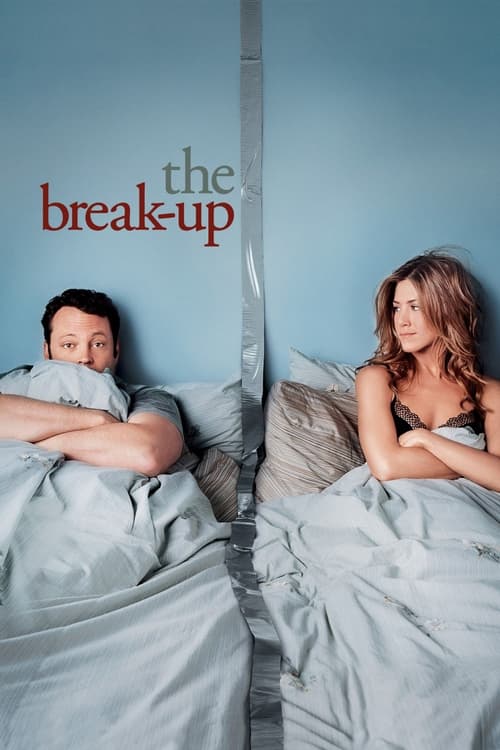
The Break-Up (2006)
Directed by Peyton Reed
No — The Break-Up is not woke, scoring 11 out of 100 on our wokeness meter.
"The Break-Up" arrives from 2006, a year when a studio romantic comedy could still be built on two attractive white people shouting at each other in a Chicago condominium.
Consciousness Markers
The plot gives Brooke a legitimate grievance about emotional labor and Gary's immaturity, and Johnny eventually concedes Gary was selfish, but this is conventional rom-com relationship friction rather than a feminist thesis.
There is a mild didactic streak in the third act's 'he should have appreciated her' moral, but it is delivered as character drama rather than preachy social instruction.
The principal cast is uniformly white and the film makes no effort at diverse or color-conscious casting; it is a standard 2006 studio rom-com ensemble.
No LGBTQ+ characters, themes, or subtext appear anywhere in the film.
Race is entirely absent as a subject; the film is set in a white Chicago milieu with no commentary on racial dynamics.
No environmental or climate themes whatsoever.
The film is a mainstream studio product with no critique of wealth, class, or capitalism; the condo and art gallery are simply backdrop.
No body-positivity messaging; the film trades on conventional Hollywood attractiveness.
No neurodivergent characters or themes are present.
The film is a contemporary fictional story with no historical subject matter to revise.
Why it received this score
"The Break-Up" arrives from 2006, a year when a studio romantic comedy could still be built on two attractive white people shouting at each other in a Chicago condominium. Peyton Reed directs Vince Vaughn and Jennifer Aniston through the slow dissolution of a relationship that begins at Wrigley Field and ends with both parties hauling furniture out of a shared apartment. The ensemble is uniformly pale, and the film never glances at the thought. Race, orientation, class, the climate: none of these intrude on the proceedings. The condo is a condo. The art gallery is an art gallery.
There is a genuine grievance buried in the screenplay. Brooke performs the emotional labor, plans the dinner, cleans the dishes, and asks Gary to notice. Johnny eventually tells Gary, in plain terms, that he was selfish and distant. A viewer could extract a modest thesis about unequal effort in heterosexual partnership. But this is the standard friction of the genre, the same argument that powered a thousand sitcoms before it, and the film resolves it by having Brooke simply leave. That is a plot decision, not a position.
The final act carries a faint sermon. Gary learns, too late, to appreciate what he had, and the movie wants us to feel the weight of that lesson. It lands as character drama, not instruction, which keeps the preaching to a minimum. We are left with a well-funded studio comedy carrying a C+ CinemaScore and a 34 percent approval rating, a film with no discernible interest in the social questions that would occupy its successors. It is a time capsule of a less self-conscious era, and it is content to be one.
Analysis generated by our Consciousness Algorithm
Part of


Synopsis
Pushed to the breaking-up point after their latest 'why can't you do this one little thing for me?' argument, Brooke calls it quits with her boyfriend Gary. What follows is a hilarious series of remedies, war tactics, overtures and undermining tricks – all encouraged by the former couple's friends and confidantes …and the occasional total stranger! When neither ex is willing to move out of their shared apartment, the only solution is to continue living as hostile roommates until one of them reaches breaking point.
Questions about The Break-Up
Is The Break-Up woke?
No — The Break-Up is not woke, scoring 11 out of 100 on our wokeness meter. That earns it a verdict of Ultra Based.
Does The Break-Up have any woke elements?
Very few. None of the 10 markers reaches 30, the level where a marker counts as present; the highest is Feminist Agenda at 15.
How does The Break-Up compare to other 2006 movies?
It ranks #67 of the 211 films from 2006 we've scored; their average is 11. The wokest is An Inconvenient Truth (92).
How is the Woke Score calculated?
An AI-assisted process researches the film and its reception, scores it 0–100 on ten markers, then combines those into one 0–100 Woke Score. It measures a specific set of 2020s cultural themes, not film quality.