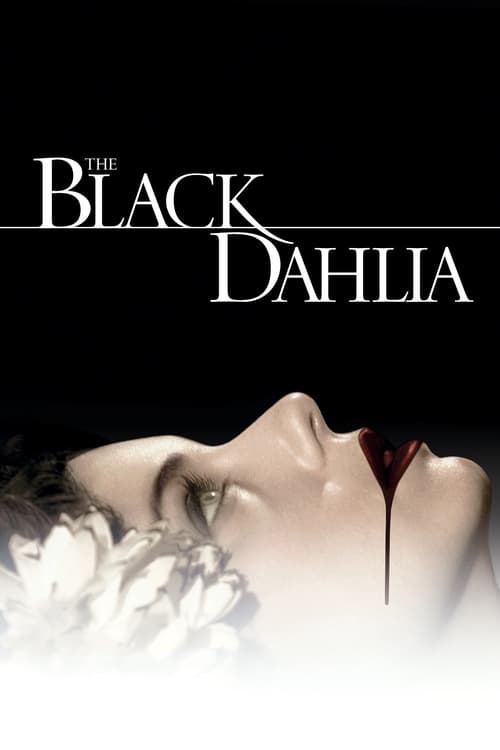
The Black Dahlia (2006)
Directed by Brian De Palma
No — The Black Dahlia is not woke, scoring 6 out of 100 on our wokeness meter.
It is 2006, and Brian De Palma has adapted James Ellroy's novel about the butchered Elizabeth Short.
Consciousness Markers
A lesbian nightclub and Elizabeth Short's association with lesbians appear, but they are framed as seedy period-noir underworld color rather than affirmative representation or advocacy.
A subplot about a wealthy family building cheap firetrap housing gestures at corruption, but it functions as noir cynicism rather than an eat-the-rich message.
The cast is overwhelmingly white and assembled from conventional Hollywood leads; no deliberate diversity casting or color-conscious choices are evident.
The film uses a butchered real woman as a lurid plot device; Maggie Gyllenhaal reportedly declined the role precisely because the story disrespected Short's memory, making this the opposite of a feminist text.
No engagement with race, racism, or racial identity appears anywhere in the narrative.
No environmental or climate themes are present.
No body-positivity themes; the film's treatment of the victim's body is exploitative rather than affirming.
References to 'family madness' are period-noir melodrama, not neurodivergence representation or advocacy.
The film fictionalizes a real unsolved murder via a novel, but it does not reframe history for ideological purposes.
The film is a convoluted neo-noir that never pauses to deliver a social or moral sermon to the audience.
Why it received this score
It is 2006, and Brian De Palma has adapted James Ellroy's novel about the butchered Elizabeth Short. The result is a neo-noir assembled from conventional Hollywood leads, all of them white, none cast with an eye toward reflecting the city the story pretends to inhabit. Josh Hartnett and Scarlett Johansson and Aaron Eckhart go through the motions of obsession while the production, shot largely in Bulgaria, keeps its gaze fixed firmly on the past. Whatever cultural awareness the film possesses begins and ends with its period detail.
Consider the lesbian nightclub where Bucky Bleichert goes looking for answers. It exists as underworld texture, a dim room of period color and cigarette smoke, not as an affirmation of anything. The wealthy Linscott family builds cheap firetrap housing, which registers as generic noir cynicism about money and power, not as a critique of capital. References to family madness are melodrama, a gothic flourish inherited from the source. Nowhere does the film turn to the audience to explain what it all means, and this absence is its one accidental virtue.
And then there is the corpse. De Palma uses a real woman's murder as a lure, a puzzle piece, a prop dummy auctioned off years later. Maggie Gyllenhaal declined the role because she found the treatment of Short's memory distasteful. She was right. The film earns nothing on the representation front and less on the human one. It is a handsome, muddled, thoroughly retrograde exercise, and it deserves the shrug it received.
Analysis generated by our Consciousness Algorithm


Synopsis
In 1940s Los Angeles, two former boxers-turned-cops must grapple with corruption, narcissism, stag films and family madness as they pursue the killer of an aspiring young actress.
Questions about The Black Dahlia
Is The Black Dahlia woke?
No — The Black Dahlia is not woke, scoring 6 out of 100 on our wokeness meter. That earns it a verdict of Ultra Based.
Does The Black Dahlia have any woke elements?
Very few. None of the 10 markers reaches 30, the level where a marker counts as present; the highest is LGBTQ+ Themes at 15.
How does The Black Dahlia compare to other 2006 movies?
It ranks #121 of the 211 films from 2006 we've scored; their average is 11. The wokest is An Inconvenient Truth (92).
How is the Woke Score calculated?
An AI-assisted process researches the film and its reception, scores it 0–100 on ten markers, then combines those into one 0–100 Woke Score. It measures a specific set of 2020s cultural themes, not film quality.