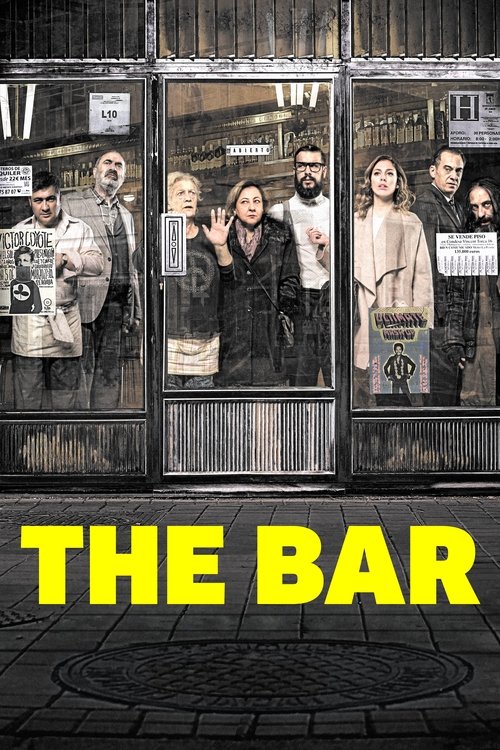
The Bar (2017)
Directed by Álex de la Iglesia
No — The Bar is not woke, scoring 4 out of 100 on our wokeness meter.
Álex de la Iglesia's The Bar (2017) drops a cross-section of downtown Madrid into a decrepit tavern, with a sniper outside and a plague inside.
Consciousness Markers
The ensemble is a natural cross-section of Madrid (including an Asian and an Argentine character), but their presence carries no thematic comment or representational agenda.
The conspiracy of clandestine agents and a quarantine cover-up gestures vaguely at institutional distrust, but the film is a paranoid survival thriller, not a critique of wealth or capital.
The film offers no moral instruction or social messaging; it is pure genre chaos and dark comedy.
No LGBTQ+ characters, themes, or subtext appear anywhere in the film.
Elena is a survivor, but the film subjects her to being stripped and oiled for a sewer crawl; the female roles are fully subordinated to gratuitous thriller mechanics rather than any feminist statement.
No engagement with racial themes or consciousness; characters are defined by survival, not identity.
No environmental or climate content whatsoever.
No body-positivity themes; the film's treatment of bodies is grotesque and exploitative horror, not affirming.
No neurodivergent characters or themes are present.
The premise is inspired loosely by bar anecdotes of the director and co-writer but makes no historical revisionist claim.
Why it received this score
Álex de la Iglesia's The Bar (2017) drops a cross-section of downtown Madrid into a decrepit tavern, with a sniper outside and a plague inside. The ensemble is a natural slice of the city, an Asian patron and an Argentine among them, and the film makes nothing of it. That is not a failing. It is simply a fact of casting, and the movie has the good manners not to congratulate itself for it.
The film has no interest in instructing anyone. Bodies are stripped, oiled, and shoved down sewer grates in pursuit of a vaccine vial. Elena, the eventual survivor, is reduced to her underwear and greased for a crawl through a tunnel, which is genre mechanics at their most grotesque and efficient, not commentary. When the story gestures at anything larger, it is a paranoid shrug toward clandestine agents and a quarantine cover-up: institutional distrust as texture, never as thesis. Nobody eats the rich here, though several characters do their level best to eat each other's share of the doses.
What remains is chaos, dark comedy, and a rising body count. The film offers no moral, no lesson, no sermon, which makes it an unusual specimen in its era: a genre exercise that asks nothing of our politics and everything of our stomach. We can admire the honesty even as the final act curdles into shouting in standing water. De la Iglesia's camera is far too busy for messaging. The result will offend no sensibilities and improve no conscience, and it seems entirely at peace with that arrangement.
Analysis generated by our Consciousness Algorithm


Synopsis
In downtown Madrid, a series of mysterious gunshots trap a motley assortment of people in a decrepit bar.
Questions about The Bar
Is The Bar woke?
No — The Bar is not woke, scoring 4 out of 100 on our wokeness meter. That earns it a verdict of Ultra Based.
Does The Bar have any woke elements?
Very few. None of the 10 markers reaches 30, the level where a marker counts as present; the highest is Representation Casting at 10.
How does The Bar compare to other 2017 movies?
It ranks #252 of the 309 films from 2017 we've scored; their average is 19. The wokest is I Am Not Your Negro (92).
How is the Woke Score calculated?
An AI-assisted process researches the film and its reception, scores it 0–100 on ten markers, then combines those into one 0–100 Woke Score. It measures a specific set of 2020s cultural themes, not film quality.