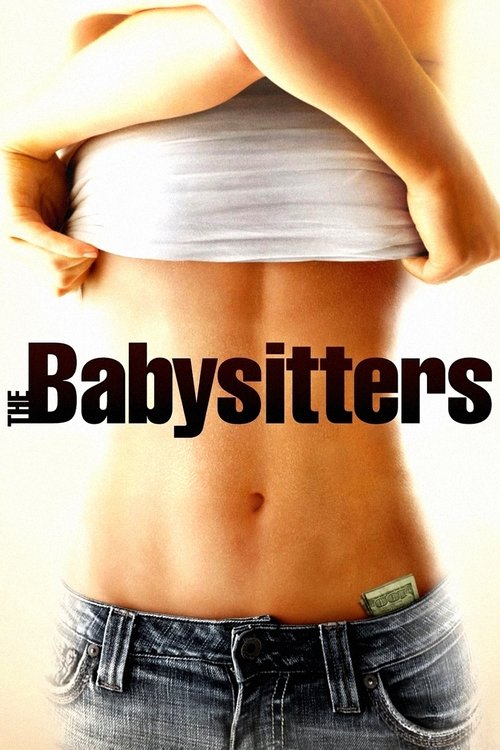
The Babysitters (2008)
Directed by David Ross
No — The Babysitters is not woke, scoring 0 out of 100 on our wokeness meter.
David Ross's The Babysitters arrived in 2008 with a premise engineered to scandalize and little else on its mind.
Consciousness Markers
The cast includes some naturally diverse performers, but the film makes no deliberate representational statement or commentary.
There are no LGBTQ+ characters, themes, or subtext in the film.
The film centers on teenage girls but frames them through exploitation and transactional sex rather than a modern feminist agenda.
Race is not a thematic concern, and the film offers no racial consciousness or commentary.
There is no environmental or climate-related content.
The babysitting-to-call-girl business premise is transactional, but it is not framed as an anti-capitalist or eat-the-rich critique.
The film does not engage with body positivity or related themes.
No neurodivergent characters or themes are present.
The film is a contemporary fictional drama with no historical revisionism.
The film does not deliver modern social-justice lectures or overt moralizing in the woke register.
Why it received this score
David Ross's The Babysitters arrived in 2008 with a premise engineered to scandalize and little else on its mind. Shirley, a seventeen-year-old entrepreneur played by Katherine Waterston, converts a routine sitting job into a small franchise of teenage companionship for dissatisfied married men, complete with business cards and a twenty percent cut skimmed off the top. The film treats this as a grim little parable about commerce and boredom, and it is careful never to suggest that anyone involved is a victim or that the arrangement deserves a moral audit from the audience.
The cast includes faces a modern studio would proudly foreground, yet the film asks them to do nothing representative. Cynthia Nixon plays the neglected wife, John Leguizamo the restless husband, and the teenage girls are written as operators, not symbols. No character pauses to explain structural inequality. No one delivers a speech about consent, labor, or the patriarchy. The transactions are sordid, and the film's attitude toward them sits closer to a shrug than a sermon. It is provocative without being instructive, which is its own kind of honesty.
This is a film from a moment before the culture decided that every story needed a thesis stapled to it. It is exploitation dressed in indie-film restraint, and its discomfort comes from how little it editorializes. There is no environmental conscience, no body-positive aside, no neurodivergent subplot, no historical revision. The movie simply watches its characters trade intimacy for cash and then drives off, leaving the audience to sit with the wreckage. As a cultural artifact, it registers as a curiosity from a different era of independent cinema, one that trusted provocation over instruction. The ledger here is empty, and the emptiness is the point. Not every film is trying to teach us something, and this one is barely trying to do anything at all beyond making us squirm. That, at least, it accomplishes with a certain efficiency. We grade it accordingly: a clean sheet, a shrug, and a long drive home.
Analysis generated by our Consciousness Algorithm


Synopsis
Seventeen-year-old Shirley is a good student who works as a babysitter in order to make money for college. One night Michael, a father Shirley works for, confesses he's unhappy with married life. Shirley has a crush on Michael, and seizes this moment to kiss him. Michael is so happy he presents Shirley with a big tip, which gives her an idea. Shirley plans to make extra money by setting up her teenage friends with other unhappy fathers.
Questions about The Babysitters
Is The Babysitters woke?
No — The Babysitters is not woke, scoring 0 out of 100 on our wokeness meter. That earns it a verdict of Ultra Based.
Does The Babysitters have any woke elements?
No. All 10 markers score zero.
How does The Babysitters compare to other 2008 movies?
It ranks #175 of the 212 films from 2008 we've scored; their average is 12. The wokest is Milk (68).
How is the Woke Score calculated?
An AI-assisted process researches the film and its reception, scores it 0–100 on ten markers, then combines those into one 0–100 Woke Score. It measures a specific set of 2020s cultural themes, not film quality.