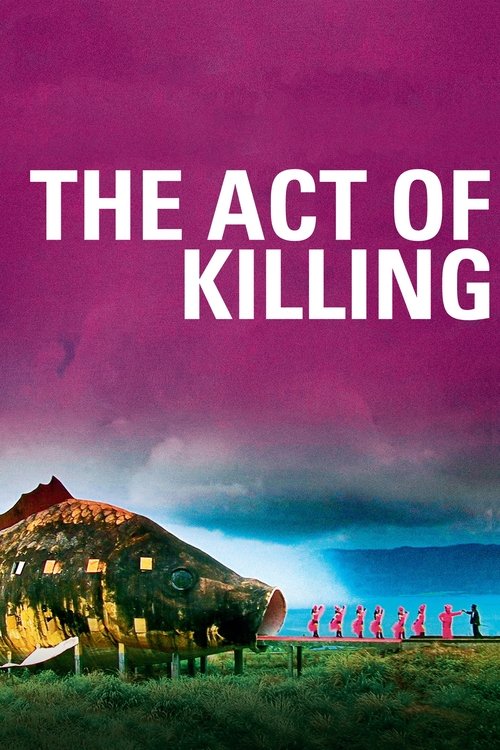
The Act of Killing (2012)
Directed by Joshua Oppenheimer
No — The Act of Killing is not especially woke, scoring 32 out of 100 on our wokeness meter.
Joshua Oppenheimer's documentary follows former Indonesian death squad leaders as they restage their own mass killings in the borrowed grammar of Hollywood genres.
Consciousness Markers
The film directly challenges the Indonesian state's glorifying narrative of the 1965-66 killings, exposing the celebrated 'heroes' as mass murderers and revising the official history. This is truth-telling revisionism rather than an ideologically modern reframing.
The film centers entirely on Indonesian subjects and was co-directed by an anonymous Indonesian collaborator, giving voice to non-Western participants. However, this is a documentary about Indonesian events, so the casting is a natural consequence of the subject rather than a deliberate diversity initiative.
The film touches on the targeting and continued extortion of ethnic Chinese Indonesians and the political persecution of alleged communists, giving it an ethnic dimension, though race is not the film's organizing lens.
The film is largely observational, letting the perpetrators incriminate themselves through re-enactment rather than delivering explicit moral instruction, though its final act carries a clear condemnatory message.
The film depicts corruption, extortion, land-grabbing for developers, and gangsters profiting from state power, but it offers no class-conscious anti-capitalist argument; the critique is of impunity, not of capital.
The film documents the gangsters' sexual objectification of women and boasts about raping teenage girls and Gerwani members, but this is presented as evidence of atrocity rather than as a feminist thesis.
There are no LGBTQ+ themes, characters, or subtext anywhere in the film.
The film's origin traces to a palm plantation labor documentary, but climate is not a theme of the finished work.
There is no body-positivity content in the film.
Congo's psychological trauma and panic attacks are depicted, but they are not framed as neurodivergence.
Why it received this score
Joshua Oppenheimer's documentary follows former Indonesian death squad leaders as they restage their own mass killings in the borrowed grammar of Hollywood genres. The subject is atrocity on a scale that resists summary, and the film treats it with a patience that borders on the unbearable. Its participants are Indonesian, its crew largely anonymous, and its vantage point genuinely non-Western. That vantage arises from the material itself, not from any deliberate design, which makes the film's diversity a fact of geography instead of a statement of intent.
The film does not tell us what to think. It hands the perpetrators the camera and the costumes, then watches them hang themselves with both. Anwar Congo brags, struts, and slowly collapses under the weight of what he has done, and the collapse lands harder because nobody narrates it for us. A structural argument about impunity does surface: the men who cleared land for developers and extorted the living remain heroes in the official telling. Exposing that is truth-telling, and it is devastating. It is not a sermon, and it never mistakes itself for one.
Where the film grazes against contemporary sensibilities, it does so in passing. The boasts about raping teenage girls register as evidence of atrocity, not as a thesis about gender. The extortion of ethnic Chinese Indonesians supplies an ethnic dimension without becoming the organizing lens. Corruption and land-grabbing occupy real screen time, but the grievance is impunity, not capital. And the film refuses to diagnose its central figure, rendering his panic attacks as plain human wreckage. A viewer arriving with a checklist will find most of it untouched. A viewer arriving with a conscience will find the floor gone.
{"thematic_tags": ["true_story"]}
Analysis generated by our Consciousness Algorithm


Synopsis
After befriending documentarian Joshua Oppenheimer, former Indonesian death squad leaders reenact their real-life mass killings in the style of various American film genres. As they recreate their past atrocities, the line between reality and performance blurs, exposing the lingering impact of Indonesia's 1965-66 anti-communist purge and the unsettling psychology of its perpetrators.
Questions about The Act of Killing
Is The Act of Killing woke?
No — The Act of Killing is not especially woke, scoring 32 out of 100 on our wokeness meter. That earns it a verdict of Based.
Does The Act of Killing have any woke elements?
3 of the 10 markers register at 30 or above, led by Revisionist History (50), Representation Casting (40) and Racial Consciousness (35). On Revisionist History: The film directly challenges the Indonesian state's glorifying narrative of the 1965-66 killings, exposing the celebrated 'heroes' as mass murderers and revising the official history.
How does The Act of Killing compare to other 2012 movies?
It ranks #21 of the 230 films from 2012 we've scored; their average is 12. The wokest is Killing Them Softly (92).
How is the Woke Score calculated?
An AI-assisted process researches the film and its reception, scores it 0–100 on ten markers, then combines those into one 0–100 Woke Score. It measures a specific set of 2020s cultural themes, not film quality.