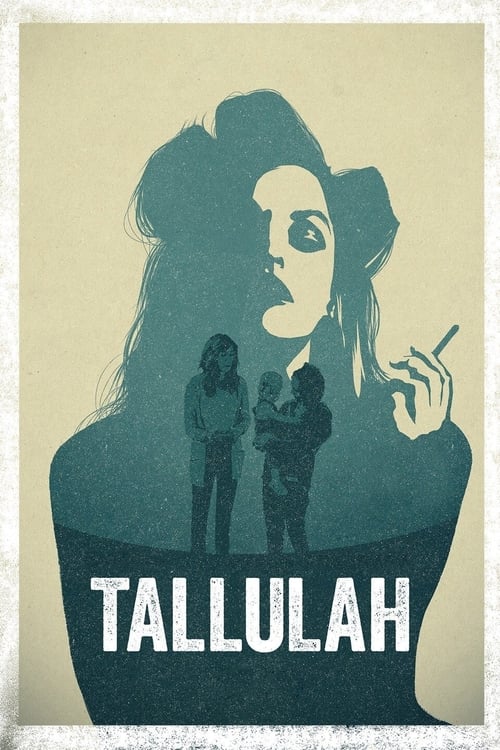
Tallulah (2016)
Directed by Sian Heder
No — Tallulah is not especially woke, scoring 25 out of 100 on our wokeness meter.
We approach this film as a careful examination of modern domestic anxieties, which is perhaps its primary cultural function.
Consciousness Markers
Written and directed by Sian Heder, the film centers women's interior lives and pointedly interrogates the assumption of universal maternal instinct, with Carolyn openly admitting she never wanted to be a mother.
The ensemble is notably diverse (Elliot Page, Uzo Aduba, David Zayas, Felix Solis) and helmed by a woman director, but the casting reads as natural rather than self-consciously curated for representation.
A genuine LGBTQ+ subplot exists: Margo's ex-husband Stephen has left her for a man, Andreas (Zachary Quinto), which drives her marital grief. It is treated matter-of-factly and is secondary to the main story.
The contrast between a homeless teenager and a wealthy Beverly Hills housewife gestures at class disparity, but the film makes no political argument about wealth or capitalism.
The film is a character-driven drama that explores its themes through performance and ambiguity rather than preaching; it largely avoids didactic messaging.
No racial themes or commentary are present; characters of color exist naturally in the story without the film engaging race as a subject.
No environmental or climate themes appear anywhere in the film.
No body positivity themes or messaging are present.
No neurodivergence is depicted or addressed; Carolyn's erratic behavior is framed as neglect and self-absorption, not neurodivergence.
No historical revisionism; the film is a contemporary fictional drama.
Why it received this score
We approach this film as a careful examination of modern domestic anxieties, which is perhaps its primary cultural function. The narrative possesses a certain commitment to its internal logic, focusing heavily on the collision of suburban aspiration and urban squalor. The portrayal of women attempting to reconcile societal expectations with personal desires forms the film’s more substantive core. We see a pointed interrogation of the supposed universal maternal impulse, which is explored through Carolyn’s admissions of neglect and her inability to claim genuine maternal instincts. This is not a sermon, but a quiet observation of a woman who finds herself unwilling to participate in the ritual of motherhood.
The handling of interpersonal dynamics avoids the most obvious signifiers of progressive sensibility. The LGBTQ+ subplots, specifically the grief surrounding Margo's marriage and the affair, are treated with a muted, understated naturalism. The diverse ensemble, while present, is used to flesh out the environment rather than to drive a specific narrative of social advocacy. The film makes a brief, almost accidental gesture at class disparity through the presence of a homeless teenager against a backdrop of Beverly Hills wealth. This anti-capitalist friction is handled with a degree of ambiguity, stopping short of becoming a genuine political argument.
Ultimately, the film is a finely tuned character study, though its cultural awareness is specific and not sweeping. It uses its diverse casting and complex emotional landscape to create a space for intense, if narrow, social consciousness. The ambition of the piece rests on its ability to explore these specific internal conflicts through performance and narrative suggestion. It is a capable piece of dramatic work that prefers nuance to overt social commentary.
Analysis generated by our Consciousness Algorithm
Synopsis
Desperate to be rid of her toddler, a dissatisfied Beverly Hills housewife hires a stranger to babysit and ends up getting much more than she bargained for.
Questions about Tallulah
Is Tallulah woke?
No — Tallulah is not especially woke, scoring 25 out of 100 on our wokeness meter. That earns it a verdict of Based.
Does Tallulah have any woke elements?
3 of the 10 markers register at 30 or above, led by Feminist Agenda (45), LGBTQ+ Themes (35) and Representation Casting (35). On Feminist Agenda: Written and directed by Sian Heder, the film centers women's interior lives and pointedly interrogates the assumption of universal maternal instinct, with Carolyn openly admitting she never wanted to be a mother.
How does Tallulah compare to other 2016 movies?
It ranks #56 of the 285 films from 2016 we've scored; their average is 16. The wokest is 13th (92).
How is the Woke Score calculated?
An AI-assisted process researches the film and its reception, scores it 0–100 on ten markers, then combines those into one 0–100 Woke Score. It measures a specific set of 2020s cultural themes, not film quality.