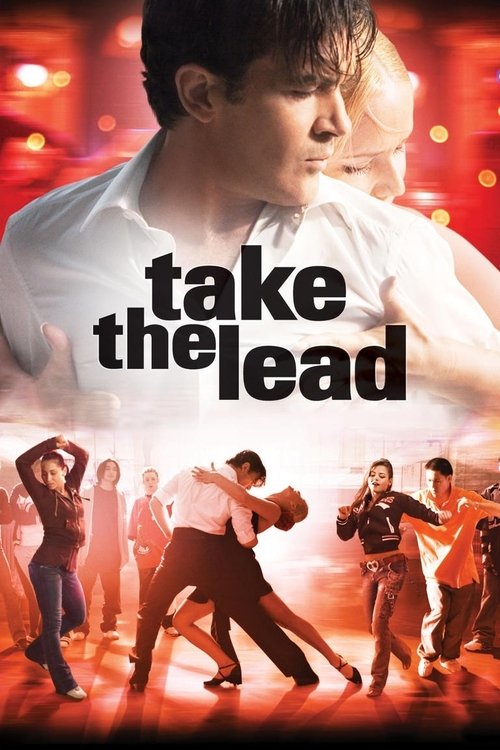
Take the Lead (2006)
Directed by Liz Friedlander
No — Take the Lead is not especially woke, scoring 26 out of 100 on our wokeness meter.
Take the Lead arrives in 2006 as a familiar classroom parable, the kind where a charismatic outsider walks into a failing school and teaches the disaffected to waltz.
Consciousness Markers
A predominantly Black and Latino ensemble of unknown young actors anchors the film, with a female director at the helm, giving a genuinely diverse cast center stage for 2006.
The film touches on cross-class and cross-race dynamics (Caitlin 'slumming' at the school, inner-city students dismissed by a colleague), but treats these as backdrop rather than thesis.
Pierre's speech to the parents' association about 'teamwork, respect, and dignity' is a straightforward moral-of-the-story moment, though the film mostly shows rather than preaches.
LaRhette is given agency as a caretaker and competitor, and Principal James and Caitlin hold meaningful roles, but the narrative is framed around a male mentor's redemption arc.
The overweight student 'Monster' is a full character who dances and saves Caitlin from tripping, a mild nod toward body acceptance without explicit messaging.
Mr. Temple's complaints about resources and the $200 contest fee gesture faintly at institutional priorities, but the film is broadly a meritocratic uplift story.
No LGBTQ+ characters, themes, or subtext appear anywhere in the film.
No environmental or climate themes are present.
No neurodivergent characters or themes are depicted.
The film is a loose dramatization of Pierre Dulaine's real program but makes no revisionist historical claims.
Why it received this score
Take the Lead arrives in 2006 as a familiar classroom parable, the kind where a charismatic outsider walks into a failing school and teaches the disaffected to waltz. Antonio Banderas plays Pierre Dulaine with genuine warmth, and Liz Friedlander directs her feature debut with a steady hand. The film's most quietly progressive gesture is its casting. A predominantly Black and Latino ensemble of unknowns is given the center of the frame, with Yaya DaCosta and Rob Brown carrying real emotional weight, and the film rarely stops to congratulate itself for this. It simply puts them there.
Where the film gestures toward social consciousness, it does so lightly and with mixed conviction. Race and class hover at the edges of the story. Caitlin, the cotillion debutante, is accused of slumming, and Mr. Temple dismisses the dance program as a squandering of resources. These are backdrops to an uplift narrative, not arguments. LaRhette tends her younger siblings and holds her own as a competitor, and Alfre Woodard's principal runs the building with weary authority, yet the plot still orbits the redemption of a European ballroom master. A heavyset student nicknamed Monster is granted dignity and a well-timed save, which is as close as things come to a statement about bodies. There is no LGBTQ presence, no neurodivergent thread, no environmental conscience, and no interest in rewriting the record of Dulaine's actual program.
The one overt sermon lands when Pierre addresses the parents' association about teamwork, respect, and dignity, and the scene sits there like a moral stapled to the third act. Elsewhere the film prefers to show not tell, which is a mercy. The result is a competent, warm, thoroughly conventional crowd-pleaser, the sort that earns an A-minus from audiences and a shrug from critics. It means well. Meaning well and having a thesis are different accomplishments.
Analysis generated by our Consciousness Algorithm


Synopsis
A former professional dancer volunteers to teach dance in the New York public school system and, while his background first clashes with his students' tastes, together they create a completely new style of dance. Based on the story of ballroom dancer, Pierre Dulane.
Questions about Take the Lead
Is Take the Lead woke?
No — Take the Lead is not especially woke, scoring 26 out of 100 on our wokeness meter. That earns it a verdict of Based.
Does Take the Lead have any woke elements?
2 of the 10 markers register at 30 or above, led by Representation Casting (48) and Racial Consciousness (35). On Representation Casting: A predominantly Black and Latino ensemble of unknown young actors anchors the film, with a female director at the helm, giving a genuinely diverse cast center stage for 2006.
How does Take the Lead compare to other 2006 movies?
It ranks #20 of the 211 films from 2006 we've scored; their average is 11. The wokest is An Inconvenient Truth (92).
How is the Woke Score calculated?
An AI-assisted process researches the film and its reception, scores it 0–100 on ten markers, then combines those into one 0–100 Woke Score. It measures a specific set of 2020s cultural themes, not film quality.