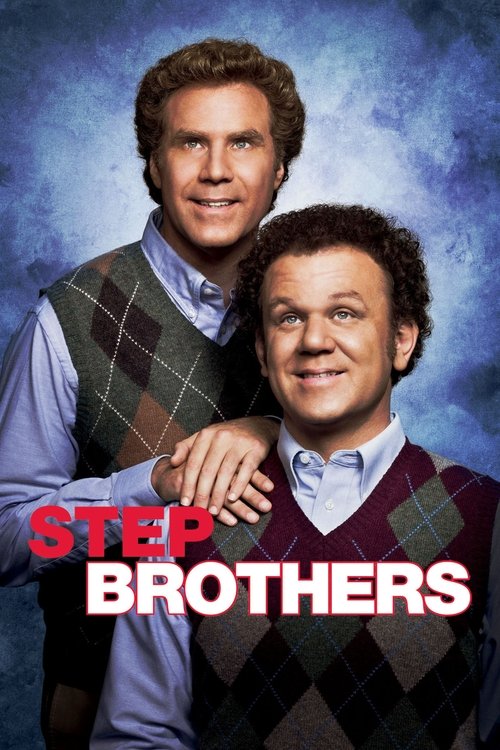
Step Brothers (2008)
Directed by Adam McKay
No — Step Brothers is not woke, scoring 3 out of 100 on our wokeness meter.
Step Brothers arrives from 2008 with the confidence of a film that has no interest in being about anything.
Consciousness Markers
The cast is overwhelmingly white, with only a fleeting appearance by Ken Jeong; there is no meaningful diversity casting or commentary on it.
Derek's helicopter-leasing corporate world is mildly mocked, but the film has no economic critique; it merely uses smug professionalism as a foil for the man-children.
No LGBTQ+ characters, themes, or subtext appear anywhere in the film.
The film's comic register is aggressively juvenile and crude, from the 'Boats 'n Hoes' music video to the affair subplot; it offers no feminist perspective whatsoever.
Race is never a subject of the film; the lone Spanish-language performance is a punchline, not a statement.
No environmental or climate themes are present.
Bodies are deployed purely for gross-out gags (prosthetic testicles, drum-set rubbing), the opposite of body-positivity messaging.
A therapy subplot exists, but an early storyline about a diagnosable condition was deliberately cut; the film treats arrested development as a joke, not as neurodivergent representation.
The film engages with no historical subject matter to revise.
This is a pure absurdist improv comedy with no didactic agenda; it preaches nothing and apologizes for nothing.
Why it received this score
Step Brothers arrives from 2008 with the confidence of a film that has no interest in being about anything. Adam McKay points his camera at two grown men who share a bunk bed, and the joke is simply that they exist. There is no thesis tucked beneath the drum set, no argument about how we ought to live. The picture wants to make you laugh at a pair of prosthetic testicles and then go home.
On the matter of representation, the cast is a wall of pale faces interrupted briefly by Ken Jeong, who appears to serve as a punchline and then vanishes. Nobody involved seems to have considered that this might be a subject worth addressing. Race never enters the room. Neither does queerness, nor any feminist reading of the material, which is built on crude adolescent gags and an affair subplot that treats Kathryn Hahn's character as a joke about boredom. The bodies on screen are deployed for disgust, not celebration. The film's relationship to physicality is one long bit about how gross a middle-aged man can be, and it commits to that fully.
The corporate world of Derek's helicopter leasing takes a light ribbing, largely because smug professionalism makes a useful foil for men who refuse to grow up, but the film holds no economic grudge and wants no part of one. A therapy subplot exists, though the filmmakers cut the storyline that would have given the characters a diagnosable condition, which tells you how much they cared to say about the mind. History does not appear. The climate does not appear. All that remains is ninety minutes of improvisation, long takes, and a Billy Joel cover band, delivered without a single sermon. Step Brothers preaches nothing. In 2008 that read as laziness to some critics and as freedom to others. Time has been kinder to the second reading.
Analysis generated by our Consciousness Algorithm


Synopsis
Brennan Huff and Dale Doback might be grown men. But that doesn't stop them from living at home and turning into jealous, competitive stepbrothers when their single parents marry. Brennan's constant competition with Dale strains his mom's marriage to Dale's dad, leaving everyone to wonder whether they'll ever see eye to eye.
Questions about Step Brothers
Is Step Brothers woke?
No — Step Brothers is not woke, scoring 3 out of 100 on our wokeness meter. That earns it a verdict of Ultra Based.
Does Step Brothers have any woke elements?
Very few. None of the 10 markers reaches 30, the level where a marker counts as present; the highest is Eat the Rich at 5.
How does Step Brothers compare to other 2008 movies?
It ranks #160 of the 212 films from 2008 we've scored; their average is 12. The wokest is Milk (68).
How is the Woke Score calculated?
An AI-assisted process researches the film and its reception, scores it 0–100 on ten markers, then combines those into one 0–100 Woke Score. It measures a specific set of 2020s cultural themes, not film quality.